

Virtual reality gaming has transformed rapidly over the last decade. Early adopters of VR Gaming will remember the days of tethered headsets, external tracking cameras, and pixelated screens that often caused a wave of motion sickness. Those clunky prototypes laid the groundwork for the highly immersive, untethered experiences we enjoy right now.
Today, players can strap on a standalone headset and instantly transport themselves to alien worlds, intense combat zones, or peaceful meditation spaces through modern VR Gaming experiences. Hardware has become lighter, software has become vastly more sophisticated, and the barrier to entry is lower than ever. But this current generation of virtual reality is just the beginning of a massive technological shift.
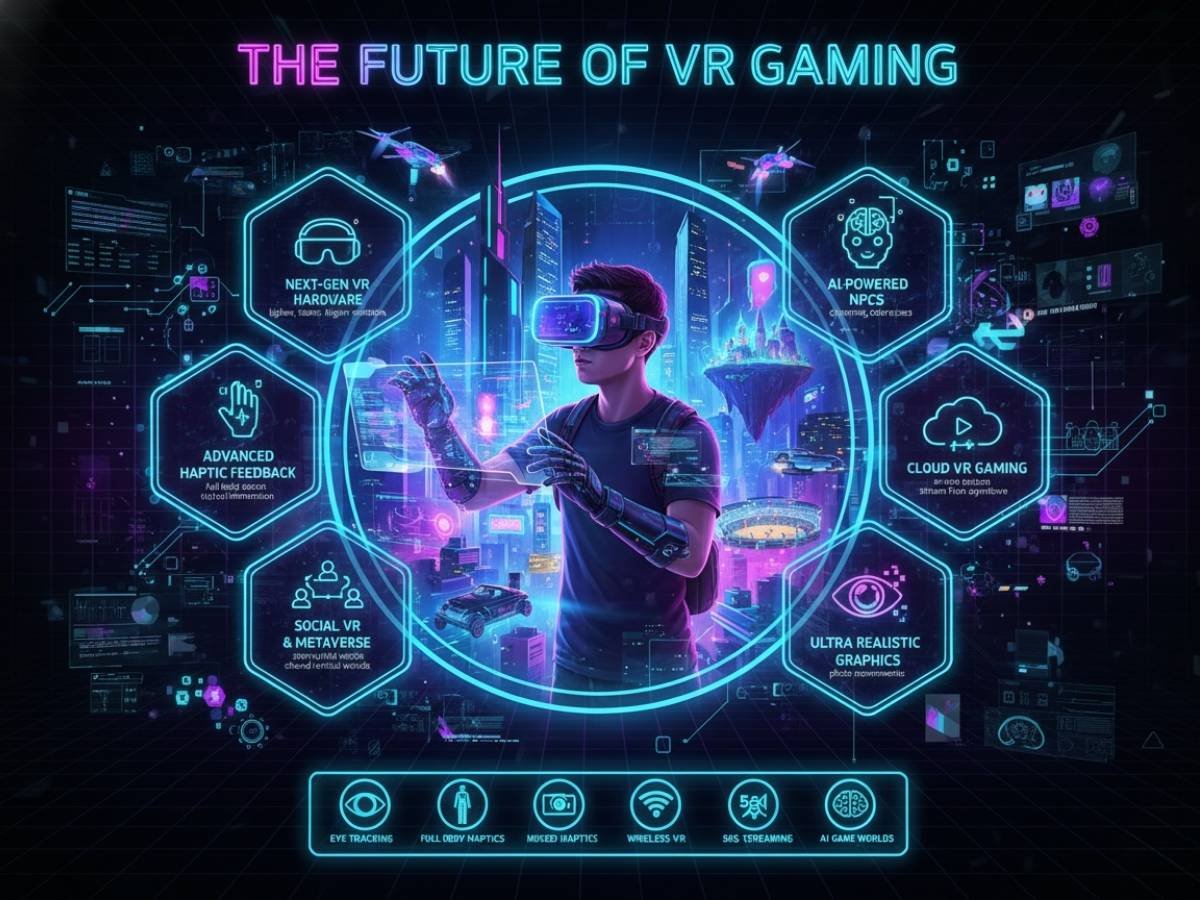
If you are wondering what comes next, you are in the right place. The next phase of VR gaming promises to blur the line between the physical and digital worlds completely. From advanced haptic feedback to hyper-realistic AI, we are about to see leaps in technology that will redefine how we play. Let’s explore the key innovations driving the future of VR gaming.
Table of Contents
Next-Generation Hardware Upgrades
The most obvious improvements in virtual reality will come from the hardware itself. Tech companies are pouring billions of dollars into research and development to make headsets smaller, faster, and much more comfortable.
Lighter and More Comfortable Headsets
Current VR headsets can feel heavy after a long gaming session. The future points toward micro-OLED displays and pancake lenses, which drastically reduce the size and weight of the hardware. We are moving toward a future where VR headsets resemble a slightly bulky pair of sunglasses rather than a scuba mask. This will allow players to enjoy marathon gaming sessions without neck strain or facial fatigue.
Higher Resolutions and Wider Field of View
Screen door effects—where you can see the gaps between pixels on a screen—are already becoming a thing of the past. Future headsets will feature resolutions matching or exceeding human eye capabilities. Coupled with a much wider field of view, these visual upgrades will trick your brain into completely accepting the virtual environment as reality.
The Magic of Advanced Haptic Feedback
Seeing and hearing a virtual world is impressive, but feeling it is the ultimate goal. Currently, most VR feedback is limited to the rumble features inside handheld controllers. The next massive leap in VR gaming involves full-body haptics.
Tech developers are creating haptic gloves and suits equipped with micro-vibrators and resistance motors. When you pick up a digital object, the gloves apply physical pressure to your fingers, making the object feel solid. If you get hit by a spell in a fantasy RPG, a haptic vest will deliver a localized vibration to your chest. This sensory input bridges the gap between looking at a game and physically existing within it.
Artificial Intelligence Meets Virtual Reality
Artificial intelligence is reshaping every tech industry, and VR gaming is heavily impacted. Until now, non-playable characters (NPCs) have relied on pre-programmed dialogue trees and set pathing. AI is changing the rules.
Future VR games will feature NPCs powered by generative AI. You will be able to speak directly into your headset’s microphone, and the character will respond dynamically based on your exact words. Furthermore, machine learning algorithms will allow virtual environments to adapt to your playstyle. If an AI director notices you are breezing through a horror game, it might dynamically alter the environment to increase the tension, ensuring no two playthroughs are ever identical.
Cloud Gaming and Seamless Streaming
One of the historical hurdles for high-end VR gaming is the requirement of an expensive, powerful gaming PC. Standalone headsets solved the tethering issue, but they are limited by their internal mobile processors. Cloud gaming offers a perfect solution.
As 5G networks expand and Wi-Fi 7 becomes standard, players will be able to stream massive, graphically intense VR games directly from remote servers. Your headset will act simply as a receiver and a display. This means you will get PC-quality graphics on a lightweight, affordable headset without needing a $2,000 computer sitting on your desk.
Social VR and the Metaverse Connection
Gaming is fundamentally a social activity. The future of VR leans heavily into shared, persistent digital spaces. Instead of simply logging into a matchmaking lobby, you will step into a centralized digital hub.
You might meet up with your friends in a virtual tavern, play a few rounds of digital darts, and then seamlessly transition into a co-op sci-fi shooter. These persistent spaces will allow for massive multiplayer events, digital concerts, and community building on a scale that flat-screen gaming cannot replicate.
Frequently Asked Questions
Will VR replace traditional gaming?
No. Virtual reality offers a different type of experience, but it will not replace traditional console or PC gaming. Just as movies did not replace books, VR will coexist with flat-screen gaming, offering players different ways to engage with interactive media based on their mood and energy levels.
How much will future VR headsets cost?
Prices will likely stratify into tiers. We will see affordable, entry-level headsets geared toward casual gaming and media consumption, likely priced similarly to modern game consoles. Simultaneously, premium “pro” models featuring the latest eye-tracking and mixed-reality passthrough technology will remain expensive for hardcore enthusiasts.
Is motion sickness still a problem in VR?
Developers are actively solving this issue. Higher refresh rates, better tracking latency, and in-game comfort settings (like teleportation movement or digital blinders) have already drastically reduced motion sickness. As technology improves, the disconnect between what your eyes see and what your inner ear feels will diminish even further.
Ready to Step Into the Next Dimension?
The trajectory of VR gaming is clear. Hardware is shrinking, virtual worlds are expanding, and the tools we use to interact with these digital spaces are becoming incredibly sophisticated. Whether you are a hardcore gamer or just someone curious about the future of entertainment, there has never been a better time to pay attention to virtual reality.
If you want to stay ahead of the curve, consider testing out a modern standalone headset today. Experience the current capabilities firsthand, and you will immediately understand why the future of gaming is virtual.

