

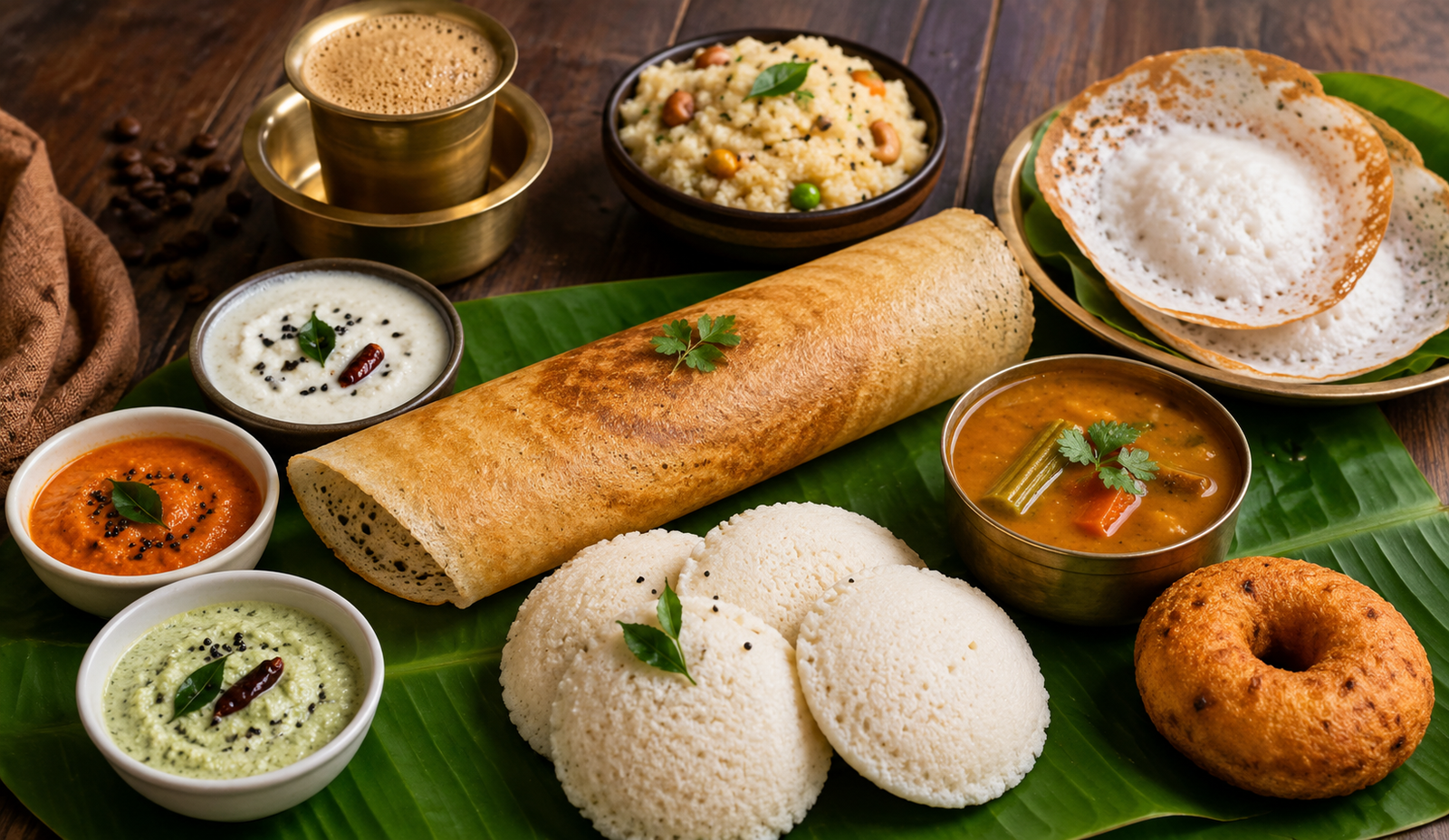
When most people outside of India think of Indian food, they often picture rich, cream-based gravies, naan bread, and tandoori chicken. However, the southern region of the country offers a completely different culinary landscape. South Indian food is a vibrant, diverse, and deeply flavorful cuisine that relies heavily on rice, lentils, coconut, and a symphony of distinct spices. It is a food culture built on ancient traditions, complex flavor profiles, and a deep respect for local ingredients.
Exploring South Indian cuisine offers a journey through five main states: Tamil Nadu, Kerala, Karnataka, Andhra Pradesh, and Telangana. Each region brings its own unique techniques, signature dishes, and flavor preferences to the table. From the fiery red chilies of Andhra Pradesh to the soothing coconut milk stews of Kerala, the variety is staggering.
By reading this guide, you will gain a deep understanding of what makes South Indian food so special. You will learn about the distinct regional variations, discover the essential ingredients that form the backbone of these dishes, and find out which classic meals you absolutely need to try.
The Regional Cuisines of South India
South India is a vast geographic area, and its food is far from monolithic. Geography, climate, and history have all shaped the distinct culinary identities of the southern states.
Tamil Nadu: Chettinad Spices and Classic Tiffins
Tamil Nadu is famous for its “tiffin” culture. Tiffin refers to light meals or snacks, often eaten for breakfast or in the late afternoon. This state is the birthplace of global favorites like idli (steamed rice cakes), dosa (crispy rice and lentil crepes), and sambar (a tangy lentil and vegetable stew).
Beyond these vegetarian staples, Tamil Nadu is home to Chettinad cuisine. Chettinad food is renowned for its complexity and heavy use of freshly roasted spices. Dishes like Chettinad chicken curry feature a potent blend of star anise, black stone flower, tamarind, and fiery chilies, creating a deeply aromatic and spicy experience.
Kerala: The Land of Spices and Coconuts
Kerala sits along the Malabar Coast, a region historically famous for the spice trade. Black pepper, cardamom, cloves, and cinnamon grow abundantly here, and they feature prominently in the local food. Because Kerala boasts a long coastline and dense backwaters, seafood is a major dietary staple.
Coconut is the undeniable king of Kerala cuisine. It appears in almost every dish in some form: grated, roasted, as coconut milk, or as coconut oil. Classic dishes include appam (a lacy, fermented rice pancake) served with vegetable or meat stew, and Meen Moilee (a delicate fish curry cooked in spiced coconut milk).
Karnataka: Udupi Vegetarian and Rich Curries
Karnataka offers a beautiful blend of robust meat dishes and strictly vegetarian temple food. The coastal town of Udupi is famous for its pure vegetarian cuisine, which avoids onions and garlic. Udupi restaurants have popularized South Indian food across the globe, serving endless varieties of dosas and sweet, jaggery-infused sambars.
In the southern part of the state, the food takes on a different character. The region of Coorg (Kodagu) is famous for its Pandi Curry, a rich and spicy pork dish flavored with a dark, tart vinegar made from the local kachampuli fruit. The city of Mysore is famous for Mysore Pak, a dense, melt-in-your-mouth sweet made from gram flour, ghee, and sugar.
Andhra Pradesh and Telangana: The Spice Capitals
If you love heat, the food from Andhra Pradesh and Telangana will deliver. These states are famous for producing some of the spiciest food in India. The cuisine makes heavy use of red chilies, tamarind, and gongura (a sour leafy green).
The city of Hyderabad, located in Telangana, boasts a rich culinary heritage heavily influenced by the Mughal Empire. Hyderabadi Biryani is arguably the most famous rice dish in India. It consists of basmati rice and marinated meat (usually mutton or chicken) cooked slowly together in a sealed pot, a technique known as “dum.”
Essential Ingredients in the South Indian Pantry
To understand South Indian food, you must familiarize yourself with the ingredients that form its foundation. These elements are used daily and give the food its characteristic taste and aroma.
Rice and Lentils
Wheat is the primary grain in North India, but rice reigns supreme in the South. It is boiled and eaten with curries, ground into flour for flatbreads, and fermented with lentils to make batters for idlis and dosas. Lentils (dals), such as toor dal, urad dal, and chana dal, provide essential protein and act as thickening agents in soups and stews.
Curry Leaves and Mustard Seeds
Almost every South Indian savory dish begins or ends with a “tadka” or tempering. This technique involves blooming spices in hot oil or ghee to release their essential oils. Mustard seeds and fresh curry leaves are the most common ingredients in a South Indian tempering. The popping of mustard seeds and the nutty, citrusy aroma of frying curry leaves signal that a South Indian meal is underway.
Tamarind and Kokum
Sour flavors are highly prized in South Indian cooking. Tamarind is the most common souring agent, providing a deep, fruity tartness to sambars, rasams (thin, peppery soups), and fish curries. In some coastal regions, dried kokum fruit is used instead, offering a sharper, slightly floral acidity.
Fresh Coconut
Unlike the heavy cream and butter used in North Indian cooking, South Indian dishes derive their richness from coconut. Freshly grated coconut is blended into chutneys, roasted into spice pastes, and squeezed to extract thick, sweet coconut milk.
Must-Try South Indian Dishes
If you are new to this cuisine, building a tasting menu can be overwhelming. Here are a few iconic dishes that offer a perfect introduction to the flavors of the South.
Masala Dosa
The masala dosa is a globally recognized culinary masterpiece. The batter, made from soaked rice and lentils, ferments overnight to develop a slight tang. It is spread paper-thin on a hot griddle and cooked until golden and crispy. The dosa is then filled with a spiced potato and onion mixture. It is always served with a side of hot sambar and cool coconut chutney.
Idli and Rasam
Idlis are soft, fluffy cakes made by steaming the same fermented rice and lentil batter used for dosas. Because they are steamed, they are incredibly light and easily digestible. While often eaten with sambar, pairing hot idlis with rasam—a thin, fiery broth made with tamarind, tomatoes, black pepper, and garlic—is the ultimate comfort food for many South Indians.
Kerala Beef Fry
A staple in Kerala’s “toddy shops” (local taverns), Kerala beef fry is a dry dish where chunks of beef are slow-cooked with a massive amount of roasted spices, onions, and garlic. The meat is then fried in coconut oil along with copious amounts of fresh curry leaves and slivers of fresh coconut. It is intensely flavorful and pairs perfectly with flaky Malabar parottas.
Hyderabadi Haleem
While biryani gets most of the attention, Haleem is a spectacular dish usually prepared during the holy month of Ramadan. It is a thick, savory porridge made by pounding wheat, lentils, and meat (usually mutton) together for hours until they blend into a smooth paste. It is rich, heavily spiced, and garnished with fried onions, fresh mint, and a squeeze of lemon.
The Health Benefits of the Cuisine
South Indian food offers numerous health benefits, making it an excellent choice for a balanced diet. The heavy reliance on fermentation for dishes like idli, dosa, and appam increases the bioavailability of nutrients and promotes a healthy gut microbiome. These fermented foods are naturally gluten-free and easy to digest.
The frequent use of lentils provides a steady source of plant-based protein and dietary fiber. Furthermore, the spices used in everyday cooking—such as turmeric, black pepper, ginger, and garlic—are packed with antioxidants and possess strong anti-inflammatory properties.
Bringing the Flavors of South India into Your Kitchen
South Indian food is a celebration of fresh ingredients, bold spices, and ancient culinary wisdom. Its reliance on rice, lentils, and vibrant flavors makes it incredibly satisfying and wonderfully diverse. Exploring this cuisine opens up a world of new textures, from the crunch of a perfect dosa to the soothing warmth of a coconut milk stew.
If you want to experience these flavors at home, start small. Purchase a bag of fresh curry leaves, some black mustard seeds, and a block of tamarind. Try making a simple lemon rice or a basic coconut chutney. As you grow more comfortable with the ingredients and techniques, you can expand your repertoire to include complex curries and fermented batters. Seek out a local South Indian restaurant or visit a specialty grocer to gather the essential spices, and begin your own culinary journey into the vibrant world of South India.

