

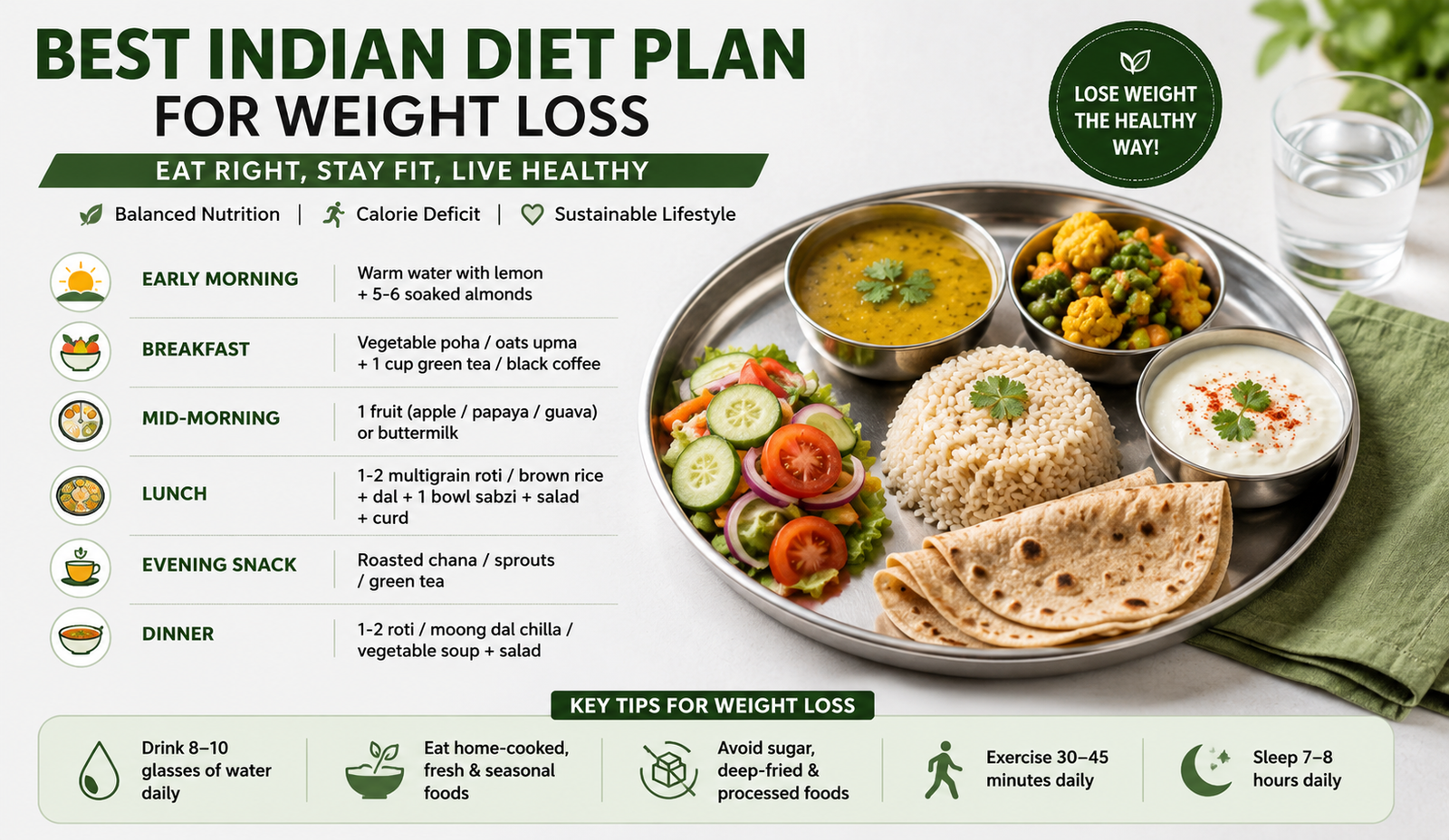
Many people associate Indian cuisine with rich, heavy curries, deep-fried snacks, and sugar-laden sweets. This perception often leads those trying to shed excess weight to abandon traditional meals in favor of bland salads or expensive imported superfoods. The truth is vastly different. Authentic, home-cooked Indian food actually provides a highly nutritious, balanced, and incredibly flavorful framework for achieving your fitness goals.
By focusing on whole grains, diverse lentils, fresh seasonal vegetables, and potent spices, you can create a sustainable calorie deficit without ever feeling deprived. Traditional Indian meals are naturally rich in plant-based proteins and essential dietary fiber. These key nutritional elements keep you full for longer periods, help stabilize blood sugar levels, and actively support a healthy gut microbiome.
This comprehensive guide gives you everything you need to successfully transform your eating habits. You will learn the nutritional science behind everyday Indian ingredients, discover exactly which foods to prioritize, and receive a complete seven-day meal plan designed for steady weight loss. Achieving your ideal weight does not require giving up the cultural foods you love. It simply requires a smarter, more mindful approach to portioning, ingredient selection, and meal preparation.
Table of Contents
Why the Traditional Indian Diet is Great for Weight Loss
The foundational principles of traditional Indian eating naturally align with modern nutritional science. Long before calorie counting became a trend, Indian meals were structured to provide a balance of macronutrients and micronutrients.
Strong Plant-Based Foundations
Indian cuisine is heavily skewed toward plant-based eating. Even for non-vegetarians, meat is typically consumed as a small portion of the overall meal rather than the main focus. High intake of plant foods means high intake of fiber. Fiber adds bulk to your meals, slowing down digestion and sending satiety signals to your brain. When you eat a bowl of mixed vegetable sabzi and a serving of dal, your body works harder to break down the complex carbohydrates, burning more calories through digestion alone.
The Power of Spices
Spices do much more than add flavor. Many spices fundamental to Indian cooking possess medicinal properties that aid metabolic health. Turmeric contains curcumin, a powerful anti-inflammatory compound that can help reduce systemic inflammation associated with obesity. Cumin seeds promote healthy digestion and can improve insulin sensitivity. Black pepper enhances the absorption of other nutrients and has a mild thermogenic effect, meaning it slightly increases the rate at which your body burns calories.
Built-In Portion Control
The traditional concept of the “Thali” (a round platter with small bowls) is a perfect example of built-in portion control. A well-constructed thali includes a small portion of complex carbohydrates, a serving of protein-rich lentils, colorful vegetables, a small amount of healthy fat, and a fermented food like yogurt. This structure ensures you consume a wide spectrum of nutrients in one sitting without overeating any single food group.
Key Components of a Healthy Indian Diet
To build an effective Indian diet plan for weight loss, you need to understand the role of different food groups and choose the highest-quality sources for each.
Lean Proteins
Protein is crucial for preserving muscle mass while you lose fat. It also has the highest thermic effect of all macronutrients.
For vegetarians, excellent sources include masoor dal (red lentils), moong dal (green gram), chana (chickpeas), rajma (kidney beans), and paneer (cottage cheese). Tofu is another great addition that absorbs Indian spices beautifully. Non-vegetarians can incorporate skinless chicken breast, fish, and eggs. The key is to prepare these proteins using grilling, boiling, or light sautéing methods rather than deep-frying.
Complex Carbohydrates
Carbohydrates are not the enemy, provided you choose the right types. Refined grains like maida (all-purpose flour) and white rice strip away beneficial fiber and nutrients, leading to rapid blood sugar spikes. Instead, opt for complex carbohydrates that provide sustained energy. Whole wheat roti, brown rice, rolled oats, and traditional millets like jowar (sorghum), bajra (pearl millet), and ragi (finger millet) are exceptional choices. Millets, in particular, are gluten-free, highly nutritious, and digest slowly.
Healthy Fats
Fat is essential for hormone production and the absorption of fat-soluble vitamins (A, D, E, and K). Ghee (clarified butter) is a staple in Indian cooking and offers numerous health benefits, including short-chain fatty acids that support gut health. However, ghee is calorie-dense, so moderation is strictly required. Other excellent sources of healthy fats include mustard oil, olive oil, almonds, walnuts, flaxseeds, and chia seeds.
Fiber-Rich Vegetables
Vegetables should make up at least half of your plate at major meals. Indian markets are filled with low-calorie, high-fiber options. Bhindi (okra), palak (spinach), lauki (bottle gourd), karela (bitter gourd), and baingan (eggplant) are nutrient powerhouses. Preparing these vegetables with minimal oil and a robust spice blend ensures you get maximum flavor for minimal calories.
Foods to Include and Avoid
Weight loss ultimately comes down to energy balance. To make maintaining a calorie deficit easier, focus on nutrient-dense foods and limit energy-dense, highly processed items.
Eat More of These
- Fresh Fruits: Apples, papayas, guavas, oranges, and berries.
- Vegetables: Leafy greens, cruciferous vegetables (cabbage, cauliflower), and gourds.
- Legumes and Pulses: All varieties of dals and beans.
- Whole Grains: Millets, whole wheat, brown rice, and quinoa.
- Dairy: Low-fat milk, plain curd (yogurt), and homemade paneer.
Cut Back on These
- Refined Sugars: Sweetmeats (mithai), jalebi, gulab jamun, and sweetened beverages.
- Refined Flours: White bread, naan made from maida, biscuits, and pastries.
- Deep-Fried Snacks: Samosas, pakoras, bhujia, and potato chips.
- Processed Meats: Sausages and canned meats, which are high in sodium and preservatives.
- Excessive Oil: Dishes floating in oil or heavy cream-based restaurant curries.
Your 7-Day Indian Diet Plan for Weight Loss
This sample meal plan provides around 1,200 to 1,500 calories per day, depending on exact portion sizes. Adjust the quantities based on your individual basal metabolic rate (BMR) and daily activity level. Drink plenty of water throughout the day.
Day 1
- Early Morning: A glass of warm water with a squeeze of fresh lemon and a pinch of cinnamon.
- Breakfast: Two moong dal chillas (savory lentil pancakes) stuffed with grated paneer and spinach, served with mint chutney.
- Mid-Morning: One medium apple and a small handful of unsalted almonds.
- Lunch: One bowl of mixed vegetable sabzi, one bowl of plain dal, two whole wheat rotis, and a side cucumber salad.
- Afternoon Snack: A cup of green tea and a small bowl of roasted makhana (fox nuts).
- Dinner: A large bowl of lauki (bottle gourd) soup and a serving of grilled chicken tikka or grilled tofu.
Day 2
- Early Morning: Warm water with soaked cumin (jeera) seeds.
- Breakfast: A bowl of vegetable oats upma cooked with carrots, peas, and green beans.
- Mid-Morning: A small bowl of fresh papaya chunks.
- Lunch: One cup of brown rice, a bowl of rajma (kidney bean curry), and a side of fresh curd (yogurt).
- Afternoon Snack: Black coffee or tea without sugar, plus two boiled egg whites (or roasted chana for vegetarians).
- Dinner: Two bajra rotis with a generous serving of palak paneer (made with minimal oil) and a side salad.
Day 3
- Early Morning: Warm water with a tablespoon of apple cider vinegar.
- Breakfast: Two idlis with a bowl of vegetable-rich sambar (avoid coconut chutney).
- Mid-Morning: A glass of fresh buttermilk (chaas) spiced with roasted cumin powder.
- Lunch: Two multigrain rotis, a bowl of yellow moong dal, and a serving of bhindi masala (okra).
- Afternoon Snack: A cup of chamomile tea and a handful of walnuts.
- Dinner: Grilled fish (or soya chunks for vegetarians) marinated in Indian spices, served with a side of stir-fried broccoli and bell peppers.
Day 4
- Early Morning: Soaked fenugreek (methi) seeds with warm water.
- Breakfast: A bowl of poha (flattened rice) cooked with peanuts, onions, and lots of peas.
- Mid-Morning: One whole orange or sweet lime.
- Lunch: One cup of quinoa cooked like pulao with mixed vegetables, served with a bowl of cucumber raita.
- Afternoon Snack: Green tea and a small portion of roasted chickpeas.
- Dinner: A bowl of clear vegetable soup and a mushroom-bell pepper stir-fry.
Day 5
- Early Morning: Warm water with lemon and a teaspoon of raw honey.
- Breakfast: Two scrambled eggs with onions and tomatoes (bhurji) served with one slice of whole-grain toast. (Vegetarians can substitute with paneer bhurji).
- Mid-Morning: A handful of mixed berries or a small pear.
- Lunch: Two whole wheat rotis, a bowl of chana masala (chickpea curry), and a carrot-tomato salad.
- Afternoon Snack: A small glass of tender coconut water.
- Dinner: A bowl of mixed dal khichdi made with brown rice and loads of vegetables, topped with a half-teaspoon of ghee.
Day 6
- Early Morning: Warm water with soaked coriander seeds.
- Breakfast: A smoothie made with low-fat yogurt, half a banana, a tablespoon of chia seeds, and a handful of spinach.
- Mid-Morning: Five soaked almonds and two walnuts.
- Lunch: One cup of boiled brown rice, a bowl of fish curry (or mixed veg curry), and a side of cabbage sabzi.
- Afternoon Snack: Tea without sugar and a multi-grain sugar-free biscuit.
- Dinner: Two jowar rotis served with baingan bharta (roasted eggplant mash) and a side salad.
Day 7
- Early Morning: Warm water with lemon.
- Breakfast: Two slices of whole wheat bread topped with mashed avocado and a sprinkle of chaat masala.
- Mid-Morning: A small bowl of pomegranate seeds.
- Lunch: A large grilled chicken salad (or grilled paneer salad) loaded with greens, tomatoes, cucumbers, and a lemon-tahini dressing.
- Afternoon Snack: A small bowl of sprouts chaat (mung bean sprouts with chopped onions, tomatoes, and lemon juice).
- Dinner: A bowl of dal makahni (made healthy with low-fat milk instead of heavy cream) and two plain rotis.
Smart Tips for Sticking to Your Diet
Having a meal plan is only the first step. Long-term success requires building sustainable daily habits.
Hydration is Crucial
Thirst is frequently mistaken for hunger. When you feel a sudden craving, drink a large glass of water and wait twenty minutes. More often than not, the urge to snack will pass. Aim for at least eight to ten glasses of water per day. Herbal teas, infused waters, and plain chaas are also excellent ways to stay hydrated without adding empty calories.
Practice Mindful Eating
Eat your meals slowly and without distractions. Turn off the television and put away your smartphone. Indian meals involve mixing flavors and textures; pay attention to the taste of the spices and the crunch of the vegetables. Chewing your food thoroughly aids digestion and gives your brain time to register that your stomach is full, preventing accidental overeating.
Prepare Meals in Advance
Relying on willpower alone at the end of a tiring day is a recipe for ordering high-calorie takeout. Take time on the weekend to chop vegetables, boil lentils, and prepare basic curry bases (onion and tomato paste). Having these healthy building blocks ready in your refrigerator makes throwing together a nutritious dinner faster than waiting for food delivery.
Frequently Asked Questions About the Indian Weight Loss Diet
Can I eat rice and still lose weight?
Yes, you absolutely can eat rice while losing weight. The key factors are portion size and preparation. Limit your serving to a small cup and pair it with a large portion of fiber-rich vegetables and protein-heavy dal. This combination slows down the absorption of carbohydrates. Switching from white rice to brown or red rice also provides more fiber and nutrients.
Is ghee good for weight loss?
Ghee is a healthy fat that offers numerous nutritional benefits, including aiding in digestion and reducing inflammation. However, it is very calorie-dense. Consuming too much will quickly push you out of a calorie deficit. Limit your intake to one or two teaspoons per day to enjoy the benefits without stalling your weight loss progress.
How much weight can I lose in a month on this plan?
A safe and sustainable rate of weight loss is typically around two to four pounds (one to two kilograms) per month. While extreme diets might promise faster results, they often lead to muscle loss and rebound weight gain. Sticking to a balanced Indian diet plan ensures you lose fat steadily while maintaining your energy levels and metabolic health.
Start Your Journey to a Healthier You
Embarking on a weight loss journey does not mean abandoning the rich, comforting flavors of Indian cuisine. By making strategic adjustments—such as prioritizing lean proteins, increasing vegetable intake, practicing portion control, and swapping refined grains for complex whole grains—you can enjoy delicious meals while successfully shedding unwanted pounds.
Take this seven-day meal plan as a starting point. Experiment with different spices, try new seasonal vegetables, and find the healthy combinations that you genuinely enjoy eating. Sustainable weight loss is about making long-term lifestyle changes rather than suffering through temporary restrictions. Begin planning your meals today, stock up your pantry with wholesome ingredients, and take that first confident step toward a healthier, more energetic version of yourself.

