

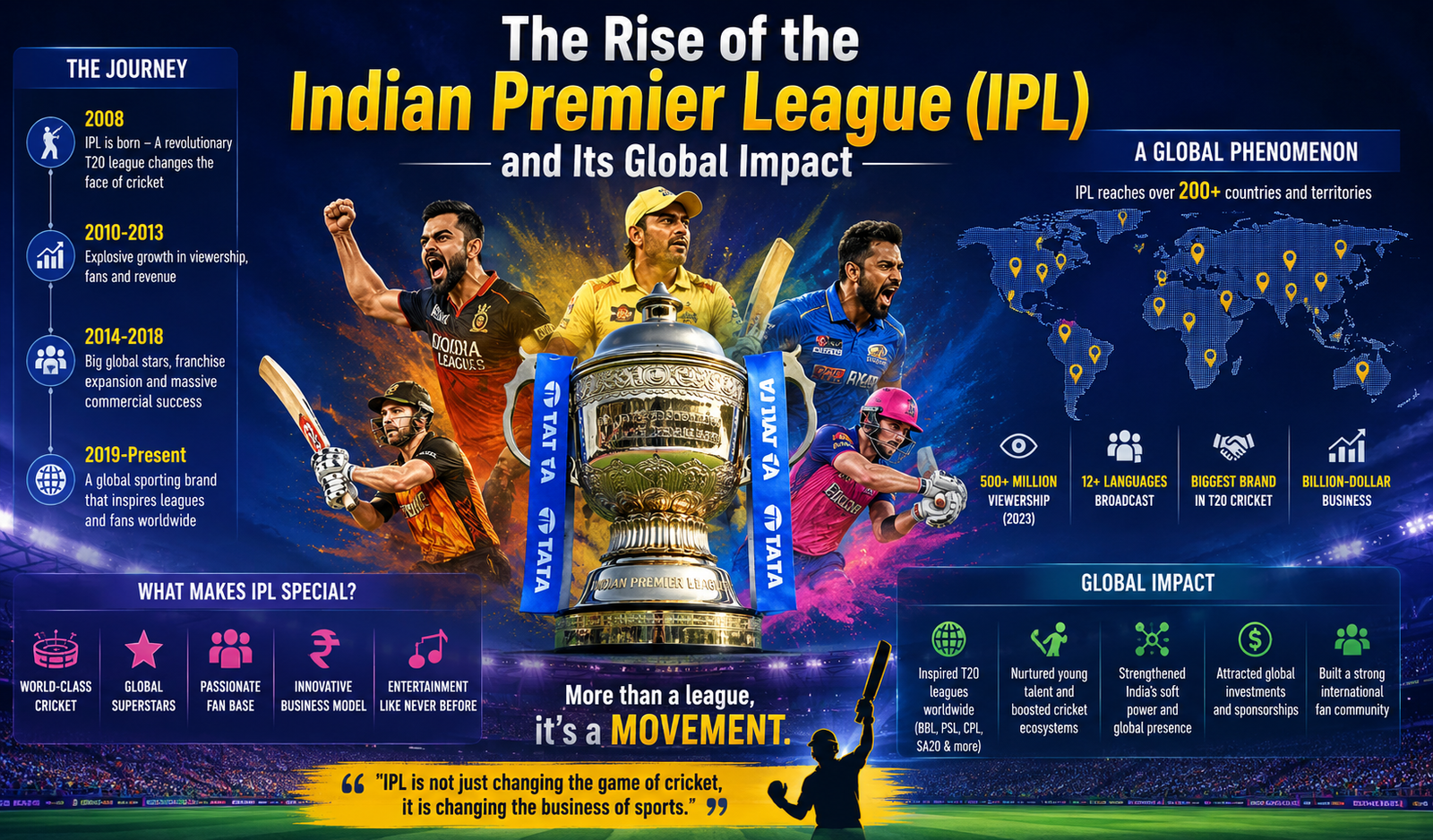
Cricket was once known exclusively as a traditional, leisurely game played over five days in pristine white uniforms. That image shifted permanently in the late 2000s when a new format injected a massive dose of adrenaline, color, and capital into the sport. The Indian Premier League (IPL) launched in 2008, fundamentally altering how cricket is played, consumed, and monetized worldwide.
The tournament seamlessly blended high-octane athletic competition with prime-time entertainment. By bringing international superstars together under privately owned franchises, the IPL created a spectacle that resonated far beyond the borders of India. It quickly transformed from a domestic summer tournament into one of the most lucrative and heavily watched sporting events on the planet.
Understanding the rise of the Indian Premier League is essential for anyone interested in the modern business of sports. This post breaks down the origins of this massive tournament, explores its staggering financial influence, and highlights exactly how it continues to shape the global cricketing landscape.
Table of Contents
The Genesis of a Cricket Phenomenon
The birth of the IPL was largely driven by a single, historic event on the global stage. India initially viewed the shortened Twenty20 (T20) format with skepticism, preferring the established rhythms of Test and One Day International (ODI) cricket. That perspective changed overnight in September 2007.
The 2007 T20 World Cup Catalyst
When a young Indian squad led by MS Dhoni lifted the inaugural ICC World Twenty20 trophy in South Africa, a massive television audience tuned in back home. The Board of Control for Cricket in India (BCCI) recognized the immense commercial potential of this three-hour format. They moved swiftly to create a domestic league that would capitalize on the nation’s newfound obsession with T20 cricket.
Birth of the Franchise Model in Cricket
Before 2008, cricket was almost entirely based on international fixtures and regional state teams. The IPL introduced an American-style franchise system to the sport. Billionaires and corporate conglomerates bid massive sums to own city-based teams like the Mumbai Indians and Chennai Super Kings. This structure established a brand-new allegiance system for fans, who suddenly found themselves cheering for a mix of local heroes and foreign stars wearing the same jersey.
Transforming the Financial Landscape of the Sport
The Indian Premier League completely rewrote the economic rulebook for cricket. The influx of private capital and corporate sponsorships turned the league into a financial juggernaut, rivaling established western sports leagues.
Broadcasting Rights and Revenue Streams
Media rights are the primary engine powering the IPL’s financial dominance. Broadcasters wage fierce bidding wars to secure the rights to televise and stream the matches to over a billion potential viewers. Recent media rights cycles have placed the per-match valuation of the IPL in the same elite tier as the National Football League (NFL) and the English Premier League. This massive revenue pool trickles down to the franchises, the governing body, and grassroots development.
Player Valuations and Auctions
The IPL player auction is an event as eagerly anticipated as the tournament itself. Franchise owners sit at bidding tables, raising paddles to secure the services of the world’s best players. This system provides life-changing financial security for athletes. A relatively unknown talent from a small town can secure a multimillion-dollar contract based on a few spectacular domestic performances. This financial incentive has encouraged players globally to tailor their skills specifically for the T20 format.
The Global Ripple Effect on Cricket
The success of the IPL could not be contained within India. The league’s structural and financial triumphs sent shockwaves through the global cricketing ecosystem, forcing other national boards to adapt or risk being left behind.
Inspiring International T20 Leagues
Seeing the commercial success of the Indian model, other national cricket boards scrambled to launch their own franchise-based T20 tournaments. Australia introduced the Big Bash League (BBL), the West Indies launched the Caribbean Premier League (CPL), and South Africa recently debuted the SA20. While these leagues bring significant revenue to their respective boards, they all operate in the giant shadow of the IPL, carefully scheduling their seasons to avoid a clash with the Indian giant.
Blurring National Rivalries
For over a century, cricket was defined by fierce international rivalries, such as the Ashes battles between England and Australia. The IPL fractured these traditional enmities in the best way possible. Fast bowlers from Australia now share dressing rooms, strategies, and meals with top-order batters from England or South Africa. This cross-pollination of talent has accelerated the tactical evolution of the sport, as players exchange knowledge and techniques that were previously guarded national secrets.
Cultural Impact Beyond the Boundary
The IPL is a cultural festival that dominates the Indian summer. The organizers deliberately merged the glamour of the entertainment industry with the grit of professional sports, creating a product designed for the entire family.
Bollywood Meets Cricket
From its inception, the league featured prominent Bollywood superstars as team owners and brand ambassadors. Actors like Shah Rukh Khan and Preity Zinta became visible, passionate fixtures in the stadium dugouts. This intersection of India’s two greatest passions—movies and cricket—drew in millions of viewers who previously had no interest in the sport, expanding the consumer base exponentially.
A Prime-Time Entertainment Behemoth
Matches are scheduled during evening prime time, complete with flashing LED stumps, booming stadium music, and spectacular pyrotechnics. This lively atmosphere transformed the stadium experience and the television broadcast into a nightly carnival. The IPL is scheduled perfectly during the Indian summer school holidays, ensuring maximum viewership and creating lifelong fans among the younger generation.
Frequently Asked Questions About the IPL
Who regulates the Indian Premier League?
The league is organized and governed by the Board of Control for Cricket in India (BCCI). The BCCI manages the scheduling, auction rules, and media rights distributions.
How are foreign players regulated in the tournament?
To ensure the league develops local talent, IPL rules mandate a strict limit on overseas players. A maximum of four international players are allowed in a team’s playing eleven for any given match.
Why do some international players skip matches for their countries to play in the IPL?
The financial rewards of the IPL are often vastly superior to standard national contracts. Additionally, many cricket boards now create a designated window in their international calendars to allow their top players to participate in the IPL without conflict.
The Future of Cricket’s Biggest Stage
The Indian Premier League has achieved more in a little over fifteen years than many sports leagues manage in a century. It revived a traditional sport, created unprecedented wealth for athletes, and established India as the undisputed financial epicenter of global cricket.
As the league continues to expand its footprint with new franchises and extended seasons, its influence shows no signs of waning. The franchise model is now the dominant paradigm in the sport, dictating the international calendar and shaping the career paths of young athletes worldwide. For fans, players, and investors alike, the IPL remains the ultimate destination, proving that the game of cricket has successfully evolved to conquer the modern entertainment era.

