

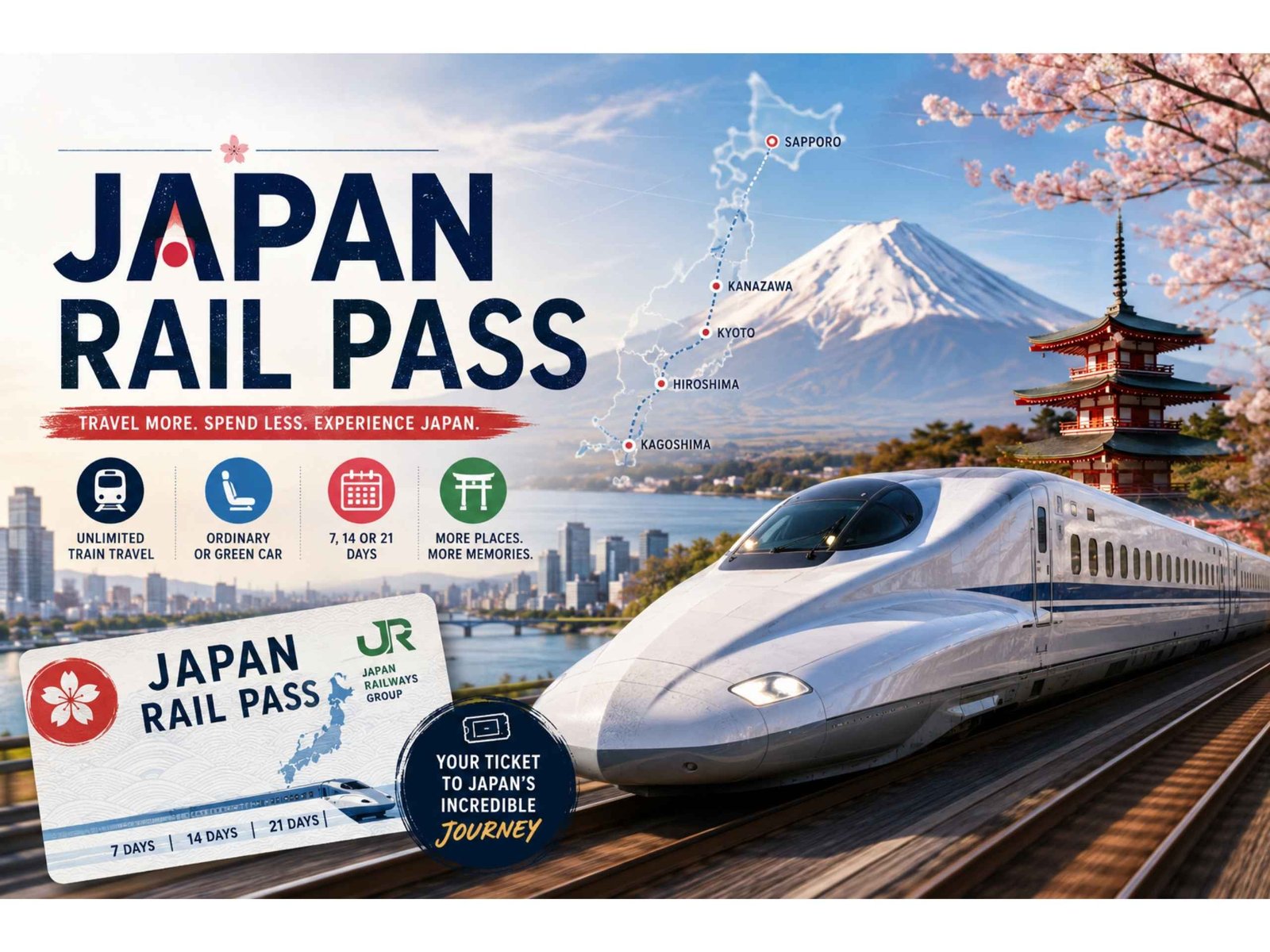
Japan’s railway system is famous for its punctuality, speed, and extensive coverage. Traveling across the country on a bullet train is an experience many travelers dream about, offering breathtaking views of Mount Fuji, coastal towns, and bustling urban centers. For decades, international tourists have relied on a specific ticket to make this travel affordable and seamless.
The Japan Rail Pass offers unlimited travel on the national JR network, including the iconic Shinkansen. Recent changes to the pricing structure have left many travelers wondering if the pass still offers good value. Navigating the different options, regional variations, and eligibility rules can feel overwhelming when planning an upcoming trip.
This guide breaks down everything you need to know about the Japan Rail Pass. You will learn how to calculate its value for your specific itinerary, the difference between ordinary and green car passes, and the step-by-step process for buying and activating your ticket. By the end of this post, you will be able to make an informed decision and potentially save hundreds of dollars on your transportation budget.
Table of Contents
What Exactly Is the Japan Rail Pass?
The Japan Rail Pass, frequently called the JR Pass, is a special discounted ticket available exclusively to foreign tourists visiting Japan under the “Temporary Visitor” visa status. It grants the holder unlimited access to most trains operated by the Japan Railways Group across the entire country.
How the Pass Works
Once activated, the pass is valid for a consecutive period of 7, 14, or 21 days. During this timeframe, you can board almost any JR-operated train, including local commuter trains, rapid services, limited express trains, and the legendary Shinkansen (bullet trains). The pass also covers the Tokyo Monorail, the JR Ferry to Miyajima, and local JR buses.
Travelers simply show their pass at manned ticket gates or insert it into the automatic turnstiles to access the platforms. For long-distance journeys, you can reserve seats at no additional cost by visiting a ticket office or using the digital reservation machines located in major stations.
Green Pass vs. Ordinary Pass
When purchasing your Japan Rail Pass, you must choose between an Ordinary Pass and a Green Pass. The Ordinary Pass grants access to standard carriages. These seats are comfortable, clean, and offer ample legroom, making them perfectly suitable for the vast majority of travelers.
The Green Pass provides access to the “Green Cars,” which are Japan’s equivalent of first-class train travel. Green Cars feature larger seats that recline further, more legroom, less crowding, and a generally quieter atmosphere. During peak travel seasons like cherry blossom spring or the Golden Week holidays, having a Green Pass can make it easier to secure seat reservations, as these premium carriages tend to fill up slower than ordinary ones.
Understanding the Recent JR Pass Price Changes
For a long time, the Japan Rail Pass was an undisputed bargain. A single round trip between Tokyo and Kyoto practically paid for a 7-day pass. However, a significant price increase was implemented recently, changing the math for prospective buyers.
The New Cost Breakdown
The cost of the national JR Pass increased by roughly 65% to 70%, depending on the duration and class of the ticket. A 7-day Ordinary Pass now requires a more extensive travel itinerary to justify the upfront cost. Travelers who only plan to visit Tokyo, Kyoto, and Osaka might find that buying individual point-to-point tickets is now cheaper than investing in the unlimited pass.
To determine if the pass is right for you, map out your planned routes and use a fare calculator to estimate the total cost of individual tickets. If your travel plans involve multiple regions, such as journeying from Tokyo to Hiroshima, up to Kanazawa, and back down to Kyoto, the national pass will likely still save you money.
Added Perks of the New Pricing
To soften the impact of the price hike, the Japan Railways Group introduced a few new benefits for pass holders. Previously, JR Pass users were completely barred from riding the Nozomi and Mizuho trains—the absolute fastest Shinkansen services that make the fewest stops.
Under the new rules, pass holders can ride the Nozomi and Mizuho trains by paying a supplementary upgrade fee. While this is an extra cost, it provides greater flexibility for travelers on a tight schedule who want to minimize their transit time between major cities. Additionally, pass holders now receive discounts at various tourist attractions and affiliated shops across the country.
How to Buy and Activate Your Japan Rail Pass
Securing your pass requires a bit of advanced planning. The process involves purchasing an exchange order before your trip and trading it for the actual ticket once you land.
Purchasing Online vs. Official Vendors
You can buy the Japan Rail Pass directly through the official JR website or via an authorized third-party travel agency. Purchasing through the official site is slightly more expensive, but it allows you to book seat reservations online before you even arrive in Japan. This is highly beneficial if you are traveling during a busy holiday period.
If you buy through an authorized third-party vendor, you will receive an “Exchange Order” in the mail. You must bring this physical document with you to Japan. Keep in mind that you cannot buy the pass if you enter the country on a student visa, working holiday visa, or any status other than a temporary visitor.
The Exchange Process in Japan
Upon arriving at a major Japanese airport like Narita, Haneda, or Kansai International, locate the JR Ticket Office. Present your passport, your temporary visitor stamp, and your Exchange Order to the staff. You will fill out a short form and select your desired activation date.
The activation date does not have to be the same day you exchange the voucher. You can specify any date within 30 days of the exchange. Once the pass is printed and handed to you, treat it like cash. If you lose your Japan Rail Pass, it cannot be reissued, and you will have to pay out of pocket for the remainder of your train travel.
Maximizing the Value of Your Pass
If you decide to invest in the Japan Rail Pass, you will want to get the most out of your purchase. Strategic planning can turn an expensive ticket into a tool for boundless exploration.
Planning Long-Distance Travel
The highest value of the JR Pass lies in long-distance bullet train journeys. Use your active pass days to cover massive distances that would otherwise cost hundreds of dollars. For instance, traveling from Tokyo all the way to Hakodate in Hokkaido, or down south to Kagoshima in Kyushu, extracts massive value from the pass. Group your longest transit days together within the 7, 14, or 21-day window of your ticket.
Using Local JR Lines and Ferries
While the Shinkansen gets all the glory, do not ignore the local JR networks. In Tokyo, the Yamanote Line and Chuo Line are operated by JR and fully covered by your pass, allowing you to navigate the city without buying subway tickets. In Osaka, the Osaka Loop Line operates similarly. Furthermore, the pass covers the JR Miyajima Ferry near Hiroshima, providing a scenic ride to the famous floating torii gate at no extra charge.
Alternatives to the National Japan Rail Pass
The national pass is incredibly convenient, but it is not the only option. Depending on your itinerary, regional alternatives might serve you better.
Regional JR Passes
The JR Group is divided into regional companies (JR East, JR West, JR Kyushu, etc.), and each offers its own regional passes. These tickets are significantly cheaper than the national version. If you plan to spend two weeks exploring solely the Kansai area (Kyoto, Osaka, Nara, Kobe) and western Japan, a JR West Kansai-Hiroshima Area Pass offers incredible value. Regional passes come with different duration options and localized perks, making them a fantastic alternative for focused itineraries.
Domestic Flights and Highway Buses
For travelers covering extreme distances, such as flying from Tokyo to Sapporo or Okinawa, domestic flights on low-cost carriers like Peach Aviation or Jetstar Japan can be much cheaper and faster than riding the train. Alternatively, budget-conscious travelers should consider highway buses. Companies like Willer Express operate overnight buses featuring comfortable reclining seats. You save money on transportation and spare the cost of a hotel room for the night, leaving more of your budget for food and sightseeing.
Frequently Asked Questions About the JR Pass
Do I need to reserve seats in advance?
Reserving seats is optional for most trains, as they feature dedicated “unreserved” cars. However, on certain popular routes like the Hokuriku Shinkansen or the Narita Express, all seats are reserved, meaning you must secure a ticket before boarding. Since reservations are free with the pass, it is always recommended to book ahead for peace of mind.
Can I use the pass on city subways?
The Japan Rail Pass is only valid on trains operated by the JR Group. It does not cover municipal subways, private railway lines (like Odakyu or Keihan), or city trams. You will need to purchase an IC card (like Suica or Pasmo) or buy individual tickets for non-JR local transit.
Does the pass cover overnight sleeper trains?
The pass covers the basic fare for overnight trains, but you will be required to pay a substantial supplement for the limited express fee and the accommodation charge (the bed or private room). Sleeper trains are rare in Japan today, but if you secure a spot on one like the Sunrise Seto/Izumo, expect to pay extra.
Make the Right Choice for Your Japanese Adventure
Navigating transportation in a foreign country can be daunting, but Japan’s railway network is exceptionally tourist-friendly. The Japan Rail Pass remains a powerful tool for those planning ambitious, multi-region itineraries. By calculating your expected fares, considering regional pass alternatives, and grouping your long-distance travel, you can optimize your budget and enjoy the scenic brilliance of Japan’s railways.
Take the time to map out your dream destinations. Calculate the costs, weigh the convenience of unlimited travel, and choose the transportation strategy that allows you to fully immerse yourself in the culture, cuisine, and history of Japan.

