

Staying active is one of the most reliable ways to maintain long-term health, but finding the motivation to hit the treadmill day after day can be a struggle. Traditional gym workouts work well for many, yet they can sometimes feel monotonous. Sports offer a dynamic alternative. They combine physical exertion with strategy, skill progression, and often a strong social element.
Engaging in a sport naturally distracts you from the sheer effort of the exercise. When you are chasing a ball, racing an opponent, or trying to perfect a complex movement, your focus shifts from counting repetitions to achieving a goal. This mental engagement makes it much easier to sustain a consistent fitness routine over months and years.
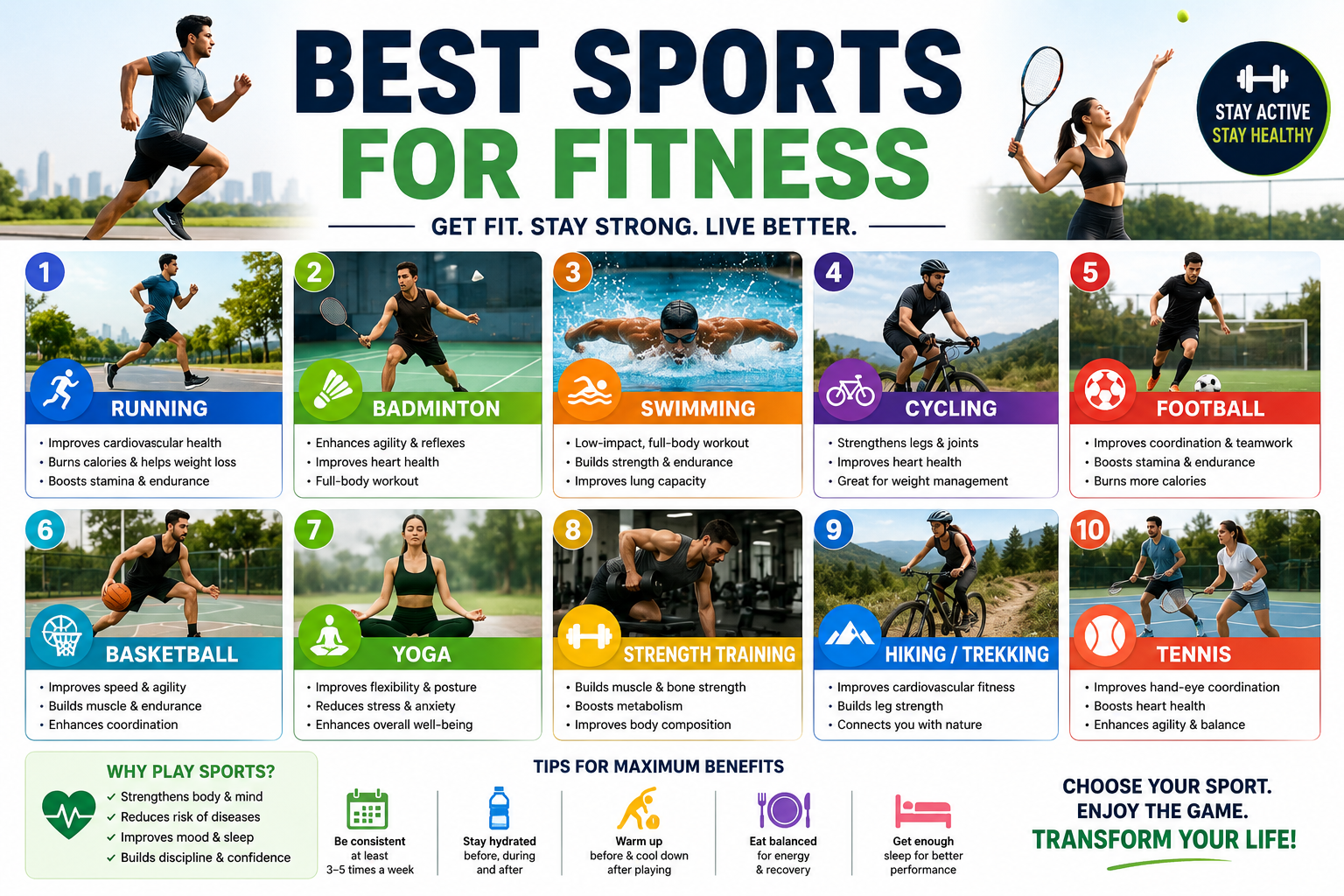
Different sports provide wildly different physiological benefits. Some activities are incredible for cardiovascular endurance, while others build explosive strength, agility, or flexibility. Selecting the right activity depends entirely on your personal fitness goals, your current physical condition, and what you genuinely enjoy doing. Below is a breakdown of the best sports for overall fitness, categorized by the specific benefits they provide.
Table of Contents
Cardiovascular Powerhouses
If your primary goal is to improve your heart health, burn calories, and build phenomenal lung capacity, these sports are top contenders.
Swimming
Swimming is widely considered one of the most effective full-body workouts available. Because water provides continuous resistance in every direction, every kick, pull, and push engages multiple muscle groups. It builds phenomenal cardiovascular endurance while remaining incredibly gentle on the joints. This makes it an ideal sport for people of all ages, including those recovering from injuries.
Cycling
Riding a bicycle, whether on steep mountain trails or long stretches of pavement, is a fantastic way to build lower body strength and aerobic capacity. Cycling intensely engages the quadriceps, hamstrings, calves, and glutes. Road cycling offers a steady, endurance-focused workout, while mountain biking requires sudden bursts of energy and sharp reflexes, adding a high-intensity interval training (HIIT) element to the ride.
Running and Track
Running is the most accessible sport on the planet. It requires minimal equipment and can be done almost anywhere. Long-distance running builds incredible stamina and strengthens the heart. Sprints and track-and-field events, on the other hand, develop fast-twitch muscle fibers, promoting explosive speed and power.
Strength and Agility Builders
Cardio is vital, but functional strength and agility keep your body resilient and capable. These sports require high levels of body control and muscle activation.
Gymnastics
Gymnastics demands absolute control over your body weight. The sport develops supreme core strength, flexibility, balance, and explosive power. While competitive gymnastics takes years to master, adult recreational classes focus on fundamental movements that significantly improve functional fitness and joint mobility.
Boxing and Martial Arts
Combat sports require peak physical conditioning. A typical boxing or mixed martial arts (MMA) training session involves jumping rope, hitting heavy bags, sparring, and intensive core work. These activities build immense upper-body endurance, rotational core strength, and rapid footwork. Furthermore, the focus required to anticipate an opponent’s moves provides an exceptional cognitive workout.
Rock Climbing
Rock climbing and bouldering have surged in popularity, and for good reason. Scaling a wall requires a unique combination of grip strength, upper body pulling power, and lower body stability. Climbers must also rely on problem-solving skills to navigate difficult routes, making it a highly rewarding mental and physical challenge.
Team Sports for Full-Body Conditioning
Team sports require constant movement, sudden changes in direction, and teamwork. The camaraderie also provides a massive boost to mental health and motivation.
Soccer
Soccer players are constantly in motion. A standard match involves a mix of slow jogging, walking, and all-out sprinting, which mimics the effects of interval training. Soccer significantly improves cardiovascular health, lower-body agility, and coordination.
Basketball
Basketball is a fast, high-intensity game. The constant jumping, lateral shuffling, and sprinting build tremendous lower-body power and cardiovascular endurance. The hand-eye coordination required for dribbling and shooting also keeps the nervous system sharp.
Rowing
Rowing is unique because it functions as both a team sport (in crews) and an individual pursuit. It is often mistaken for an upper-body workout, but proper rowing actually relies heavily on the legs and core to generate power. It provides a phenomenal, low-impact cardiovascular workout that engages nearly 85% of the body’s musculature.
Racket Sports for Reflexes and Coordination
Racket sports are highly engaging and require split-second decision-making, making them excellent for cognitive health and agility.
Tennis
Tennis involves continuous lateral movement, quick sprints, and forceful swings. This combination builds robust aerobic fitness and muscular endurance. The sport also requires high levels of flexibility to reach difficult shots, keeping the joints mobile.
Squash
Played in a small, enclosed court, squash is incredibly intense. The ball moves at blistering speeds, forcing players to react instantly. A single game of squash can burn hundreds of calories and provides one of the best cardiovascular workouts of any racket sport.
Frequently Asked Questions
What is the safest sport for older adults?
Swimming and cycling are highly recommended for older adults. Both are low-impact sports that effectively build cardiovascular health and muscle tone without putting undue stress on the knees, hips, or spine.
How often should I play a sport to see fitness results?
Consistency is the most important factor. Aim to engage in your chosen sport two to three times a week for at least 45 minutes to an hour. Combining this with a balanced diet and adequate rest will yield noticeable improvements in stamina and strength within a few weeks.
Can playing sports replace a gym routine?
Yes. Many sports provide a comprehensive workout that rivals or exceeds standard gym routines. However, some athletes choose to supplement their sport with targeted strength training in the gym to prevent muscle imbalances and reduce the risk of injury.
What is the most expensive sport to start?
Cycling and ice hockey tend to have higher barriers to entry due to the cost of equipment. Conversely, running, soccer, and basketball require very little financial investment to get started.
Find Your Game and Get Moving
Improving your fitness does not have to feel like a chore. By choosing a sport that aligns with your physical goals and personal interests, you transform exercise into an activity you actively look forward to. Evaluate what you want to achieve—whether that is building a stronger heart, increasing your flexibility, or simply making new friends—and pick a sport that delivers those results.
The best way to begin is simply to try something new. Look for local beginner leagues, community pools, or recreational clubs in your area. Grab a pair of athletic shoes, invite a friend to join you, and take the first step toward a healthier, more active lifestyle today.

