

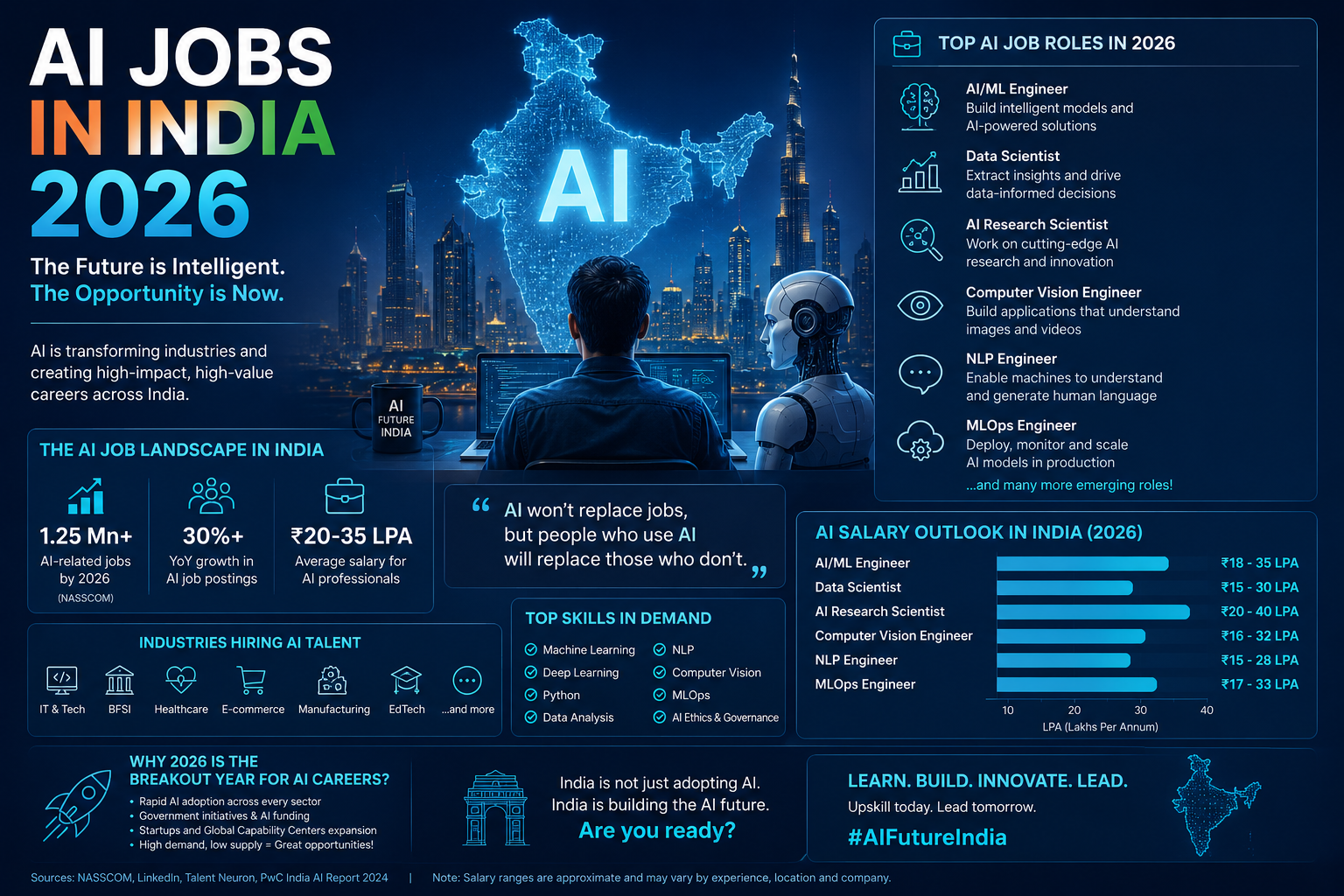
Artificial intelligence is rapidly reshaping the global workforce, and India stands at the forefront of this transformation. As one of the world’s largest technology hubs, the country is experiencing a massive shift in how industries operate, hire, and grow. By 2026, the landscape of AI jobs in India will look drastically different from what it is right now. New roles are emerging, existing jobs are evolving, and the demand for specialized skills is reaching unprecedented levels.
For students planning their careers, digital marketers looking to stay relevant, and business owners trying to scale, understanding this shift is critical. The integration of artificial intelligence into everyday business processes is no longer a distant possibility. It is happening across sectors like healthcare, finance, e-commerce, and digital marketing.
This guide explores the specific AI career opportunities that will dominate the Indian market by 2026. You will learn which skills are becoming essential, how different professionals can leverage this technology, and what steps you can take today to secure a competitive advantage in the future tech economy.
Table of Contents
The Evolution of India’s Tech Landscape
India has long been a global powerhouse for IT services and software development. Cities like Bengaluru, Hyderabad, and Pune have built robust ecosystems that support technological innovation. Now, these same hubs are transitioning their focus toward machine learning, automation, and advanced data analytics. Government initiatives and heavy investments from international tech giants are accelerating this growth.
By 2026, the focus will move from basic IT support to complex problem-solving using artificial intelligence. Companies are actively seeking professionals who can build, manage, and scale AI-driven solutions. This means a significant portion of the workforce will need to upskill. The transition creates a unique opportunity for proactive individuals ready to embrace new technologies.
Top AI Job Roles Emerging by 2026
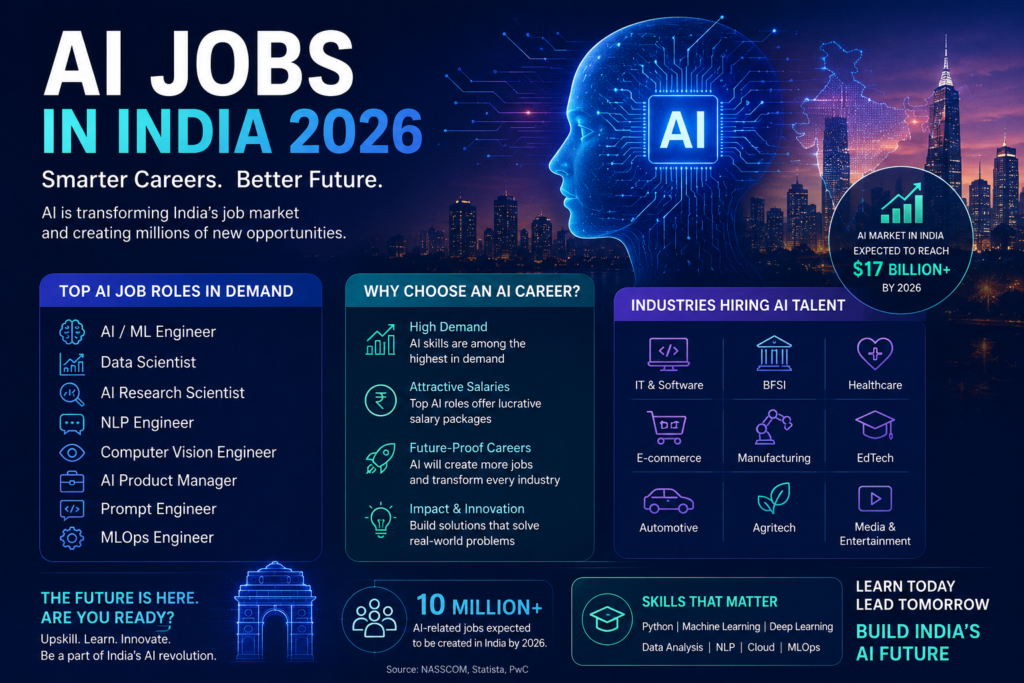
The definition of a tech job is expanding. While software engineering remains vital, the next few years will see a surge in specialized roles dedicated entirely to artificial intelligence.
AI Prompt Engineers and Content Strategists
Large language models have revolutionized how we generate text, code, and images. Prompt engineering is becoming a highly sought-after skill. These professionals understand how to communicate effectively with AI models to produce highly accurate and useful outputs. Digital marketers, in particular, will find this skill invaluable. By mastering prompt engineering, marketing teams can generate campaign concepts, write copy, and analyze consumer data faster than ever before.
Machine Learning Architects
Machine learning architects design the overarching systems that allow AI to function effectively within a business. They build the infrastructure that processes massive amounts of data, ensuring the algorithms can learn and adapt over time. As more Indian startups and enterprises adopt artificial intelligence, the demand for architects who can design scalable and secure machine learning environments will skyrocket.
AI Ethics and Compliance Officers
With great computing power comes significant responsibility. As AI systems make more decisions—from approving loans to filtering job applications—the potential for algorithmic bias increases. AI ethics officers will ensure that these systems operate fairly and transparently. They will navigate complex legal frameworks and ensure companies comply with evolving data protection regulations.
Data Translators
Business leaders often struggle to understand complex data science. Data translators bridge the gap between technical teams and executive management. They take the insights generated by artificial intelligence and turn them into actionable business strategies. For business owners, having a skilled data translator is essential for making informed decisions based on AI-generated analytics.
What This Means for Students Entering the Workforce
If you are a student evaluating your career options, the message is clear: technical literacy is non-negotiable. However, you do not necessarily need a degree in computer science to succeed in the AI economy.
The most successful graduates will be those who combine domain expertise with artificial intelligence skills. For example, an economics student who understands machine learning models for financial forecasting will be incredibly valuable. A healthcare administration student who knows how AI can optimize patient scheduling will stand out to employers.
Students should focus on building foundational knowledge in data analysis, Python programming, and statistical modeling. Countless online platforms offer certifications that hold significant weight in the Indian job market. Additionally, participating in open-source projects, hackathons, and internships will provide the practical experience employers demand.
How Digital Marketers Can Adapt to the AI Shift
Digital marketing is experiencing a profound disruption. Traditional methods of audience segmentation and A/B testing are being replaced by predictive analytics and hyper-personalization. For digital marketers in India, artificial intelligence is the ultimate productivity multiplier.
Marketers need to familiarize themselves with AI tools that automate repetitive tasks. This includes using machine learning for programmatic advertising, employing chatbots for immediate customer service, and utilizing advanced analytics to predict consumer behavior. By automating the heavy lifting, marketing professionals can dedicate more time to high-level strategy and creative direction.
The key to thriving in 2026 will be human-AI collaboration. Marketers who refuse to adapt risk obsolescence, while those who integrate these tools will deliver significantly higher returns on investment for their clients or employers.
Why Business Owners Need to Invest in AI Talent Now
For business owners and entrepreneurs in India, the AI revolution is a critical inflection point. Waiting until 2026 to adopt these technologies will put your company at a severe competitive disadvantage. The time to build an AI-capable team is right now.
Implementing artificial intelligence can drastically reduce operational costs, optimize supply chains, and improve customer satisfaction. However, technology alone is not enough. You need the right talent to deploy it effectively. This means investing in upskilling your current employees and adjusting your hiring strategies to attract top-tier tech talent.
Start by identifying the bottlenecks in your business operations. Can customer queries be handled by an intelligent virtual assistant? Can inventory management be optimized using predictive algorithms? Once you identify the use cases, hire professionals who specialize in those specific applications. Fostering a culture of continuous learning will ensure your workforce remains agile and capable of leveraging new advancements.
Frequently Asked Questions (FAQ)
Will artificial intelligence replace my current job?
Artificial intelligence is more likely to transform your job rather than replace it entirely. Routine, repetitive tasks will be automated, freeing up your time for strategic and creative work. Professionals who learn to use AI tools effectively will replace those who do not.
What are the best courses to learn AI in India?
Several premier institutions, including the IITs and IIITs, offer specialized programs in machine learning and data science. Additionally, online platforms like Coursera, edX, and local ed-tech companies provide comprehensive, industry-recognized certifications that are highly valued by Indian employers.
Do I need a coding background to work in AI?
Not necessarily. While roles like Machine Learning Architect require deep programming knowledge, other roles like AI Ethics Officer, Prompt Engineer, or Data Translator focus more on strategy, compliance, and communication. A basic understanding of how the technology works is often sufficient for these non-technical roles.
How is the salary progression for AI jobs in India?
Because the demand for skilled professionals heavily outweighs the supply, compensation for these roles is highly competitive. Entry-level positions offer lucrative starting packages, and salaries scale rapidly with experience, especially for niche skills like deep learning and natural language processing.
Preparing for the Next Era of Tech
The trajectory of AI jobs in India points toward massive growth and specialization. By 2026, artificial intelligence will be woven into the fabric of the Indian economy. The transition presents challenges, but the opportunities for career advancement and business growth are unmatched.
Success in this new landscape requires continuous education and a willingness to adapt. Students must diversify their skill sets, digital marketers must embrace automation, and business owners must invest in forward-thinking talent. The future belongs to those who actively prepare for it today. Start exploring the tools, taking the courses, and building the strategies that will secure your place in India’s next technological revolution.

