

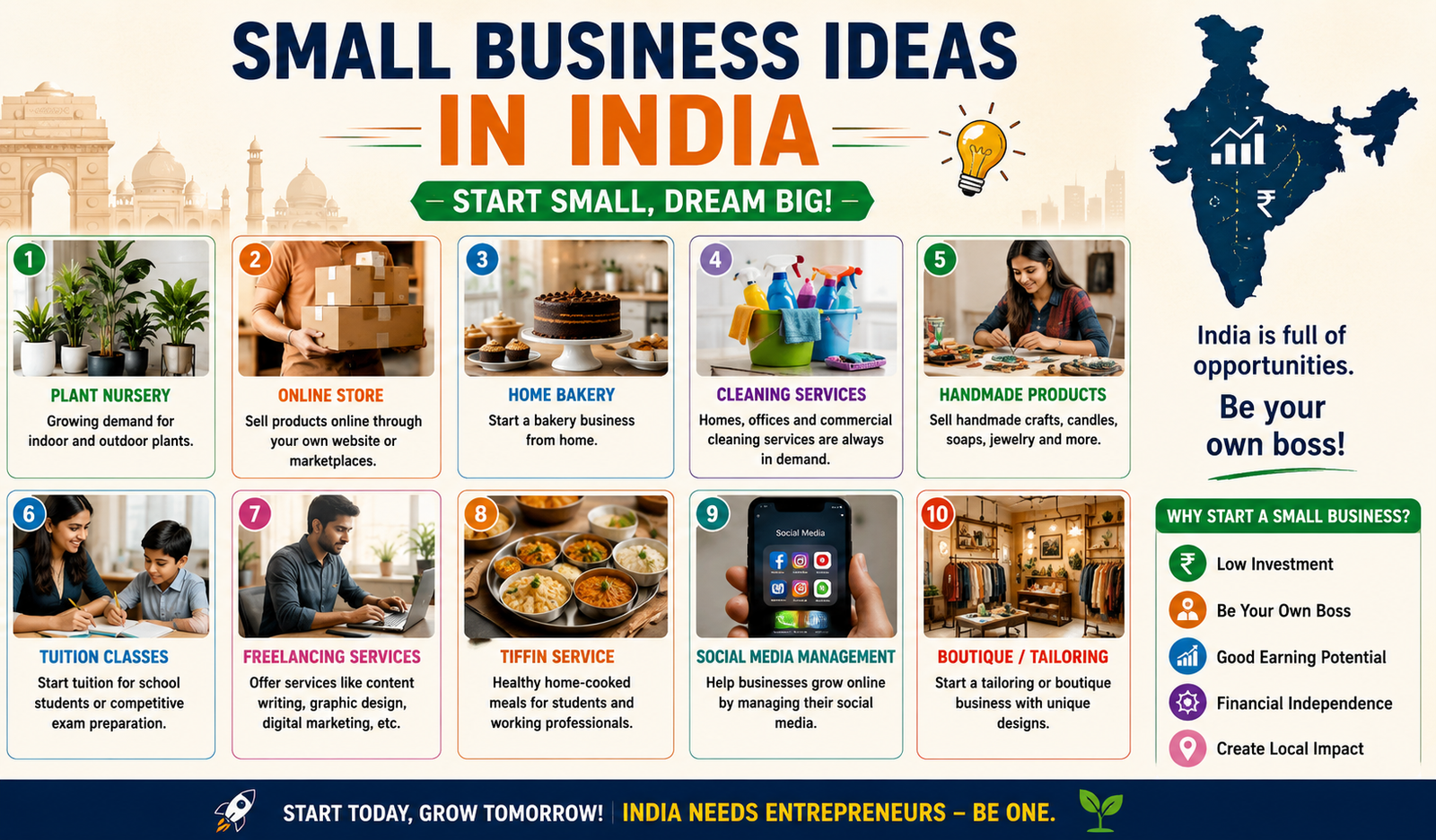
India is experiencing a massive wave of entrepreneurial energy. The combination of a rapidly growing economy, widespread internet penetration, and a young, ambitious workforce has created a fertile environment for new ventures. Government initiatives like Make in India and Digital India have further simplified the process of launching a business, removing many traditional barriers that once discouraged founders.
Starting a business here does not require massive capital or a sprawling corporate office. Many successful Indian startups began in small apartments or local garages, driven by founders who identified a specific problem and offered a practical solution. The key is understanding the local market, adapting to regional preferences, and utilizing the digital tools available at your fingertips.
Finding the right concept is often the hardest part of the journey. You need a venture that aligns with your skills, fits your budget, and has a clear target audience. The Indian market is incredibly diverse, meaning a product or service that thrives in a tier-one city like Bengaluru or Mumbai might need a completely different approach in a tier-two or tier-three town.
This guide explores a comprehensive list of viable small business ideas in India across various sectors. By reviewing these opportunities, you can identify a path that matches your expertise and taps into the current demands of the Indian consumer base.
Table of Contents
High-Demand Service-Based Businesses
Service businesses are incredibly popular because they typically require low initial investment. Your primary asset is your time, skill, and ability to deliver quality results to clients.
Digital Marketing Agency
Every local shop, restaurant, and independent professional now understands the importance of an online presence. However, most business owners lack the time or technical knowledge to manage their social media, run Google Ads, or optimize their website for search engines. Starting a digital marketing agency allows you to bridge this gap. You can begin as a solo freelancer offering social media management and gradually expand by hiring specialists in SEO, pay-per-click advertising, and graphic design. The overhead costs are minimal, requiring little more than a good laptop, reliable internet, and a few software subscriptions.
Virtual Assistant Services
As startups and established companies adopt remote work models, the demand for virtual assistants has skyrocketed. Executives and small business owners frequently need help managing emails, scheduling appointments, handling customer inquiries, and performing basic bookkeeping. If you have strong organizational and communication skills, you can offer these services from your home. You can package your offerings into hourly rates or monthly retainers, providing a steady and predictable income stream.
Freelance Content Creation and Copywriting
Brands are constantly hungry for high-quality content to engage their audiences. This includes website copy, blog posts, video scripts, and social media captions. If you have a way with words, freelance copywriting is a highly lucrative small business idea. You can specialize in specific niches, such as finance, healthcare, or technology, which allows you to charge premium rates for your industry expertise. Platforms like LinkedIn are excellent for networking with potential clients and showcasing your portfolio.
Retail and E-commerce Opportunities
The e-commerce sector in India is booming, driven by increased smartphone usage and improved logistics networks. You no longer need a physical storefront to run a successful retail business.
Dropshipping and Print-on-Demand
Dropshipping allows you to sell products without holding any inventory. When a customer places an order on your website, a third-party supplier ships the item directly to them. Print-on-demand is a similar model where you design custom graphics for t-shirts, mugs, and phone cases, and a partner company prints and ships them as orders come in. Both models require very low upfront capital. Your main focus will be building an attractive e-commerce website using platforms like Shopify and driving targeted traffic through social media marketing.
Organic and Health Food Store
Health consciousness is rising rapidly across India. Consumers are actively seeking organic produce, gluten-free snacks, cold-pressed juices, and vegan alternatives. You can start a business catering to this demographic by sourcing high-quality organic products from local farmers and ethical suppliers. You might choose to open a small boutique store in a residential neighborhood or operate entirely online, delivering fresh, healthy goods directly to customers’ doorsteps.
Customized Gifting Services
People love personalized gifts for birthdays, anniversaries, weddings, and corporate events. A customized gifting business involves curating special hampers filled with items like artisanal chocolates, engraved accessories, premium teas, and handmade soaps. Success in this niche depends heavily on aesthetic presentation and reliable delivery. By marketing your services heavily on platforms like Instagram and Pinterest, you can build a loyal customer base that returns for every major celebration.
Tech and IT Solutions
India has long been a global IT hub. Local businesses are now heavily investing in digital infrastructure, creating numerous opportunities for tech-savvy entrepreneurs.
App and Web Development
A responsive website and a user-friendly mobile app are essential for modern businesses. If you possess coding skills, starting a web and app development agency is a highly profitable venture. You can cater to local restaurants wanting a proprietary delivery app, retail stores needing an e-commerce platform, or fitness trainers looking to launch online coaching programs. Building a strong portfolio of diverse projects will help you attract higher-paying corporate clients over time.
IT Support and Cybersecurity Consulting
Small and medium enterprises (SMEs) are increasingly vulnerable to data breaches and cyberattacks, yet they often cannot afford full-time, in-house IT departments. You can offer outsourced IT support and cybersecurity consulting. Services might include setting up secure employee networks, managing cloud data backups, performing vulnerability assessments, and providing emergency technical support. Trust and reliability are the most critical factors in growing this type of business.
Food and Beverage Ventures
The food industry in India is evergreen. Despite heavy competition, unique concepts with high-quality execution consistently find success.
Cloud Kitchens and Tiffin Services
A cloud kitchen, or ghost kitchen, is a commercial cooking facility that prepares food exclusively for delivery, with no dine-in space. This model drastically reduces rent and staffing costs. You can partner with delivery aggregators like Zomato and Swiggy to reach a massive audience. Alternatively, starting a traditional tiffin service targets students and corporate professionals looking for healthy, home-cooked daily meals. Consistency in taste, hygiene, and timely delivery will make or break these businesses.
Specialty Coffee and Tea Shops
While traditional chai stalls are ubiquitous, there is a growing market for specialty coffee and premium tea experiences. Young professionals and students are looking for comfortable spaces to work, socialize, and enjoy high-quality beverages. Opening a boutique café that sources single-origin coffee beans or rare tea blends can attract a dedicated following. Focusing on interior design, offering free Wi-Fi, and hosting small community events can turn your café into a local hotspot.
Education and Training
The demand for quality education and skill enhancement is a constant in India. Parents are willing to invest heavily in their children’s futures, and professionals are eager to upskill.
Online Tutoring and E-Learning Platforms
If you have expertise in a particular subject—ranging from high school mathematics to advanced foreign languages—you can start an online tutoring business. Tools like Zoom and interactive whiteboards make it easy to conduct engaging classes from anywhere. As your student base grows, you can hire additional tutors and eventually build a comprehensive e-learning platform offering recorded courses and certification programs.
Skill Development Workshops
Traditional university degrees do not always equip students with the practical skills needed in the modern workforce. You can host workshops teaching highly sought-after skills like data analytics, graphic design, public speaking, or digital marketing. These can be conducted as weekend bootcamps in rented co-working spaces or as comprehensive online cohorts. Partnering with local colleges to offer these workshops directly to their students is an excellent acquisition strategy.
Essential Steps to Start Your Business in India
Having a great idea is only the beginning. Transforming that concept into a profitable reality requires careful planning and execution.
Market Research and Business Planning
Before spending any money, validate your idea. Talk to potential customers, analyze your competitors, and determine exactly what makes your offering unique. Document your findings in a comprehensive business plan. This document should outline your target audience, pricing strategy, marketing plan, and financial projections for the first two years. A solid business plan acts as a roadmap and is essential if you intend to seek outside funding.
Legal Registration and Compliance
Operating legally protects you from future liabilities. Depending on the scale and nature of your business, you might register as a Sole Proprietorship, Partnership, Limited Liability Partnership (LLP), or Private Limited Company. You will also need to apply for a Permanent Account Number (PAN) for the business, register for Goods and Services Tax (GST) if your turnover exceeds the threshold, and obtain any specific industry licenses, such as an FSSAI license for food businesses.
Funding and Financial Management
Determine exactly how much capital you need to launch and sustain operations until the business becomes profitable. Funding can come from personal savings, loans from family, bank loans, or government schemes like the Mudra Yojana. Once operational, strict financial management is crucial. Separate your personal and business finances immediately, use accounting software to track every expense, and always keep a reserve fund for unexpected emergencies.
Frequently Asked Questions (FAQ)
What is the most profitable small business in India?
Profitability varies widely based on location, execution, and market trends. However, service-based businesses like digital marketing, web development, and freelance consulting typically offer the highest profit margins because they require very low initial capital and have minimal overhead costs.
How much money do I need to start a small business in India?
The required capital depends entirely on the business model. A freelance writing or virtual assistant business can be started for almost zero cost if you already own a computer. Conversely, opening a specialty café or a retail store might require an initial investment ranging from ₹5 Lakhs to ₹20 Lakhs to cover rent, equipment, and initial inventory.
Can I start a business while working a full-time job?
Yes, many entrepreneurs begin their businesses as side hustles. E-commerce dropshipping, online tutoring, and freelance design are excellent options that allow you to work on evenings and weekends. Once the side business generates a consistent income that rivals your salary, you can consider transitioning to it full-time.
What are the best government schemes for small businesses in India?
The Indian government offers several schemes to support small businesses. The Pradhan Mantri Mudra Yojana provides loans up to ₹10 Lakhs to non-corporate, non-farm small and micro enterprises. The Stand-Up India scheme facilitates bank loans to women and SC/ST entrepreneurs. Additionally, the Startup India initiative offers tax exemptions and simplified compliance processes for recognized startups.
Take the First Step Toward Your Entrepreneurial Dream
The landscape for small business ideas in India is vast and highly accommodating to those willing to put in the effort. From tech-driven e-commerce ventures to highly localized service offerings, the opportunities are limited only by your dedication and adaptability. Success does not require a flawless launch; it requires a willingness to start, learn from your customers, and pivot when necessary.
Review the skills you currently possess, assess the resources you have available, and select an idea that excites you. Conduct your market research, draft a basic business plan, and take that crucial first step. The journey of entrepreneurship is challenging, but building a business that creates value, generates wealth, and grants you professional independence is entirely within your reach.

