

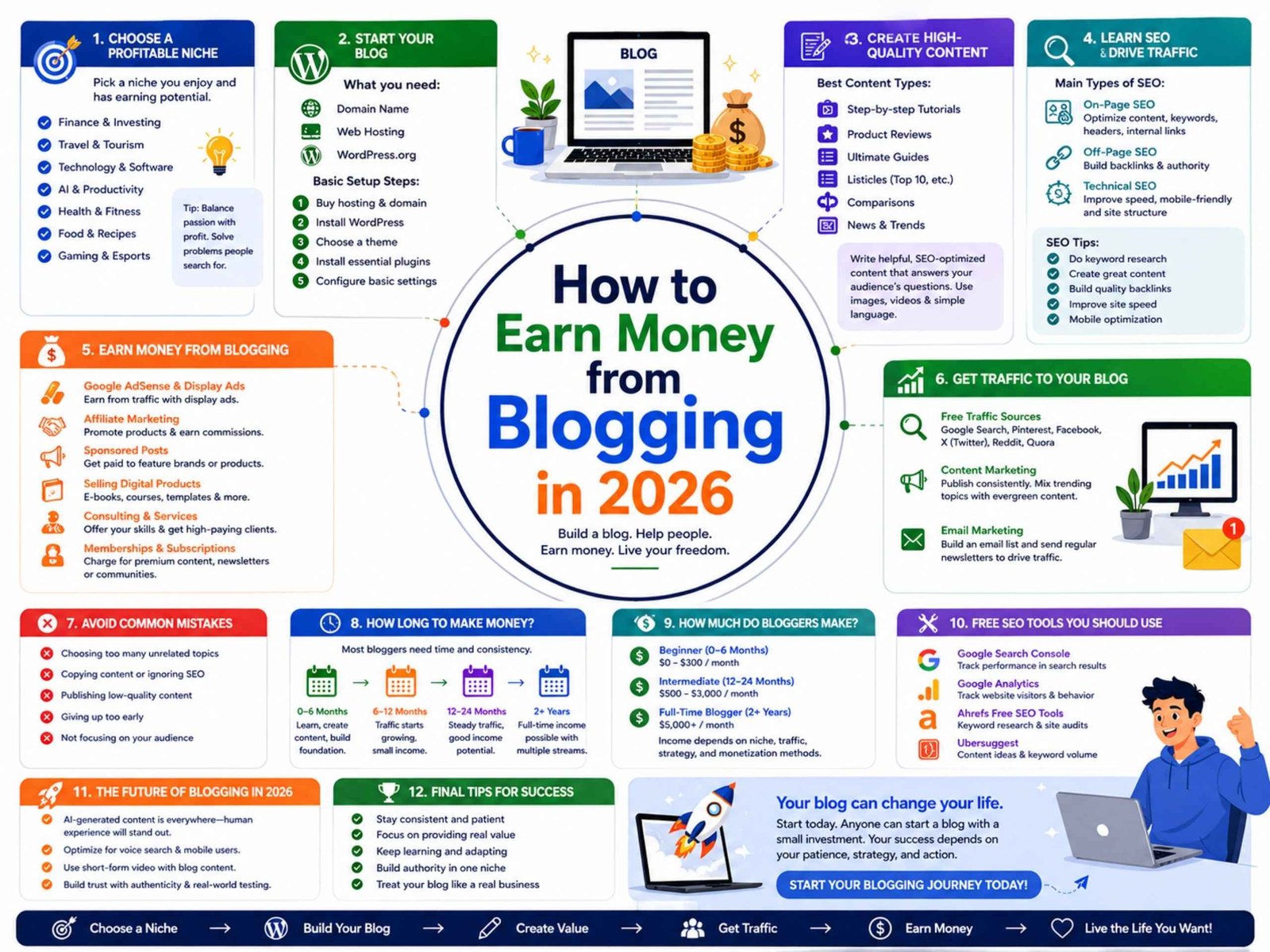
You can earn money blogging by choosing a profitable niche, setting up a self-hosted WordPress website, publishing SEO-optimized content, and driving traffic through search engines. Bloggers monetize their traffic using display ads, affiliate marketing, sponsored posts, digital products, and consulting services. Reaching a full-time income typically requires consistent publishing over 12 to 24 months.
Blogging remains one of the most accessible ways to build an online business and earn money from blogging. At its core, a blog is a regularly updated website written in a conversational or informal style. While the digital landscape has shifted drastically over the past decade, creating written content that answers specific user queries is still highly profitable in 2026.
Starting a blog offers remarkable flexibility. You control your schedule, own your platform, and have unlimited income potential. Best of all, anyone with a computer and an internet connection can launch a blog. You do not need a computer science degree or professional writing credentials to build a successful website.
Table of Contents
How do you choose a profitable blog niche?
A niche is the specific topic your blog will cover. Selecting the right focus determines your audience and your monetization potential.
What are the most popular blogging niches?
Certain topics consistently attract high search volumes and lucrative advertisers. The most profitable niches include:
- Finance and investing
- Travel and local tourism (like Japan lifestyle and travel)
- Technology and software
- Artificial Intelligence (AI) and productivity tools
- Health, wellness, and fitness
- Video gaming and esports
- Food and recipe creation
How do you pick the right niche?
Do not just pick a topic because it pays well. Balance passion with profit. You will need to write hundreds of articles, so select a subject you genuinely enjoy. Analyze the search demand using SEO tools to ensure people are actually looking for this information. Finally, check the competition. If established media giants dominate the first page of Google, consider narrowing your focus to a sub-niche with higher long-term potential.
How do you start your first blog?
Launching a blog requires a small upfront investment. Avoid free blogging platforms, as they severely limit your ability to place ads and earn money.
What do you need to start?
You need three core elements: a domain name (your website address), web hosting (where your site lives on the internet), and a Content Management System (CMS). Industry experts overwhelmingly recommend WordPress.org as the best CMS for bloggers because of its flexibility and ownership rights.
What are the basic setup steps?
First, buy a hosting plan from a reputable provider and register your domain name. Next, install WordPress through your hosting dashboard. Once WordPress is active, choose a professional, fast-loading theme to dictate your site’s appearance. Finally, install essential plugins for security, caching, and search engine optimization.
What types of high-quality content should you create?
Your content must provide clear, actionable value to readers.
What are the best types of blog content?
Different queries require different formats. Successful bloggers mix several content types:
- Step-by-step tutorials
- In-depth product reviews
- Comprehensive ultimate guides
- Listicles (e.g., “Top 10 tools for X”)
- Comparison articles (e.g., “Product A vs Product B”)
- Industry news and trend analysis
How do you write great content?
Start by integrating SEO keywords naturally into your headings and paragraphs. Write genuinely helpful content that directly answers the user’s search intent. Break up large walls of text with relevant images, infographics, and embedded videos. Use short paragraphs and simple vocabulary to make the content easy to read on mobile devices.
How do you learn SEO to drive blog traffic?
Search Engine Optimization (SEO) is the process of improving your website to increase its visibility in Google and other search engines.
What are the main types of SEO?
SEO falls into three distinct categories. On-page SEO involves optimizing individual articles with keywords, proper headers, and formatting. Off-page SEO focuses on building authority through backlinks from other websites. Technical SEO ensures your website loads quickly, is mobile-friendly, and can be easily crawled by search engine bots.
What are the most important SEO tips?
Conduct thorough keyword research before writing any article to ensure demand exists. Add internal links to connect your related blog posts, which helps readers and search engines navigate your site. Focus on earning high-quality backlinks from reputable sites in your industry. Finally, prioritize fast website speed and perfect mobile optimization.
What free SEO tools should you use?
- Google Search Console (for tracking search performance)
- Google Analytics (for tracking user behavior)
- Ahrefs Free SEO Tools (for keyword research and site audits)
- Ubersuggest (for content ideas and keyword volume)
What are the best ways to earn money from blogging?
Once you have consistent traffic, you can monetize your audience through multiple streams.
Google AdSense and display ads
Display ads generate revenue based on how many people view or click them. Beginners often start with Google AdSense, but as your traffic grows, you can join premium ad networks like Mediavine or Raptive, which pay significantly higher rates.
Affiliate marketing
Affiliate marketing involves promoting a company’s products and earning a commission for every sale made through your unique link. The Amazon Associates program is a popular starting point. Software and web hosting affiliate programs often offer the highest payouts.
Sponsored posts
Companies will pay you to write articles featuring their products or services. As your blog gains authority, brands will reach out directly to purchase sponsored content.
Selling digital products
Creating your own digital products allows you to keep 100% of the profits. Bloggers frequently sell e-books, online courses, printable templates, and digital planners.
Offering consulting and services
Use your blog as a portfolio to attract high-paying clients. You can offer freelance SEO services, content writing, or web design directly to your readers.
Memberships and subscriptions
Create a paywall for your most valuable content. You can charge readers a monthly fee for access to premium articles, exclusive newsletters, or paid community forums.
How do you get traffic to your new blog?
A beautiful blog earns nothing without visitors. You need a proactive traffic strategy.
What are the best free traffic sources?
Google Search is the most reliable source of passive traffic. However, you should also leverage platforms like Pinterest, Facebook, X (formerly Twitter), Reddit, and Quora to drive immediate visits while waiting for your SEO efforts to kick in.
How does content marketing work?
Maintain a consistent posting schedule to build trust with search engines and readers. Balance your content calendar between trending topics that generate quick spikes in traffic and evergreen articles that provide steady, year-round visits.
Why is email marketing important?
You do not own your social media followers, but you do own your email list. Build an email list from day one by offering a free download in exchange for a reader’s email address. Send a regular newsletter to drive subscribers back to your latest blog posts.
What are common blogging mistakes to avoid?
Many beginners fail because they make avoidable errors. Avoid choosing too many unrelated topics, which confuses search engines and readers. Never copy content from other websites; plagiarism will result in severe search engine penalties. Do not ignore SEO, as writing great content without keyword research rarely works. Finally, avoid publishing low-quality, rushed articles, and do not give up too early.
How long does it take to make money blogging?
Blogging is not a get-rich-quick scheme. Set realistic expectations before you buy your domain.
Most beginners will not see significant traffic or income for the first six to nine months. Google takes time to trust new websites. Consistency is the most crucial factor during this phase. Bloggers who publish two to three high-quality articles per week often see their traffic compound aggressively after the one-year mark.
How much money do bloggers actually make?
Income varies wildly based on niche, traffic, and monetization methods.
- Beginner Blogger (Months 1–6): $0 to $300 per month. Income usually trickles in from minimal affiliate sales or basic display ads.
- Intermediate Blogger (Months 12–24): $500 to $3,000 per month. At this stage, premium ad networks and consistent affiliate conversions drive revenue.
- Full-Time Blogger (Years 2+): $5,000+ per month. Top-tier bloggers diversify their income with digital products, high-ticket sponsorships, and courses.
What is the future of blogging in 2026?
The blogging industry is evolving rapidly. AI-generated content is flooding the internet, making authentic, human-driven experiences more valuable than ever. Readers want personal stories, unique case studies, and real-world testing. Additionally, bloggers must optimize their content for voice search devices and integrate short-form video content directly into their written posts to keep users engaged.
What are the final tips for blogging success?
Stay relentlessly consistent with your publishing schedule. Always focus on providing actual value rather than just writing for search engines. Continuously learn new SEO tactics as algorithms change. Build deep topical authority in one specific niche before expanding into others. Most importantly, treat your blog like a real business from day one, tracking your expenses and strategically planning your content.
Start your profitable blogging journey today
Blogging remains a powerful, long-term income source for those willing to put in the initial effort. Anyone can launch a professional website with a very low financial investment. Your success ultimately depends on your patience, your content strategy, and your willingness to adapt to new technologies. Choose your niche, secure your domain, and start publishing today.

