

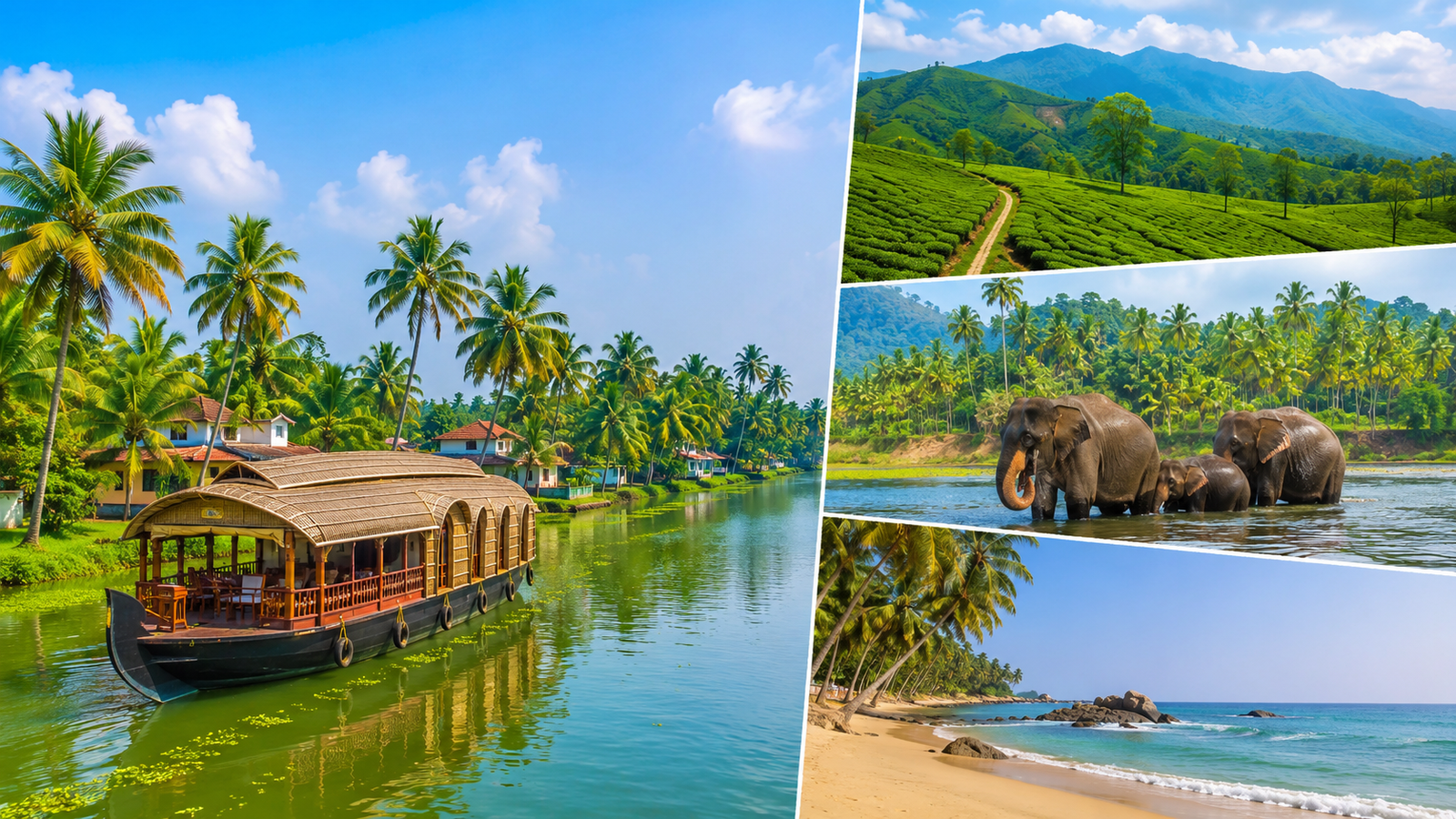
7-Day Kerala Itinerary Covering Kochi, Munnar, Thekkady, Alleppey and Kovalam
A 7-day Kerala itinerary typically covers Kochi, Munnar, Thekkady, Alleppey, and Kovalam. This guide walks you through each destination day by day, including what to see, where to stay, and practical tips for planning your trip in 2026.
Kerala is one of India’s most visited states—and for good reason. Ranked among the top 10 travel destinations in Asia by Lonely Planet, this narrow coastal state packs an extraordinary amount of diversity into a relatively compact geography. Misty tea gardens, tiger reserves, ancient spice markets, and 580 kilometers of Arabian Sea coastline all coexist within a few hours’ drive of each other.
Seven days is the sweet spot for first-time visitors. Long enough to experience Kerala’s major highlights without rushing, a week-long trip lets you slow down and actually absorb the place—whether that means a sunrise boat ride through the backwaters or an Ayurvedic massage in a centuries-old treatment center.
This guide is built around a logical, road-trip-style route that minimizes backtracking and maximizes variety. Each day is mapped out with specific recommendations, practical logistics, and insider tips drawn from the most up-to-date travel information available for 2026. Whether you’re traveling solo, as a couple, or with family, this itinerary adapts easily to your pace and interests.
Day 1–2: What to See and Do in Kochi (Cochin), Kerala’s Cultural Capital
Kochi is the natural starting point for most Kerala itineraries, thanks to its well-connected international airport. But beyond its logistical convenience, Kochi genuinely rewards exploration.
Fort Kochi, the historic peninsula on the western edge of the city, is where most visitors spend their first morning. The iconic Chinese fishing nets—cantilever fishing structures introduced to the Malabar Coast in the 14th century by traders from the court of Kublai Khan—are best photographed at sunrise. Nearby, St. Francis Church (built in 1503) is considered the oldest European church in India and once held the remains of explorer Vasco da Gama.
Spend your first afternoon at the Kerala Kathakali Centre, where you can watch artists apply elaborate facial makeup before a live Kathakali performance. This classical dance form, native to Kerala, combines intricate hand gestures, facial expressions, and costumes that take performers years to master.
On Day 2, explore Mattancherry, famous for the Mattancherry Palace (also called the Dutch Palace) and the Jewish Quarter, known as Jew Town. The palace, originally built by the Portuguese in 1555 and later renovated by the Dutch, houses remarkable Kerala murals depicting scenes from the Ramayana. The surrounding streets are lined with spice merchants, antique dealers, and independent galleries that reflect Kochi’s centuries-old trading heritage.
For dinner on either evening, the Fort Kochi waterfront area offers excellent seafood. The Malabar House restaurant is a consistently well-reviewed option for upscale Kerala cuisine.
Where to stay: Fort Kochi has a range of heritage guesthouses and boutique hotels within walking distance of the main sights. For mid-range options, the Forte Kochi Hotel and Old Harbour Hotel both receive strong reviews on booking platforms in 2026.
Day 3: How to Get from Kochi to Munnar and What to Expect on Arrival
The drive from Kochi to Munnar takes approximately 3.5 to 4.5 hours, covering around 130 kilometers through increasingly dramatic hill terrain. Hiring a private driver or renting a self-drive car from Kochi is the most practical option; public buses do operate on this route but involve transfers and significantly longer travel times.
Munnar sits at an altitude of roughly 1,600 meters above sea level in the Western Ghats—a UNESCO World Heritage Site recognized for its extraordinary biodiversity. The region produces some of India’s finest tea, and the Tata Tea Museum in Munnar town offers an informative overview of the industry’s history in the region, from British colonial plantation beginnings through to modern production.
Arrive in Munnar by early afternoon to give yourself time to settle in and take an evening walk through the tea estates. The air is noticeably cooler here than on the coast, so pack a light layer.
Day 4: The Best Things to Do in Munnar for Nature and Wildlife Lovers
Munnar rewards early risers. Set an alarm for 5:30 AM and head to the Top Station viewpoint, located 32 kilometers from Munnar town near the Tamil Nadu border, to catch the sunrise over a sea of clouds. The road winds through dense tea plantations and offers several photography stops along the way.
Later in the morning, visit Eravikulam National Park, home to the endangered Nilgiri Tahr—a mountain ungulate found only in the Western Ghats. According to the Kerala Forest Department, Eravikulam’s Tahr population has stabilized at around 900 individuals in recent years, making this one of the most successful wildlife conservation efforts in South India. Entry to the park requires advance booking through the official Kerala Forest Department portal, particularly during peak season (December–March).
In the afternoon, the Mattupetty Dam and Indo-Swiss Farm offer a quieter, scenic counterpoint to the morning’s activity. The dam’s reservoir reflects the surrounding hills beautifully in clear weather.
Day 5: How to Plan Your Thekkady Visit for the Best Periyar Wildlife Experience
The drive from Munnar to Thekkady takes roughly 3 hours through winding mountain roads. Thekkady is most famous for Periyar Wildlife Sanctuary, one of India’s most biodiverse protected areas, covering 925 square kilometers of tropical forest.
The Periyar Lake boat cruise, operated by the Kerala Tourism Development Corporation, is the signature activity here. Morning departures (typically at 7:30 AM and 9:30 AM) offer the best chances of wildlife sightings—elephants, sambar deer, and otters are regularly spotted along the shoreline. Book tickets in advance through the KTDC website.
Thekkady is also a hub for spice plantation tours. Kerala produces black pepper, cardamom, cinnamon, and vanilla, and a guided walk through a working spice garden gives genuine insight into how these crops are cultivated and harvested. The Periyar Spice Garden and Abraham’s Spice Garden are both well-regarded options near the main town.
In the evening, consider attending a Kalaripayattu demonstration—this ancient Indian martial art, believed by many historians to be the predecessor of several Asian martial traditions, is particularly prominent in Kerala. Several performance centers near Thekkady offer nightly shows.
Day 6: Everything You Need to Know About the Kerala Backwaters and an Alleppey Houseboat Stay
Alleppey (officially Alappuzha) lies about 3.5 hours west of Thekkady and serves as the gateway to Kerala’s legendary backwater network—a system of interconnected lakes, rivers, lagoons, and canals that stretches across the state’s low-lying coastal plain.
The backwaters are best experienced on a traditional kettuvallam, a handcrafted wooden houseboat originally designed to transport rice and spices. Modern houseboats have been adapted for tourism and range from basic two-bedroom vessels to luxury floating suites with air conditioning, private sun decks, and gourmet chefs. Prices vary widely depending on the season and boat class; a mid-range overnight houseboat for two typically costs between ₹8,000 and ₹15,000 in 2026.
Houseboats generally depart from Alleppey boat jetty in the late morning and return by 9 AM the following day. The route typically winds through the Vembanad Lake, Punnamada Lake, and smaller village canals, passing rice paddies, coconut groves, and small settlements that have remained relatively unchanged for generations.
For those who prefer not to stay overnight on the water, half-day shikara (wooden canoe) tours through the narrow village canals offer a more intimate alternative and are often regarded as the more authentic backwater experience.
Day 7: Why Kovalam Beach Is the Perfect Way to End Your Kerala Itinerary
From Alleppey, Kovalam is a 3.5- to 4-hour drive south, passing through Thiruvananthapuram (Trivandrum), Kerala’s state capital. Kovalam is a collection of three crescent-shaped beaches separated by rocky headlands, and it has been a popular destination since the 1930s when the Maharaja of Travancore made it his personal retreat.
Lighthouse Beach is the most developed and busiest of the three, lined with restaurants, ayurvedic treatment centers, and guesthouses. Hawah Beach (also called Eve’s Beach) and Samudra Beach are quieter options a short walk to the north.
Use your final day to decompress—swim, browse for handicrafts at the local market stalls, or book a genuine Ayurvedic massage. Kerala is the home of Ayurveda, and even a single 60-minute Abhyanga (oil massage) treatment at a reputable center provides a meaningful introduction to this 3,000-year-old healing tradition. The Somatheeram Ayurvedic Health Resort, located near Kovalam, is internationally recognized as a leading Ayurveda destination.
If your return flight departs from Trivandrum International Airport, Kovalam is only 16 kilometers away—making it a logical and relaxing final stop before heading home.
Practical Tips for Planning a Kerala Trip in 2026
Best time to visit Kerala: The peak tourist season runs from October to March, when temperatures are mild and rainfall is minimal. The Southwest Monsoon (June–August) transforms Kerala into a dramatic landscape of heavy rain and flooding, though this is also when Ayurvedic treatments are considered most effective and houseboat prices drop significantly. Avoid April and May if you’re heat-sensitive—temperatures in lowland areas can exceed 38°C.
Getting around: Kerala’s roads are generally well-maintained between major tourist destinations. Hiring a private car and driver for the full 7-day itinerary is the most comfortable and time-efficient option. Platforms like Savaari and Kerala Tourism-approved operators offer fixed rates for multi-day itineraries.
Visa requirements: Most international visitors require an e-Visa to enter India. The Indian e-Visa portal processes applications in 72–96 hours. Check current requirements for your nationality before booking.
Currency and payments: The Indian Rupee (INR) is the local currency. UPI-based digital payments are now widely accepted across Kerala, including at many roadside stalls and small restaurants, but carrying some cash for remote areas and boat jetties is still advisable.
Is 7 Days Enough for Kerala? Final Thoughts on Making the Most of Your Trip
Seven days gives you a genuine experience of Kerala’s range—urban culture, highland nature, wildlife, backwaters, and beach—without exhausting you with constant movement. The itinerary outlined above builds in logical stopping points that allow for spontaneous detours: a longer hike near Munnar, an extra night on the houseboat, or an afternoon lost in Kochi’s art galleries.
The key is to resist the temptation to cram in every possible attraction. Kerala’s appeal lies as much in its pace and texture as in its specific sights. A slow morning over a Kerala sadhya (traditional vegetarian feast), a conversation with a spice farmer, or watching the sun set over the Arabian Sea from Kovalam’s lighthouse—these moments don’t appear on any highlight reel, but they’re what most travelers remember longest.
Start planning early, particularly if you’re visiting between December and February. Houseboats and heritage hotels in Fort Kochi book up weeks in advance during the peak season, and Eravikulam National Park closes periodically for the Nilgiri Tahr calving season (January–March).
Frequently Asked Questions About a 7-Day Kerala Itinerary
What is the best 7-day Kerala itinerary for first-time visitors?
The most recommended route for first-time visitors covers Kochi (2 days), Munnar (2 days), Thekkady (1 day), Alleppey (1 day), and Kovalam (1 day). This circuit offers a balanced mix of culture, nature, wildlife, backwaters, and beach without excessive travel time between destinations.
How much does a 7-day trip to Kerala cost in 2026?
A mid-range budget for a 7-day Kerala trip typically falls between ₹40,000 and ₹80,000 per person (approximately USD $480–$960), including accommodation, meals, transportation, and activities. Luxury houseboat stays and premium hill resorts can push this higher.
Is Kerala safe for solo female travelers?
Kerala consistently ranks among India’s safer states for solo female travelers. The state has relatively high female literacy and workforce participation rates, and tourist areas like Fort Kochi and Alleppey are accustomed to international visitors. Standard travel precautions apply, particularly when traveling after dark in unfamiliar areas.
Do I need to book a Kerala houseboat in advance?
Yes, particularly between November and February. Well-rated houseboats in Alleppey can book out weeks in advance during peak season. Booking through a KTDC-approved operator or a verified platform like Airbnb or MakeMyTrip reduces the risk of encountering unlicensed or poorly maintained vessels.
What should I pack for a Kerala trip?
Lightweight, breathable clothing works well for coastal and lowland areas. A light fleece or jacket is necessary for Munnar, where temperatures can drop to 10°C at night. Reef-safe sunscreen, insect repellent, and comfortable walking shoes are essential. Modest dress (covering shoulders and knees) is respectful and required at temples and churches.
Can I visit Kerala during the monsoon season?
Kerala during the monsoon (June–September) is a genuinely different experience—lush, dramatic, and significantly less crowded. Some roads and forest areas become inaccessible, and houseboat tours are restricted during heavy rains. However, Ayurvedic resorts consider this the optimal season for treatments, and many offer substantial discounts during these months.

