

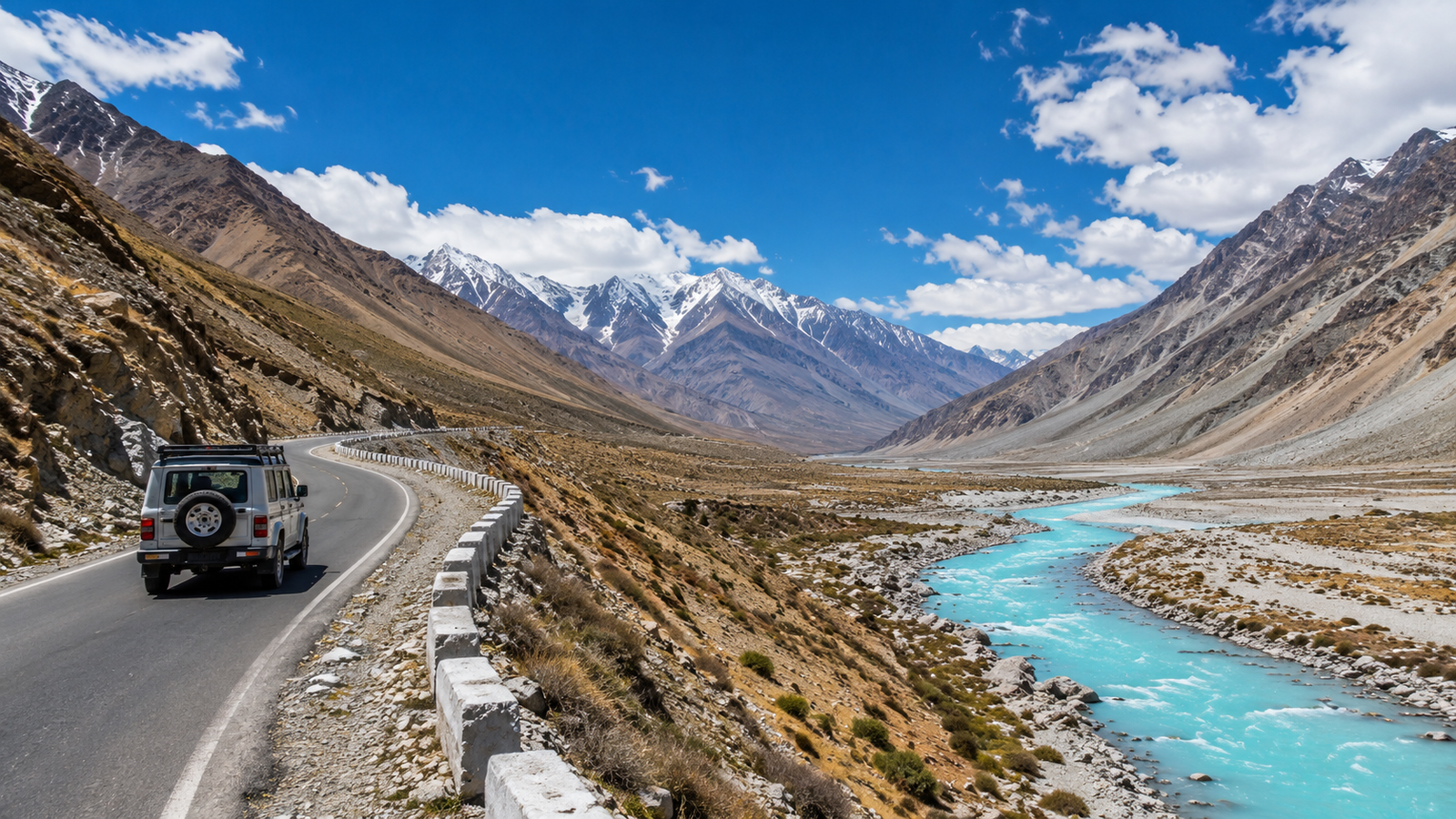
A Delhi to Spiti Valley road trip covers roughly 1,100–1,200 km one way, passing through Shimla, Narkanda, and Sangla before reaching Kaza. The best time to drive this route is between June and October, when mountain passes are open and road conditions are manageable. Budget 10–14 days for a comfortable, acclimatized journey.
Few road trips in India match the raw, untamed grandeur of driving from Delhi to Spiti Valley. The landscape transforms gradually—from the heat and chaos of the capital to dense Himalayan forests, then to stark, moon-like terrain above 4,000 meters. Every turn reveals something new. Every kilometer demands your full attention.
Spiti Valley, tucked inside Himachal Pradesh, sits at an average altitude of 3,800 meters above sea level. It is one of the coldest inhabited deserts on Earth, and the road to get there is both a physical and psychological challenge. But for those who make the journey, the payoff is extraordinary—ancient Buddhist monasteries, turquoise rivers, and villages so remote they feel like they exist outside of time.
This guide covers everything you need to plan a Delhi to Spiti Valley road trip in 2026: the best route, a day-by-day itinerary, key stops along the way, acclimatization advice, and practical tips to ensure you arrive safely and fully prepared.
What Is the Best Route From Delhi to Spiti Valley in 2026?
There are two main routes to Spiti Valley. The first goes via Shimla and Kinnaur (the NH5 route), and the second goes via Manali and the Rohtang Pass (NH3/NH21). Most experienced travelers recommend the Shimla–Kinnaur route for the onward journey, saving Manali for the return—or vice versa—so you experience both landscapes without retracing your path.
The Shimla route is longer (approximately 685 km from Delhi to Kaza) but more accessible for most of the season, typically opening in late May or early June. The Manali route is shorter in distance but involves crossing the Kunzum Pass (4,590 m), which can remain blocked by snow well into June and sometimes beyond. According to the Himachal Pradesh Road Transport Corporation (HRTC), the Kunzum Pass typically opens between mid-June and early July, depending on snowfall that year.
For a 2026 road trip, plan to take the Shimla–Kinnaur route going in and the Manali–Rohtang route coming out, giving you a full loop with maximum variety.
How Many Days Do You Need for a Delhi to Spiti Valley Road Trip?
A minimum of 10 days is recommended for a Delhi to Spiti Valley road trip. Twelve to fourteen days is ideal. Rushing this journey is the single biggest mistake first-timers make. The high altitude demands gradual acclimatization, and most cases of Acute Mountain Sickness (AMS) occur when travelers ascend too quickly.
A 12-day itinerary allows you to gain elevation slowly, rest when needed, and actually experience the places you pass through—rather than treating them as checkpoints on a map.
Day-by-Day Delhi to Spiti Valley Itinerary (12 Days, 2026)
Day 1: Delhi to Shimla — Your Gateway to the Himalayas (365 km, 7–8 hours)
Start early—by 5:00 or 5:30 AM at the latest—to beat the traffic out of Delhi on NH48 toward Ambala, then NH5 toward Shimla. The drive passes through the Punjab plains before the road starts climbing into the Shivalik Hills. Shimla, the former summer capital of British India, sits at 2,200 meters and offers a good first-night stop to shake off the city and begin adjusting to altitude.
Once you arrive, walk along The Mall Road and visit Christ Church, one of the oldest churches in North India. Shimla has no shortage of good accommodation, from heritage hotels like Wildflower Hall by Oberoi to budget guesthouses in the Lakkar Bazaar area.
Day 2: Shimla to Narkanda or Rampur — Climbing Deeper Into Himachal Pradesh (65–130 km, 2–4 hours)
Day 2 is a short but scenic drive. If you pushed hard on Day 1 and feel tired, stop at Narkanda (65 km from Shimla, 2,700 m). If you feel good, push on to Rampur (130 km from Shimla, 975 m)—a busy trading town on the banks of the Sutlej River.
Narkanda is the better option for acclimatization, with apple orchards, forest walks, and the Hatu Peak temple worth visiting. Rampur is more convenient as a base for Day 3’s drive.
Day 3: Rampur to Sangla Valley — One of the Most Beautiful Detours on the Route (80–100 km, 3–4 hours)
From Rampur, follow NH5 along the Sutlej River to Jeori, then turn off toward Sangla via the Baspa Valley. The Sangla Valley is widely considered one of the most scenic spots in all of Himachal Pradesh—lush, green, and dramatically different from the arid terrain ahead.
The village of Chitkul, 28 km beyond Sangla at 3,450 m, is officially the last inhabited village on the Indo-Tibetan border. It is accessible by road and makes a stunning half-day detour. The drive from Sangla to Chitkul and back takes about 2 hours.
Spend the night in Sangla. Budget guesthouses are plentiful, and camps along the Baspa River offer a memorable experience.
Day 4: Sangla to Kalpa — Apple Orchards, Ancient Temples, and Himalayan Views (30 km, 1.5 hours)
Kalpa is a small village perched above Recong Peo at around 2,960 meters. The drive is short, which is intentional—this is another acclimatization day. The views of the Kinner Kailash range from Kalpa are among the most dramatic on the entire route.
Visit the Hu-Bu-Lan-Kar Monastery and the Kalpa Suicide Point viewpoint (despite its alarming name, it offers a staggering panorama of the valley). The Kinnaur Kailash Parikrama, a pilgrimage circuit, also begins near here for those interested in the region’s deep spiritual significance.
Day 5: Kalpa to Nako — Crossing into the Trans-Himalayan Zone (100 km, 4–5 hours)
The landscape begins shifting dramatically on Day 5. As you drive from Kalpa toward Nako, the vegetation thins and the terrain becomes increasingly arid. You are entering the rain shadow zone—the Himalayas block monsoon clouds from reaching Spiti, resulting in a cold desert climate.
Nako village sits at 3,662 meters beside a small, impossibly blue lake. The Nako Monastery, believed to date back to the 10th century, is one of the oldest in the region. Spend the night here. The altitude will test your body; drink plenty of water, avoid alcohol, and rest well.
Day 6: Nako to Tabo — Home of the Ajanta of the Himalayas (95 km, 3–4 hours)
Tabo is one of the most historically significant stops on the route. The Tabo Monastery, founded in 996 CE, is often called the “Ajanta of the Himalayas” for its intricate murals and sculptures. UNESCO has recognized it as a site of outstanding cultural value.
The drive from Nako includes the steep and often nerve-wracking descent through the Malling Nala gorge—take it slow and follow the road carefully. Tabo itself is a quiet, meditative town. Stay the night and allow yourself time to properly explore the monastery complex the following morning before departing.
Day 7: Tabo to Kaza — Welcome to the Heart of Spiti Valley (47 km, 1.5 hours)
The drive from Tabo to Kaza is short. Use the extra time to revisit the monastery in the morning light, then make the easy drive along the Pin River to Kaza—the largest town in Spiti Valley and your base for the next several days.
Kaza sits at 3,800 meters and has grown steadily as a traveler hub. You will find ATMs (though carry cash as backup—connectivity can be unreliable), cafes, gear shops, and guesthouses ranging from basic to comfortable. The Spiti Ecosphere initiative, a local organization focused on responsible tourism, is headquartered here and offers excellent guided experiences for travelers who want to engage with local communities meaningfully.
Days 8–10: Exploring Spiti Valley from Kaza — Monasteries, Villages, and High-Altitude Lakes
Use Kaza as a base for three days of exploration. The major highlights include:
Key Monastery: Perched dramatically on a hilltop above the Pin-Parvati Valley, Key Monastery (4,166 m) is the largest monastery in Spiti and houses over 300 monks. The view from the top—of the valley, the river, and the surrounding peaks—is breathtaking.
Kibber Village: Once listed among the world’s highest motorable villages (at 4,270 m), Kibber is a cluster of whitewashed homes connected by narrow lanes. The road to Kibber from Key Monastery is straightforward and well-paved.
Chandratal Lake: Located at 4,300 meters, Chandratal (“Moon Lake”) is one of the most photographed destinations in the Himalayas. Access is typically open from mid-June, and the 45-minute trek from the parking area to the lake is manageable for most fit travelers. Camping near Chandratal is a highlight of the entire trip. Note: camping right at the lake shore has been restricted to protect the ecosystem—designated camping zones are marked nearby.
Pin Valley National Park: A UNESCO biosphere reserve and home to the endangered snow leopard. Guided wildlife tours can be arranged through local operators or through the Spiti Ecosphere initiative.
Hikkim: Home to the world’s highest post office, where you can send a postcard stamped at 4,440 meters—a classic Spiti souvenir.
Days 11–12: Return via Manali — Kunzum Pass, Rohtang, and the Road Back
The return journey via Manali covers approximately 200 km from Kaza and takes 7–9 hours, depending on road and weather conditions. The route crosses the Kunzum Pass (4,590 m), where a small temple marks the top. Most drivers stop to offer a prayer and take in the view—a tradition worth honoring.
From Kunzum, the road descends to the Chandra River and follows it to Gramphoo, then rejoins the Manali–Leh Highway. Rohtang Pass (3,978 m) sits between Gramphoo and Manali. As of 2026, the Atal Tunnel (Rohtang Tunnel) bypasses the pass entirely, making this section faster and far less dependent on weather. Once through the tunnel, you arrive in Manali.
Spend a night in Manali, then drive back to Delhi via Kullu, Mandi, and the Chandigarh highway—a long but straightforward day of roughly 550 km.
What Are the Key Practical Tips for a Delhi to Spiti Valley Road Trip in 2026?
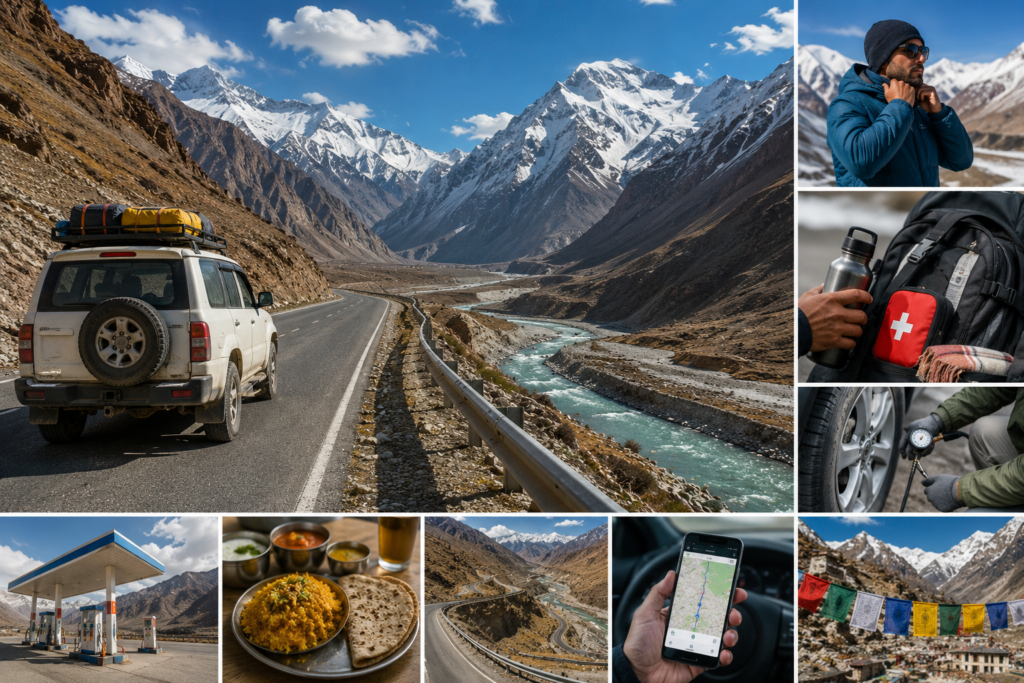
Vehicle: A 4WD SUV is strongly recommended. Popular choices include the Mahindra Thar, Maruti Suzuki Jimny, Toyota Fortuner, and Isuzu D-Max. The roads are unpaved and rocky in many sections, and ground clearance matters.
Permits: Foreign nationals require an Inner Line Permit (ILP) to enter Spiti Valley. As of 2026, Indian nationals do not require a separate permit, but carry your ID and vehicle documents at all times. Check the latest regulations through the Himachal Pradesh government portal before you depart.
Fuel: Fill up at every opportunity. Fuel stations are scarce beyond Rampur. Carry extra fuel in a spare jerry can—at least 10–15 liters.
Altitude Sickness: Ascend gradually. If you experience severe headache, vomiting, or confusion at altitude, descend immediately. Diamox (Acetazolamide) can be taken as a preventive measure—consult a doctor before your trip.
Connectivity: BSNL SIM cards offer the best coverage in remote Himalayan areas. Private carriers like Jio and Airtel have limited to no signal in much of Spiti. Download offline maps via Google Maps or Maps.me before you leave.
Best Time to Go: Mid-June to mid-October is the window for the full loop. July and August bring monsoon rains that can cause landslides on the Shimla–Kinnaur side, but Spiti itself sees very little rainfall. September is widely considered the best month—stable weather, clear skies, and fewer tourists.
Is a Delhi to Spiti Valley Road Trip Worth It?
For anyone who loves mountains, history, and the feeling of genuine remoteness, the answer is an unqualified yes. Spiti Valley is not an easy destination. The roads are punishing, the altitude is humbling, and the journey demands respect. But the difficulty is precisely what makes it so rewarding.
The monasteries here have stood for over a thousand years. The communities have endured some of the harshest conditions on Earth, and they remain warm, welcoming, and proud of their culture. Responsible travel—respecting local customs, supporting local businesses, and leaving no waste behind—is the least visitors can offer in return.
Plan carefully, drive slowly, and give yourself more time than you think you need. Spiti rewards patience.
Frequently Asked Questions About the Delhi to Spiti Valley Road Trip
How long does it take to drive from Delhi to Spiti Valley?
The drive from Delhi to Kaza (the main town in Spiti) takes approximately 3–4 days via the Shimla–Kinnaur route, covering around 685 km. A direct, non-stop drive is not advisable due to altitude acclimatization requirements.
What is the best time of year to do the Delhi to Spiti Valley road trip?
Mid-June to mid-October is the optimal window. September offers the best combination of clear weather, open passes, and manageable road conditions. Avoid traveling during winter (November–May), when most roads are closed due to heavy snowfall.
Do I need a permit to travel to Spiti Valley in 2026?
As of 2026, Indian nationals do not require a separate permit. Foreign nationals need an Inner Line Permit (ILP), available online through the Himachal Pradesh government portal. Always carry valid ID and vehicle registration documents.
Which vehicle is best for a Delhi to Spiti Valley road trip?
A 4WD SUV with high ground clearance is strongly recommended. The Mahindra Thar, Maruti Suzuki Jimny, and Toyota Fortuner are popular choices. Avoid hatchbacks or sedans—the terrain will damage them.
Is Spiti Valley safe to visit for solo travelers?
Yes, Spiti Valley is considered safe for solo travelers, including solo women. The local communities are hospitable and accustomed to tourists. That said, always inform someone of your route and expected arrival times, as connectivity is limited in many areas.
How much does a Delhi to Spiti Valley road trip cost?
Costs vary widely based on vehicle type, accommodation preferences, and group size. A rough estimate for a 12-day trip for two people (including fuel, accommodation, food, and permits) ranges from ₹40,000 to ₹80,000. Fuel alone for the full loop (approximately 2,400 km round trip) will cost between ₹10,000 and ₹15,000 depending on your vehicle.

