

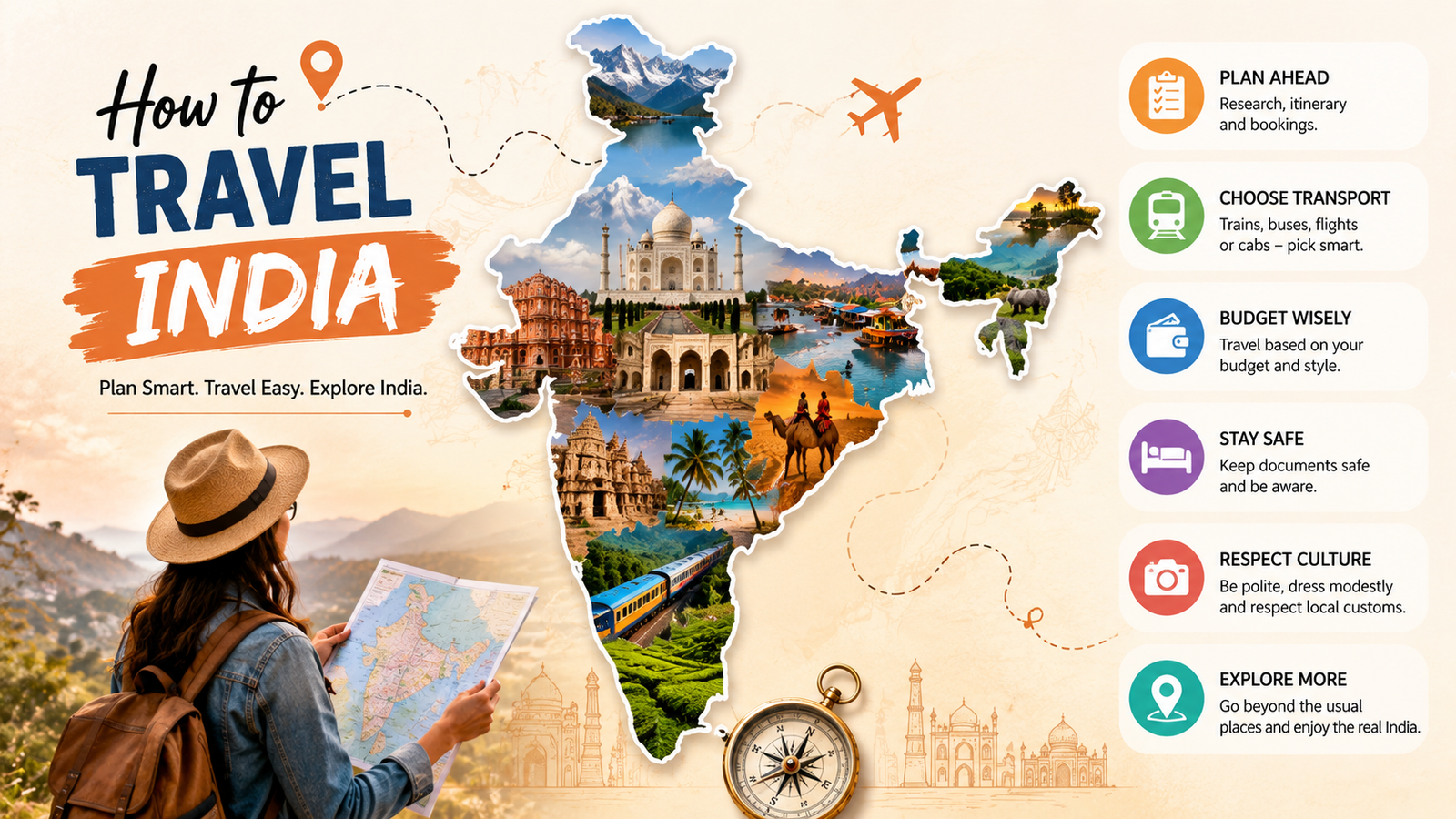
Traveling India on a budget in 2026 is entirely achievable. By booking trains early, eating where locals eat, choosing guesthouses over hotels, and traveling during the shoulder season, most travelers can explore India comfortably for $25–$40 USD per day—without sacrificing the experiences that make the country unforgettable.
India is one of the most rewarding destinations on the planet—and one of the most affordable. Nowhere else can you eat a full meal for under a dollar, sleep in a heritage haveli for $10 a night, and watch the sun rise over a UNESCO World Heritage Site without paying an entrance fee. Yet first-time travelers often overspend simply because they don’t know where to start.
This guide breaks down exactly how to travel India on a tight budget in 2026, from the best time to visit and how to get around cheaply, to where to sleep, eat, and what to do for next to nothing. Whether you have two weeks or two months, these tips will help you stretch every rupee.
What Is the Realistic Daily Budget for Traveling India in 2026?
Before diving into the tips, it helps to know what “budget travel” actually looks like in India. Based on current traveler reports and cost-of-living data, a budget traveler in India in 2026 can expect to spend:
- Accommodation: ₹500–₹1,500/night ($6–$18 USD) for a hostel dorm or a basic private room
- Food: ₹200–₹600/day ($2.50–$7 USD) eating local thalis, street food, and chai
- Transport: ₹300–₹800/day ($3.50–$10 USD) depending on distance and mode
- Activities: ₹0–₹500/day ($0–$6 USD), as many temples and markets are free
Total average: $15–$35 USD per day, with a comfortable mid-budget sitting around $40–$50 USD per day if you want a private room and the occasional restaurant meal.
That figure is far lower than almost any other major travel destination in the world, including Southeast Asia.
When Is the Best Time to Visit India for Budget Travelers?
Timing your trip correctly is one of the most effective ways to cut costs. India’s tourist season peaks between October and March, when the weather across most of the country is dry and pleasant. Prices for accommodation and tours spike during this period, particularly around Christmas, New Year’s, and Diwali.
For budget travelers, the shoulder seasons—September to October and February to March—offer the sweet spot: decent weather, fewer crowds, and lower prices. Accommodation rates in popular destinations like Rajasthan and Kerala can drop by 20–40% outside of peak season.
The monsoon season (June to September) brings heavy rainfall but dramatically discounted rates. Destinations like Goa, which becomes almost a ghost town during the monsoon, offer some guesthouses at 50–70% off peak prices. If you don’t mind rain and want India largely to yourself, this is your window.
How to Get Around India Cheaply: Trains, Buses, and Smart Booking
Transport is one of the biggest expenses for travelers in India, but it doesn’t have to be. The Indian Railways network is the backbone of budget travel across the country—and for good reason. With over 13,000 trains running daily and routes connecting nearly every major city and town, it remains the most affordable and practical way to cover long distances.
Book on IRCTC (irctc.co.in) as early as possible. Train tickets open for booking 120 days in advance, and popular routes between cities like Delhi–Agra, Mumbai–Goa, and Jaipur–Jodhpur sell out fast. A sleeper class ticket from Delhi to Jaipur (around 5 hours) costs approximately ₹200–₹300 ($2.50–$3.60 USD). AC 3-tier, a step up in comfort, runs around ₹500–₹700 ($6–$8.50 USD) for the same route.
For shorter distances, state-run buses are even cheaper. Most major state bus terminals have online booking now, including RedBus (redbus.in), which aggregates both government and private operators. Overnight buses between cities can save you a night’s accommodation cost, though comfort varies.
Avoid pre-paid airport taxis unless necessary. In most cities, app-based services like Ola and Rapido are significantly cheaper for getting from airports and train stations into the city center. In 2026, Rapido’s auto-rickshaw service has expanded to over 100 Indian cities, offering some of the lowest fares for short urban trips.
Where to Stay in India Without Blowing Your Budget
India’s accommodation market has expanded significantly in recent years, giving budget travelers more options than ever before.
Hostels remain the gold standard for solo budget travelers. Platforms like Hostelworld (hostelworld.com) and Booking.com list well-reviewed hostels in every major tourist city. In cities like Varanasi, Pushkar, and Hampi, dorm beds start from as low as ₹350–₹500/night ($4–$6 USD) and often include breakfast, lockers, and common areas with rooftop views.
Government guesthouses and dharamshalas are another underused option. Run by state tourism boards, these are typically clean, safe, and significantly cheaper than private hotels. Rajasthan Tourism (tourism.rajasthan.gov.in) operates a network of heritage-style tourist bungalows across the state, some of which offer double rooms for ₹800–₹1,200/night ($10–$14 USD).
OYO Rooms (oyorooms.com) has improved its reputation considerably since its early days, and now provides reliable budget accommodation in tier-2 and tier-3 cities where hostels are rare. Rooms typically start at ₹600–₹900/night ($7–$11 USD) and include essentials like clean linen, Wi-Fi, and an ensuite bathroom.
One practical tip: always negotiate for longer stays. Many guesthouses in tourist towns will offer a 20–30% discount for stays of five nights or more, especially outside peak season.
How to Eat Well in India on Almost No Money
Food is where India truly shines for budget travelers. Eating well and eating cheaply are not mutually exclusive here—they are practically the same thing.
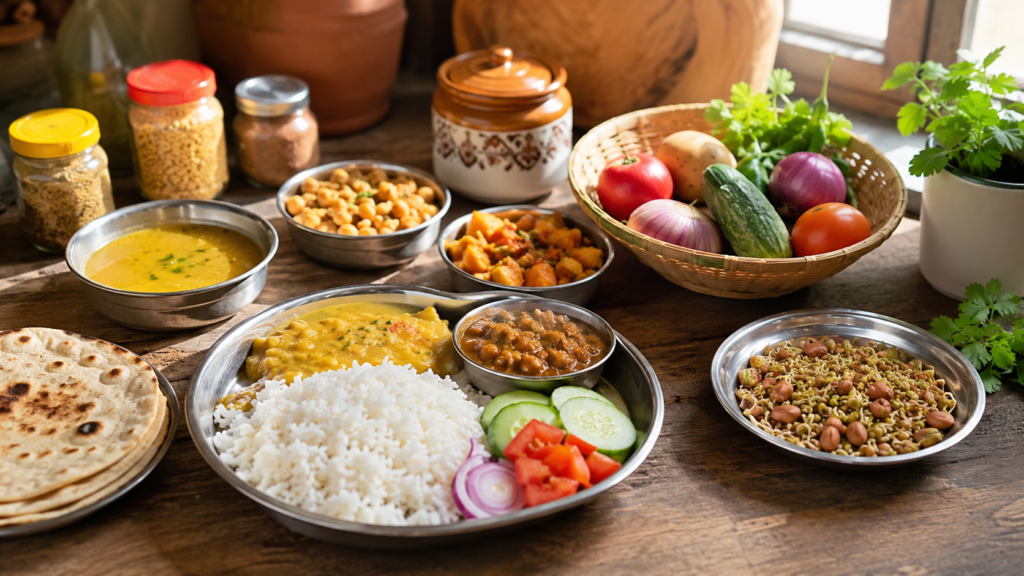
The thali is your best friend. A traditional thali—an all-you-can-eat platter of dal, sabzi, rice, roti, and pickles—costs anywhere from ₹80–₹200 ($1–$2.50 USD) at a local dhaba (roadside restaurant). In Gujarat and Rajasthan, unlimited thalis are a regional staple, and many restaurants refill your plate as many times as you want for the same flat price.
Street food is safe when chosen wisely. Contrary to the warnings travelers often receive, street food in India is generally safe when you follow a few basic rules: eat freshly cooked food that you can see being prepared, avoid anything sitting out in the open for long periods, and drink only sealed bottled water or chai made with boiled water. Popular street snacks like pani puri, samosas, vada pav, and chole bhature cost ₹20–₹60 ($0.25–$0.75 USD) and are some of the most satisfying meals you’ll eat anywhere.
Avoid tourist restaurant menus. Restaurants near major landmarks in cities like Agra and Jaipur often charge three to five times more than local eateries a few streets away. A quick 10-minute walk from any major tourist site will typically cut your meal cost in half.
What Are the Best Free and Low-Cost Experiences in India?
India’s most iconic experiences are often its least expensive. Here’s where to focus your time and money:
Varanasi Ghats at Sunrise and Sunset — Watching the Ganga Aarti ceremony at Dashashwamedh Ghat costs nothing. Thousands of pilgrims and travelers gather every evening for this centuries-old ritual of fire, incense, and prayer. No ticket, no queue—just show up.
Exploring Old Delhi’s Lanes — Chandni Chowk and the surrounding bazaars of Old Delhi are a sensory experience unlike any other. Entry is free; the only cost is what you choose to eat or buy along the way.
Golden Temple, Amritsar — The Harmandir Sahib, or Golden Temple, is the holiest site in Sikhism and one of the most breathtaking structures in Asia. Entry is completely free, and the langar (community kitchen) serves free vegetarian meals to tens of thousands of visitors every single day, regardless of religion or background.
Hampi’s Ancient Ruins — The ruined city of Hampi in Karnataka is a UNESCO World Heritage Site spread across 4,100 hectares. Most of the site is open to explore freely; individual monument entry fees are nominal (₹40–₹100 for Indian nationals, slightly more for foreign visitors).
Beaches in Goa During Off-Season — Avoid the December–January tourist rush and visit Goa in September or October. The beaches are quiet, the water is warm, and many shacks offer food and accommodation deals that simply don’t exist in peak season.
How to Save Money on SIM Cards and Connectivity in India
Staying connected in India is cheap. In 2026, the three major providers—Jio, Airtel, and BSNL—all offer tourist-friendly prepaid SIM plans. Jio and Airtel consistently offer the best 4G and 5G coverage across urban and semi-rural areas.
A Jio prepaid plan offering 1.5GB of data per day for 28 days costs around ₹299 ($3.60 USD). Airtel’s equivalent plan is slightly more expensive but offers better speeds in some regions.
To get a SIM card, you’ll need your passport and a passport-sized photo. Most airport arrival halls and phone shops in city centers can activate a SIM within 30–60 minutes. Avoid buying SIMs from unofficial vendors, as activation issues are common.
Frequently Asked Questions About Budget Travel in India
How much money do I need per day to travel India on a budget?
Most budget travelers spend between $20–$40 USD per day in India in 2026, covering accommodation, food, local transport, and a few paid activities. Staying in dorms, eating street food, and traveling by train can bring that figure closer to $15–$20 USD per day.
Is India safe for solo budget travelers?
India is generally safe for budget travelers, including solo travelers. Standard precautions apply: keep copies of your documents, use official transport services, and book accommodation with verified reviews. Solo female travelers should research destination-specific advice, as safety levels vary significantly by region and city.
What is the cheapest region of India to travel in?
South India—particularly Tamil Nadu, Andhra Pradesh, and parts of Karnataka—tends to be cheaper than the more tourist-heavy Golden Triangle (Delhi, Agra, Jaipur). Accommodation and food costs in cities like Madurai, Mysuru, and Tirupati are noticeably lower than in Rajasthan or Goa.
Do I need travel insurance for India?
Yes. Even on a tight budget, travel insurance is a non-negotiable expense. Medical care in India can range from excellent to inadequate depending on location, and without insurance, a hospital visit or emergency evacuation can cost thousands of dollars. Providers like World Nomads and SafetyWing offer policies tailored to long-term budget travelers.
When should I book train tickets for India?
Book Indian Railways tickets as early as possible—up to 120 days in advance—through the official IRCTC website or app. Tatkal tickets (last-minute releases) are available but come at a premium. If you miss regular booking, check for tourist quota seats, which are set aside specifically for foreign visitors and are sometimes available when regular tickets are sold out.
Start Planning Your Indian Adventure With These First Steps
India rewards travelers who do their homework. The country is vast, logistically complex in places, and absolutely overwhelming in the best possible way—but none of that means it needs to be expensive.
Start by building a rough route around the train network, pick your must-see destinations, and book your first few nights of accommodation before you land. From there, the best discoveries in India almost always happen by slowing down, getting off the tourist trail, and letting the country surprise you.
The food will be incredible. The people will be generous. And the cost? Probably lower than your last weekend away at home.

