

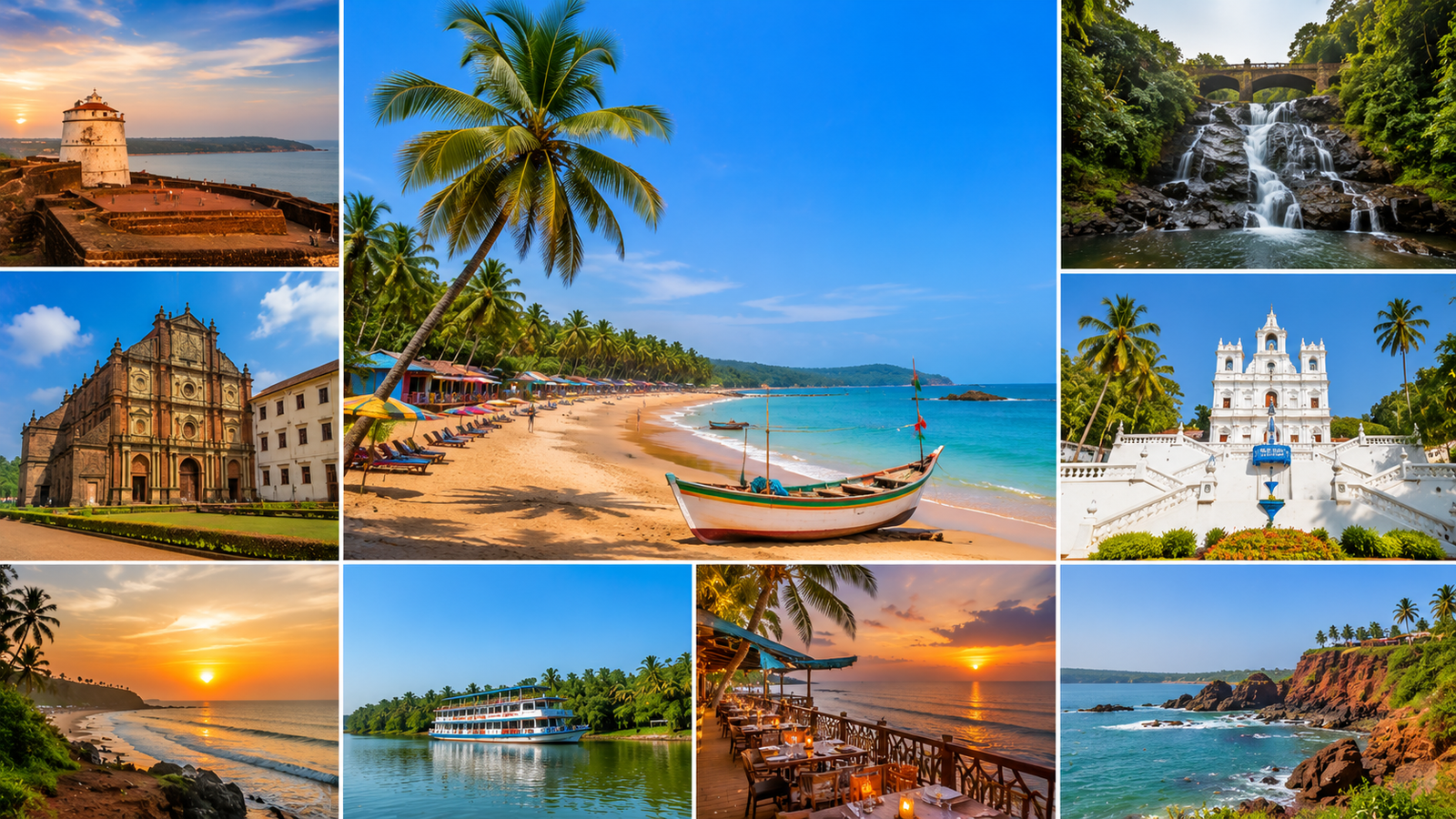
15 Best Places to Visit in Goa for Beaches, Heritage and Nature
Goa’s best places to visit in 2026 include beaches like Palolem and Vagator, heritage sites like Old Goa’s Basilica of Bom Jesus, and nature escapes like Dudhsagar Falls and Bhagwan Mahavir Wildlife Sanctuary. The state offers something for every traveler—from party hubs to serene retreats.
Goa punches well above its weight. At just 3,702 square kilometers, it’s India’s smallest state—yet it draws over 8 million domestic and international tourists every year. The reason isn’t hard to find: Goa compresses an extraordinary range of experiences into a very small geography. Baroque churches, spice plantations, Portuguese mansions, jungle waterfalls, and some of the subcontinent’s most beautiful coastline all exist within easy driving distance of one another.
But Goa has changed. The Goa Tourism Development Corporation has invested significantly in sustainable travel infrastructure in recent years, and 2026 sees a growing wave of travelers seeking depth over party culture—boutique homestays over beach resorts, heritage trails over nightclubs. That shift has brought quieter corners of the state into sharper focus, and the best itineraries now balance the classics with the lesser-known.
This guide covers the 15 best places to visit in Goa in 2026, spanning North Goa’s energetic beaches, South Goa’s tranquil shores, Goa’s historical interior, and its underrated natural landscapes. Whether you’re planning your first trip or your fifth, there’s something here worth discovering.
North Goa’s Most Iconic Beaches and Why They Still Deserve a Visit in 2026
1. Baga Beach — The Social Hub of North Goa
Baga Beach remains one of Goa’s most visited stretches of coastline, and for good reason. The beach itself is wide, clean, and well-maintained—but it’s the surrounding ecosystem of shacks, water sports operators, and nightlife venues that makes Baga distinct. Tito’s Lane, running parallel to the shore, fills up after sunset with bars and live music. Watersports like parasailing, jet skiing, and banana boat rides run throughout the day. Families, backpackers, and weekend visitors from Mumbai all converge here, giving Baga an energy that’s hard to replicate elsewhere. Visit between October and March for the best weather.
2. Vagator Beach — Red Cliffs, Viewpoints, and Bohemian Vibes
Vagator is one of North Goa’s most visually striking beaches. The coastline is split into two sections—Big Vagator and Little Vagator—separated by dramatic red laterite cliffs. The famous Chapora Fort sits above, offering panoramic views of the Arabian Sea that are genuinely worth the short climb. Vagator has long been associated with Goa’s psychedelic trance scene, but in 2026, the area is better described as eclectic—yoga studios, vegan cafes, and boutique guesthouses sit comfortably alongside open-air clubs like Hilltop.
3. Anjuna Beach — Flea Markets and a Changing Identity
Anjuna was the original hippie haven of Goa’s tourism era, and traces of that identity remain—particularly at the famous Anjuna Flea Market, held every Wednesday from November to April. The market draws hundreds of vendors selling everything from Kashmiri shawls and tribal jewelry to handmade leather goods and spices. Beyond the market, Anjuna has evolved considerably. The cliffside strip near Curlies is dotted with newer restaurants and beach clubs that attract a younger, more style-conscious crowd.
4. Calangute Beach — Goa’s Busiest Beach and How to Navigate It
Calangute is often called the “Queen of Beaches,” and it remains Goa’s most visited beach by sheer volume. That popularity comes with trade-offs—crowded shacks, persistent vendors, and busy roads. However, Calangute also has excellent infrastructure: reliable ATMs, hospitals, shopping markets, and transportation links. For first-time visitors who want convenience and proximity to everything, Calangute is a practical base. Head to the northern end of the beach early in the morning for a quieter experience before the crowds arrive.
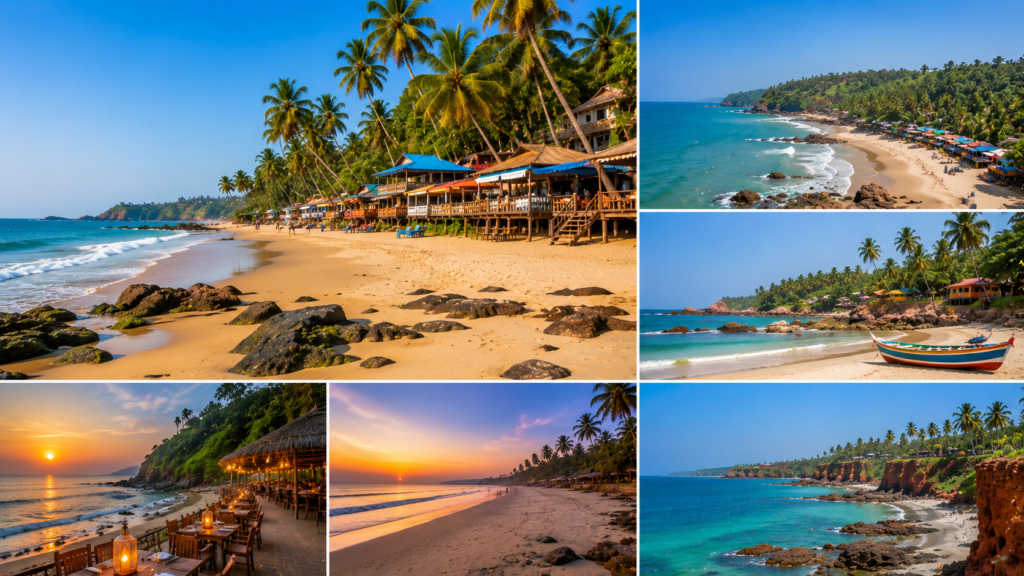
The Best Beaches in South Goa for a More Peaceful Experience in 2026
5. Palolem Beach — The Most Beautiful Crescent in Goa
Palolem consistently ranks among Goa’s most photogenic beaches, and the reason becomes clear the moment you arrive. The beach curves in a near-perfect crescent, flanked by two wooded headlands, with calm waters that are safe for swimming almost year-round. In 2026, Palolem has become a particular favorite among digital nomads and long-stay travelers, thanks to fast broadband at many beachside accommodations and a relaxed daily rhythm. The “silent disco” parties held on the beach—where attendees wear wireless headphones—are a quirky local institution worth experiencing.
6. Agonda Beach — South Goa’s Best-Kept Secret for Slow Travelers
Agonda is quieter than Palolem, less developed, and increasingly popular with travelers who prioritize peace over convenience. The beach is long and relatively uncrowded even during peak season. Olive Ridley sea turtles nest here between November and February, and during this period, sections of the beach are cordoned off to protect nesting sites. A small number of excellent restaurants and boutique huts line the shoreline, but Agonda has resisted large-scale commercial development—something local conservation groups have actively advocated for.
7. Butterfly Beach — Goa’s Most Remote and Rewarding Coastal Walk
Butterfly Beach is only accessible by boat from Palolem or on foot via a jungle trail—and that inaccessibility is precisely its appeal. The small, sheltered cove is surrounded by forest and sees relatively few visitors compared to the main beaches. Dolphins are frequently spotted in the waters just offshore. The hike through the headland takes approximately 30 minutes from Palolem and passes through dense coastal vegetation. Arrive early and bring your own water; there are no permanent facilities at the beach.
Goa’s Most Significant Heritage Sites and Historical Landmarks Worth Exploring
8. Basilica of Bom Jesus, Old Goa — A UNESCO World Heritage Site
The Basilica of Bom Jesus in Old Goa is one of the finest examples of Baroque architecture in Asia and a UNESCO World Heritage Site. Built in 1605, the basilica houses the mortal remains of Saint Francis Xavier, one of the founders of the Society of Jesus. The relics are displayed in a silver casket inside an ornate mausoleum gifted by the Grand Duke of Tuscany. The Old Goa complex includes several other churches and convents within walking distance, making it possible to spend a full morning exploring the area. Entry to the basilica is free.
9. Fort Aguada — Goa’s Best-Preserved Portuguese Fortification
Built by the Portuguese in 1612 to defend against Dutch and Maratha incursions, Fort Aguada stands at the northern tip of Sinquerim Beach with commanding views of the Mandovi River estuary. The fort is remarkably well-preserved, and its four-story lighthouse—built in 1864—is the oldest in Asia. A separate jail complex nearby, also called Aguada, was historically used as a prison and is now being developed as a heritage tourism site. The fort is best visited in the late afternoon, when the light is softer and the heat more manageable.
10. Fontainhas, Panaji — Goa’s Latin Quarter and Living Heritage District
Fontainhas is a small neighborhood in Goa’s capital, Panaji, and it represents the most intact example of Portuguese-era urban architecture in India. The streets are narrow, the houses are painted in ochre, yellow, and terracotta, and wrought-iron balconies overhang the lanes in a way that feels genuinely European. The Goa Chitra Museum, located nearby, is an excellent complement to a Fontainhas walk—it houses thousands of artifacts documenting Goa’s pre-industrial heritage. Many of the old mansions in Fontainhas now function as heritage homestays.
Natural Attractions and Wildlife Destinations That Make Goa More Than Just Beaches
11. Dudhsagar Falls — One of India’s Tallest Waterfalls
Dudhsagar Falls, located on the Goa-Karnataka border within the Bhagwan Mahavir Wildlife Sanctuary, is one of the most spectacular natural attractions in South India. The falls drop approximately 310 meters in four distinct cascades, and the name—which means “Sea of Milk” in Konkani—describes the white foam that the water creates as it hits the rocks below. Access is via a jungle jeep safari from the village of Mollem. The falls are at their most dramatic between July and October, immediately after the monsoon, though access roads may be restricted during heavy rainfall. Book jeep permits in advance through the Goa Forest Department’s official portal.
12. Bhagwan Mahavir Wildlife Sanctuary and Mollem National Park
Covering over 240 square kilometers of the Western Ghats, Bhagwan Mahavir Wildlife Sanctuary is Goa’s largest protected forest area and a biodiversity hotspot. The sanctuary is home to gaur (Indian bison), leopards, sloth bears, Indian giant squirrels, and over 200 bird species. The Mollem National Park, which sits within the sanctuary, offers guided wildlife safaris and birdwatching trails. The Tambdi Surla Mahadeva Temple, a 12th-century Kadamba-era temple built entirely from black basalt, is located within the sanctuary and is Goa’s oldest surviving temple.
13. Chorao Island and Dr. Salim Ali Bird Sanctuary
Chorao Island sits in the Mandovi River estuary, accessible by ferry from Ribander near Panaji. The Dr. Salim Ali Bird Sanctuary, named after India’s most celebrated ornithologist, covers the island’s western edge and protects a dense expanse of mangrove forest. Migratory birds flock here between October and March, including kingfishers, herons, egrets, and the rare purple-rumped sunbird. Kayaking tours through the mangrove channels have become a popular way to explore the sanctuary without disturbing nesting birds. Several local operators run guided morning tours from Panaji.
Cultural and Culinary Experiences That Define Goa’s Identity in 2026
14. Spice Plantation Tours in Ponda — Where Goa’s Agricultural Heritage Comes Alive
The interior district of Ponda is home to several working spice plantations that welcome visitors for guided tours and traditional Goan meals. Savoi Plantation, one of the oldest and most reputable, grows cardamom, pepper, vanilla, nutmeg, and kokum across a forested estate. Tours typically include a walk through the plantation with commentary on each crop’s cultivation and medicinal uses, followed by a lunch of traditional Goan dishes—fish curry, pork vindaloo, and bebinca (a layered Goan dessert)—served on banana leaves. It’s an experience that contextualizes Goa’s cuisine in a way that no restaurant visit quite can.
15. Anjuna Flea Market and Mapusa Market — Shopping Like a Local
No trip to Goa is complete without at least one market visit. The Anjuna Flea Market (every Wednesday, October–April) is the more tourist-oriented of the two, with a festive atmosphere and a wide range of handicrafts, clothing, and jewelry. The Mapusa Friday Market, by contrast, is a working market used by Goans themselves—vendors sell local vegetables, fish, pickles, chouriço (Goan pork sausage), and flowers alongside clothing and household goods. Mapusa offers a more authentic window into daily Goan life, and the surrounding town has several good lunch spots serving traditional Goan breakfasts of poee bread and fish curry.
When Is the Best Time to Visit Goa for Each Type of Traveler?
The conventional answer is October to March—Goa’s dry season, with temperatures ranging from 20°C to 33°C and minimal rainfall. This period covers the peak tourist season, the major beach festivals, and the Anjuna Flea Market’s weekly run.
That said, 2026 has seen growing interest in monsoon tourism in Goa. Between June and September, the state transforms—waterfalls swell, rice paddies turn electric green, and the beaches are nearly empty. Dudhsagar is at its most dramatic, spice plantation tours are lush and fragrant, and accommodation prices drop significantly. Monsoon travel requires flexibility around road closures and ferry suspensions, but for travelers who prioritize experience over comfort, it can be the most memorable time of year.
April and May are the shoulder months—hot, humid, and increasingly busy with domestic travelers from neighboring states.
Frequently Asked Questions About Visiting Goa in 2026
What are the best places to visit in Goa for first-time visitors?
First-time visitors should prioritize a combination of Calangute or Baga Beach for convenience, Old Goa’s Basilica of Bom Jesus for cultural depth, and a day trip to Dudhsagar Falls for natural scenery. These three experiences give a solid introduction to Goa’s beach, heritage, and nature offerings within a short itinerary.
Is South Goa better than North Goa for a relaxing trip?
South Goa is generally better for travelers seeking quieter beaches and a slower pace. Palolem and Agonda offer calmer waters, less commercial development, and a more relaxed atmosphere. North Goa—particularly Baga, Calangute, and Vagator—is better suited for those who want nightlife, water sports, and easy access to markets and restaurants.
How many days do you need to see the best of Goa?
A minimum of five days is recommended to cover the main highlights across North Goa, South Goa, and the historical interior around Old Goa and Ponda. Seven to ten days allows for a more comfortable pace, including day trips to Dudhsagar Falls and Chorao Island.
What is the best way to get around Goa in 2026?
Renting a scooter remains the most flexible and popular option for independent travelers. Two-wheelers can be rented for approximately ₹300–₹500 per day in most tourist areas. App-based cab services like Goa Miles and Rapido are available in urban areas, though surge pricing applies during peak hours. Auto-rickshaws are widely available but do not use meters, so agree on a fare before boarding.
Are there any new attractions or experiences in Goa worth visiting in 2026?
Yes. The Goa Tourism Development Corporation has expanded its heritage trail program in Fontainhas and Old Goa, with new audio-guided walking routes launched in late 2025. Several new kayaking and birdwatching operators have started tours through Chorao Island’s mangrove channels. The Aguada Jail complex is also undergoing phased development as a heritage tourism site and is expected to open sections to visitors in 2026.
Is Goa safe for solo travelers?
Goa is generally considered one of India’s safer destinations for solo travelers, including solo women travelers. Coastal areas with tourist infrastructure—Palolem, Anjuna, Vagator, Calangute—are well-patrolled during peak season. Standard precautions apply: avoid isolated beaches after dark, use registered transportation, and keep valuables secure. The Goa Police Department has a dedicated Tourist Police unit operating during the October–March season.
Plan Your Goa Trip With the Right Expectations
Goa rewards travelers who approach it without rigid expectations. The state has a rare quality—it can absorb very different types of trips and deliver something meaningful from each. A week at a South Goa beach hut feels nothing like a long weekend in North Goa’s nightlife circuit, yet both are authentically Goa.
The smartest approach in 2026 is to mix categories: anchor one or two days at a beach, dedicate a morning to Old Goa’s heritage sites, take one day trip into the interior for a spice plantation or Dudhsagar Falls, and leave at least one afternoon unplanned. Goa’s best moments tend to be spontaneous—a ferry ride that turns into a conversation with a local fisherman, a side road that leads to a half-empty beach, a shack that serves the best prawn curry you’ve ever had.
Start planning your Goa itinerary using the Goa Tourism official website and the Goa Forest Department’s portal for wildlife sanctuary and waterfall permits. The information is frequently updated, and booking permits in advance can save significant time on arrival.

