

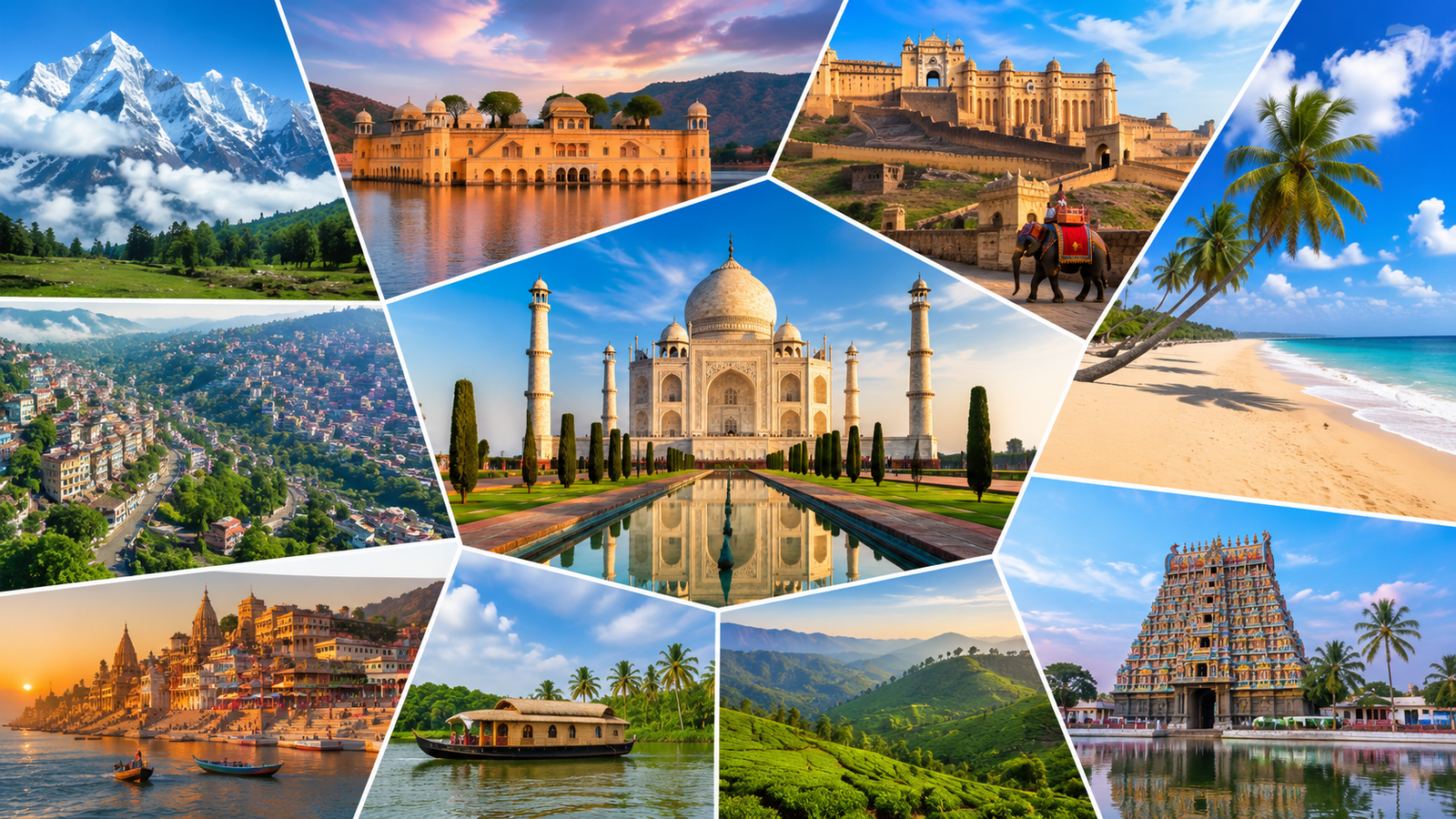
India offers an unmatched mix of history, nature, spirituality, and culture. From the Taj Mahal in Agra to the backwaters of Kerala, the best places to visit in India in 2026 span 28 states and 8 union territories—each with its own food, language, and landscape worth exploring.
India doesn’t ease you in. From the moment you land, the country hits you with color, noise, spice, and beauty in equal measure. With over 1.4 billion people, 22 officially recognized languages, and millennia of recorded history, narrowing down the “best” places to visit feels almost impossible—and yet, some destinations rise above the rest year after year.
Whether you’re planning your first trip or your fifth, 2026 is a great year to visit. India’s tourism infrastructure has grown significantly, with new expressways connecting major cities, expanded airport terminals, and a record number of UNESCO World Heritage Sites now totaling 43 (as of 2025). The Indian government’s “Incredible India 2.0” campaign has also pushed for sustainable and responsible tourism, making it easier than ever to explore without leaving a heavy footprint.
This guide covers the most rewarding destinations across India—from iconic monuments and ancient temples to pristine beaches and mountain retreats. Each entry includes what makes it special, the best time to go, and links to help you plan.
The Top Destinations in Northern India Worth Adding to Your 2026 Itinerary
Why Is Agra Still One of India’s Most Visited Cities in 2026?
Agra needs no introduction. Home to the Taj Mahal—arguably the most recognized building on Earth—this city in Uttar Pradesh draws millions of visitors annually. Built by Mughal Emperor Shah Jahan between 1631 and 1648 as a mausoleum for his wife Mumtaz Mahal, the Taj Mahal remains a masterclass in symmetry, marble inlay work, and architectural ambition.
But Agra offers more than one monument. The Agra Fort, another UNESCO World Heritage Site, sits just a few kilometers from the Taj and once served as the primary residence of Mughal emperors. Fatehpur Sikri, a ghost city built and abandoned within decades by Emperor Akbar, is less than an hour’s drive away and rewards curious travelers with near-total solitude.
Visit between October and March for the most comfortable weather. Avoid May and June when temperatures can exceed 45°C. Book your Taj Mahal tickets in advance at the official Archaeological Survey of India portal to skip long queues.
What Makes Jaipur, the Pink City of Rajasthan, a Must-See Destination?
Jaipur, the capital of Rajasthan, earns its nickname from the rose-pink sandstone used to construct much of the old city—a color chosen in 1876 to welcome the Prince of Wales. Today, the city blends regal architecture with a lively bazaar culture that makes it one of the most photogenic cities in South Asia.
The Amber Fort, perched on a hillside just outside the city, is Jaipur’s crown jewel. Its mirrored Sheesh Mahal (Palace of Mirrors) and panoramic views of the Aravalli Hills make it a destination in its own right. Within the city, Hawa Mahal (the Palace of Winds) and the City Palace complex draw large crowds—and for good reason. The Jantar Mantar, an 18th-century astronomical observatory and UNESCO site, adds a surprising layer of scientific history to the trip.
For travel planning, Rajasthan Tourism’s official website provides updated entry fees, timings, and itinerary suggestions. The best time to visit is between November and February, when the weather is dry and mild.
How Does Varanasi Offer a Spiritual Experience Unlike Anywhere Else in the World?
Varanasi may be the world’s oldest continuously inhabited city. Situated on the banks of the Ganges River in Uttar Pradesh, it has served as a center of Hindu spirituality, philosophy, and learning for over 3,000 years. Pilgrims travel from every corner of India to bathe in the Ganges, perform last rites, and attend the Ganga Aarti—an elaborate evening fire ceremony that takes place at the Dashashwamedh Ghat every single day of the year.
The city’s ghats (stone steps leading to the river) are its heartbeat. Manikarnika Ghat, where cremations take place around the clock, confronts visitors with the Hindu relationship with mortality in a way that is deeply humbling rather than morbid. Narrow lanes called “galis” wind through the old city, lined with temples, chai shops, and silk weavers who have practiced their craft here for generations.
Varanasi is best experienced slowly. Spend at least three nights to absorb its rhythm. Check Uttar Pradesh Tourism for accommodation options across price ranges.
The Most Rewarding Destinations in Southern India for Travelers in 2026
Why Are Kerala’s Backwaters Considered One of India’s Most Unique Natural Attractions?
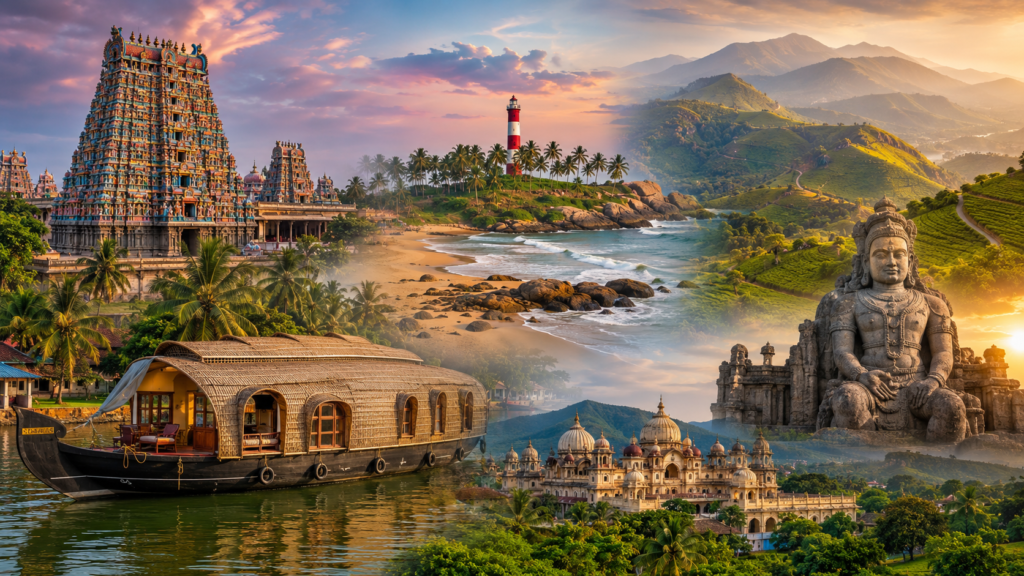
Kerala’s backwater network—a 900-kilometer maze of lagoons, canals, rivers, and lakes running parallel to the Arabian Sea coast—is unlike anything found elsewhere in India. Traveling through it on a traditional houseboat (known locally as a “kettuvallam”) gives you access to villages, paddy fields, and ecosystems that road travel simply cannot reach.
Alleppey (Alappuzha) is the most popular entry point for backwater cruises and has been called the “Venice of the East.” Beyond the backwaters, Kerala also offers dense rainforests in Munnar and Wayanad, wildlife reserves like Periyar Tiger Reserve, and the temple-rich city of Thrissur. Kerala’s cuisine—particularly its seafood preparations and coconut-based curries—is widely regarded as among India’s finest.
According to the Kerala Tourism Department, the state welcomed over 17 million domestic tourists in 2023, making it one of India’s top-performing tourism destinations. Visit between September and March to avoid the monsoon season. Plan your houseboat stay through Kerala Tourism’s official site.
What Makes Hampi in Karnataka One of the Most Historically Significant Sites in India?
Hampi was once the capital of the Vijayanagara Empire—one of the largest Hindu kingdoms in Indian history, with a peak population estimated at 500,000 in the 14th and 15th centuries. Today, what remains is a sprawling UNESCO World Heritage Site covering over 4,000 hectares, dotted with temple ruins, stone chariots, elephant stables, and enormous boulders that define the region’s surreal landscape.
The Virupaksha Temple, still an active place of worship, anchors the site. The iconic Stone Chariot at the Vittala Temple complex is one of India’s most reproduced images. Unlike many historical sites in India, Hampi rewards wanderers—renting a bicycle and spending a full day exploring the ruins at your own pace is one of the best ways to experience it.
Hampi is located in northern Karnataka and is best visited between October and February. Detailed site maps and entry information are available through Karnataka Tourism.
The Best Hill Stations and Nature Destinations to Visit in India in 2026
Why Is Leh-Ladakh the Ultimate Adventure Travel Destination in India?
Leh-Ladakh, situated at altitudes between 3,000 and 5,000 meters above sea level in the northernmost part of India, draws a specific type of traveler—one drawn to raw landscapes, Buddhist monasteries, and the kind of silence that only high-altitude deserts can offer. The region, which was reorganized as a Union Territory in 2019, shares borders with Pakistan and China, lending it a geopolitical significance that adds another layer of intrigue.
The Pangong Tso Lake, which gained international fame after appearing in the Bollywood film “3 Idiots,” stretches across the India-China border and changes colors throughout the day due to its mineral composition. The Nubra Valley, accessible via the Khardung La pass—one of the world’s highest motorable roads at 5,359 meters—offers sand dunes, double-humped Bactrian camels, and ancient monasteries in a single frame.
Physical acclimatization is essential before undertaking strenuous activity in Leh. Spend at least 48 hours resting upon arrival. The summer months of June through September offer the best road access and clearest skies. Check current road and travel conditions through Ladakh Tourism’s portal.
What Are the Best Reasons to Visit Meghalaya, India’s Hidden Gem in the Northeast?
Meghalaya, whose name translates to “abode of clouds” in Sanskrit, is one of India’s most overlooked travel destinations—and one of its most rewarding. The state receives some of the highest rainfall on Earth; Mawsynram holds the Guinness World Record for the wettest place on the planet. That extraordinary rainfall feeds lush forests, roaring waterfalls, and one of Meghalaya’s most celebrated attractions: living root bridges.
These bridges, found primarily in the Khasi Hills, are engineered from the aerial roots of rubber fig trees by local communities over decades—sometimes centuries. The double-decker root bridge near Nongriat village is among the most photographed. Beyond this, Meghalaya offers the vast cave system of Mawsmai Cave in Cherrapunjee, the clear blue waters of Dawki River on the Bangladesh border, and vibrant Khasi and Garo cultural traditions.
Tourism to northeastern India has grown steadily since 2022. The state government has made significant investments in eco-tourism infrastructure. Visit Meghalaya Tourism for permits, guided tours, and accommodation listings.
What Are the Best Beaches to Visit in India in 2026?
India’s coastline stretches over 7,500 kilometers across two distinct coasts—the Arabian Sea to the west and the Bay of Bengal to the east—giving it an enormous variety of beach experiences.
Goa remains the most popular coastal destination, famous for its Portuguese colonial architecture, beach shacks, seafood, and nightlife. North Goa (Baga, Calangute) caters to a livelier crowd, while South Goa (Agonda, Palolem) offers quieter, more scenic stretches. Goa receives the highest number of foreign tourists of any Indian state annually.
The Andaman and Nicobar Islands, however, offer something rarer: near-pristine coral reefs, bioluminescent plankton beaches, and waters that rival those of Thailand or the Maldives. Havelock Island (officially renamed Swaraj Dweep) and Neil Island (Shaheed Dweep) are the most accessible. Radhanagar Beach on Havelock was named one of Asia’s best beaches by Time magazine. Permits are required for inter-island travel; check Andaman Tourism for the latest requirements.
How to Plan Your India Trip for 2026: Practical Tips and Advice
Planning an India trip requires more preparation than many other destinations, but the rewards are proportional to the effort. Here are the key logistical factors to keep in mind.
Visas: Most nationalities can obtain an Indian e-Visa online through the official Indian government visa portal. The e-Tourist Visa is available for stays up to 30, 90, or 180 days depending on your nationality.
Best time to visit: October through March is peak season for most of India, offering cooler, drier weather across the north and south. The Himalayan regions of Leh and Sikkim are best visited June through September, when mountain roads are passable. The northeast, including Meghalaya and Assam, is best explored between October and April.
Getting around: India’s railway network—operated by Indian Railways—is one of the world’s largest, connecting virtually every major city at highly affordable rates. Book in advance, especially for popular routes like Delhi–Jaipur or Mumbai–Goa. Budget airlines including IndiGo, Air India, and Vistara now serve all major cities, with domestic airfares often competitive with train tickets.
Health: Carry travel insurance and consult your doctor about recommended vaccinations before departure. Drink bottled or filtered water throughout your trip.
Start Planning Your India Trip Today
India rewards curiosity. The more you dig—into a neighborhood, a cuisine, a local festival, a temple’s history—the more it gives back. No single trip covers it all, and that’s precisely what makes the country so endlessly compelling for repeat visitors.
The destinations in this guide represent a starting point, not a ceiling. Agra’s Taj Mahal is worth every photograph you’ve already seen of it. Varanasi will stay with you long after you leave. Meghalaya will make you question why you hadn’t heard of it sooner. And Ladakh will remind you just how vast and varied this planet—and this country—really is.
Start with one region. Then come back for another.
Frequently Asked Questions About Visiting India in 2026
What is the best time of year to visit India?
October to March is the most comfortable time to visit most of India. North India and Rajasthan enjoy cool, dry winters during this period. South India’s weather remains pleasant year-round, though coastal areas experience monsoons between June and September.
Do I need a visa to visit India?
Most international travelers require a visa. India’s e-Tourist Visa is available online through the official Indian government visa portal and supports stays of 30, 90, or 180 days depending on nationality. Processing typically takes 72 hours.
Is India safe to travel as a solo traveler?
India is generally safe for solo travelers, including solo female travelers, with common-sense precautions. Major tourist areas are well-patrolled, and tourism police are present at key attractions. Research your specific destinations in advance and use reputable transport services.
How much does a trip to India cost?
India can be explored on a wide range of budgets. Budget travelers can manage on USD $30–50 per day using local transport and guesthouses. Mid-range travelers typically spend USD $80–150 per day. Luxury travel, with five-star hotels and private guides, can exceed USD $300 per day.
What are the most underrated places to visit in India?
Hampi in Karnataka, Meghalaya in the northeast, Kutch in Gujarat, Chettinad in Tamil Nadu, and Zanskar Valley in Ladakh are consistently cited as India’s most underrated destinations by experienced travelers. These areas offer rich cultural and natural experiences with far fewer crowds than mainstream tourist circuits.

