

Best Places in India for Digital Nomads to Live and Work Remotely in 2026
India is one of the most cost-effective and culturally rich destinations for digital nomads in 2026. Cities like Bangalore, Goa, and Rishikesh offer reliable internet, thriving coworking communities, and affordable living costs—making India a top-tier remote work destination for location-independent professionals worldwide.
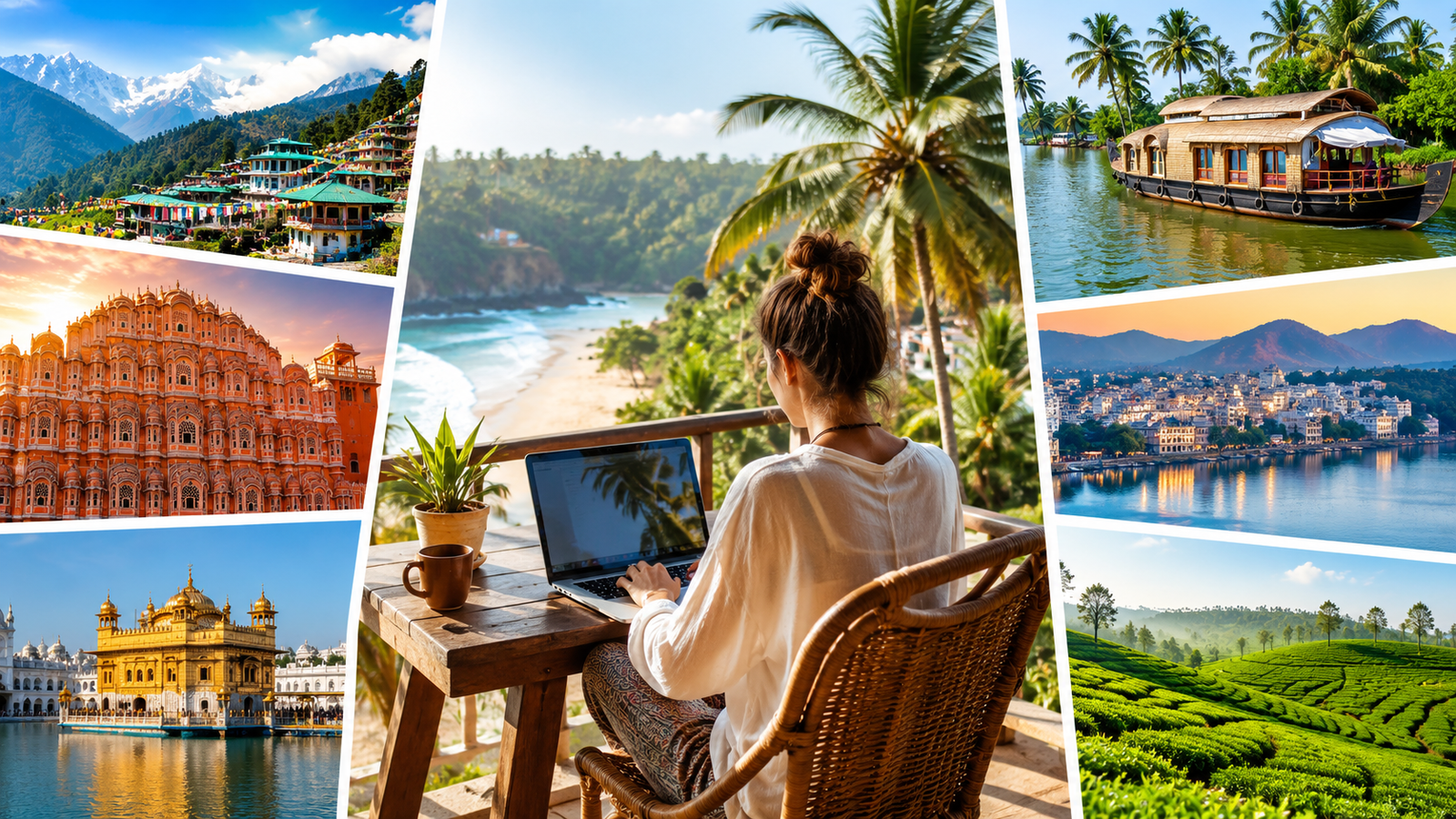
The laptop is open, the coffee is strong, and the view outside the window could be a sun-drenched beach, a misty Himalayan valley, or a buzzing café in a historic old city. India has quietly emerged as one of the most compelling destinations for digital nomads—not just because it’s affordable, but because it offers an almost absurd range of experiences, climates, and communities within a single country.
With over 100 million internet users added in just the last three years and coworking spaces multiplying across tier-1 and tier-2 cities alike, India’s remote work infrastructure has matured significantly. A 2025 report by Coworker.com found that India ranks among the top 10 countries globally for coworking space growth, with more than 5,000 coworking spaces operating nationwide. That number is only growing in 2026.
Whether you’re a freelance designer, a remote software engineer, or a content creator, India offers something most countries simply can’t: world-class internet and modern amenities at a fraction of Western costs, wrapped in a country that never stops surprising you.
This guide walks you through the best cities and regions in India for digital nomads in 2026—covering internet reliability, coworking infrastructure, cost of living, visa considerations, and community.
Why India Is One of the Best Countries for Digital Nomads in 2026
Before diving into specific locations, it’s worth understanding why India has become such a strong destination for the remote work crowd. The cost of living is a major draw. According to Numbeo’s 2025 Cost of Living Index, cities like Pune and Ahmedabad rank among the most affordable in the world for expats. A comfortable monthly lifestyle—including accommodation, food, transport, and coworking membership—can often be sustained for $800 to $1,200 USD.
India’s digital infrastructure has also improved dramatically. The rollout of 5G services across major metros accelerated through 2024 and 2025, with Jio and Airtel leading the charge. Fiber broadband is now standard in most urban coworking spaces, and even mid-sized cities offer reliable connectivity speeds of 50 Mbps or above.
The cultural richness doesn’t hurt either. Every city has its own food, language, history, and rhythm. For nomads who crave novelty, India delivers it in abundance.
Bangalore: The Tech Hub That Feels Like Home for Remote Workers
Bangalore (officially Bengaluru) remains the top destination for tech-savvy digital nomads in India in 2026. As the country’s Silicon Valley, the city has long attracted engineers, startup founders, and product managers. But it’s now increasingly popular among remote workers from Europe and Southeast Asia looking for a well-connected base.
The coworking ecosystem in Bangalore is the most mature in India. Spaces like WeWork Bangalore, 91springboard, and Cowrks offer enterprise-grade infrastructure, regular community events, and flexible membership plans starting at around ₹8,000 per month (approximately $95 USD). Many spaces are clustered in Koramangala, Indiranagar, and HSR Layout—neighborhoods that also happen to be full of excellent cafés, restaurants, and green spaces.
Internet speeds in Bangalore are consistently among the highest in the country. Fiber plans from Jio and ACT Fibernet can reach up to 1 Gbps in residential areas, making video calls and large file transfers seamless.
The main downside? Traffic. Bangalore’s road congestion is legendary, and commuting between neighborhoods can eat hours from your day. The workaround most nomads adopt is choosing accommodation within walking distance of their coworking space.
Goa: Where Beaches and Broadband Coexist
For digital nomads who want a slower pace without sacrificing connectivity, Goa remains one of India’s most beloved remote work destinations—and 2026 is no different. The northern beach towns of Anjuna, Vagator, and Assagao have developed into fully-fledged nomad communities, with a cluster of coworking spaces, wellness studios, and international-quality restaurants.
The Hive Goa in Assagao is particularly well-regarded, offering private desks, meeting rooms, and a curated community of freelancers and remote professionals. Monthly memberships typically range from ₹10,000 to ₹15,000 ($120–$180 USD), and many spaces include high-speed fiber internet as part of the package.
Accommodation in Goa spans a wide range. Long-term villa rentals in North Goa’s quiet interior villages can be found for as little as ₹20,000 to ₹35,000 per month ($240–$420 USD), while short-term stays near the beach will cost more. The key is booking for longer durations, as landlords frequently offer significant discounts for stays of three months or more.
The digital nomad season in Goa runs from October to April, when the weather is dry and temperatures are manageable. The monsoon months (June to September) bring heavy rain but also dramatically lower prices—a trade-off some nomads find worth it.
Pune: The Underrated Digital Nomad Destination That’s Growing Fast in 2026
Pune doesn’t always make the top of nomad lists, but it absolutely should. Often referred to as the “Oxford of the East” for its concentration of universities, Pune combines the intellectual energy of a student city with the startup culture of a growing tech hub. The result is a lively, youthful, and relatively affordable base for remote professionals.
Coworking infrastructure in Pune is robust. IndiQube, Innov8, and Dev Infinity all operate strong spaces throughout the city, particularly in the Koregaon Park and Baner neighborhoods. Monthly coworking memberships average ₹7,000 to ₹12,000 ($85–$145 USD).
What makes Pune especially attractive is its food and café culture. Koregaon Park alone has dozens of excellent cafés with fast Wi-Fi, making it easy to work informally without committing to a coworking membership.
Living costs in Pune are notably lower than Bangalore and Mumbai. A comfortable one-bedroom apartment in a central neighborhood typically rents for ₹15,000 to ₹25,000 per month ($180–$300 USD), and local food is cheap without any compromise on quality.
Rishikesh: A Himalayan Retreat for Nomads Who Want to Disconnect to Reconnect
Rishikesh sits on the banks of the Ganges in the foothills of the Himalayas, and it has been drawing spiritual seekers for decades. More recently, it’s drawn a different kind of seeker: the remote worker who wants mountain air, yoga, and a fiber connection.
The coworking scene in Rishikesh is smaller than Bangalore or Goa but growing steadily. Zostel Homes Rishikesh and several independent coworking cafés in the Tapovan and Laxman Jhula areas have become popular working spots. Speeds of 30–50 Mbps are now fairly standard, though some older guesthouses still run slower connections—always check before booking.
Living costs in Rishikesh are exceptionally low. A clean private room in a riverside guesthouse can cost as little as ₹8,000 to ₹15,000 per month ($95–$180 USD), and meals from local dhabas rarely exceed ₹100 to ₹150 ($1.20–$1.80 USD). The town is also famously alcohol-free, which for many nomads is actually a productivity bonus.
The best months to base yourself in Rishikesh are October through March. Summers can be hot, and the monsoon period brings flooding risks along the riverbanks.
Mumbai: For Nomads Who Want Maximum Energy and Urban Convenience
Mumbai is not the cheapest Indian city for digital nomads, but it’s arguably the most dynamic. As India’s financial and entertainment capital, Mumbai offers networking opportunities, a dense professional community, and a pace of life that some remote workers actively seek out.
Coworking spaces in Mumbai are plentiful and high-quality. WeWork Mumbai, Awfis, and 91springboard all operate multiple locations across Bandra, Lower Parel, and Andheri West. Memberships are slightly higher than in other Indian cities, typically running ₹12,000 to ₹20,000 per month ($145–$240 USD), but the quality of infrastructure and community events justifies the premium for many.
Accommodation in Mumbai can strain a nomad budget. Decent one-bedroom apartments in central areas like Bandra or Versova rarely drop below ₹35,000 per month ($420 USD), though shared housing with other nomads can cut that cost significantly.
What Visa Do Digital Nomads Need to Work Remotely in India in 2026?
As of 2026, India does not yet offer a dedicated digital nomad visa. Most remote workers enter on a standard e-Tourist Visa (e-TV), which allows stays of up to 90 days per entry with double-entry options available. A 1-year multiple-entry tourist visa is also available for citizens of most countries.
It’s worth noting that working on a tourist visa occupies a legal grey area in India, as it does in many countries without dedicated nomad visa programs. Many remote workers choose to maintain legal compliance by working exclusively for employers or clients outside India. Always consult with an immigration lawyer or check the latest guidance on the Indian Visa Online portal before making plans.
There has been ongoing discussion in Indian policy circles about introducing a digital nomad or “remote work” visa category, particularly as competing destinations like Thailand and Portugal have launched their own programs. Many nomad community members and industry groups are actively advocating for this change.
How to Choose the Right Indian City for Your Nomad Lifestyle in 2026
Choosing the right Indian city comes down to priorities. Choose Bangalore if reliable infrastructure, tech networking, and a large expat community matter most. Choose Goa if beach access, a relaxed pace, and a strong seasonal nomad community are your priorities. Choose Pune if budget, café culture, and urban energy without Mumbai-level costs appeal to you. Choose Rishikesh if nature, wellness, and a low-distraction environment are what you’re looking for. Choose Mumbai if you thrive in high-energy urban environments and value premium networking opportunities.
No single city is objectively best. The right answer depends entirely on the kind of environment in which you do your best work—and the kind of life you want to build around it.
Your Next Steps for Planning a Digital Nomad Trip to India
India rewards those who do their research. Before you book, spend time in nomad communities like Nomad List India or the r/digitalnomad subreddit to read current reviews, find coworking recommendations, and connect with others already based there.
Check current visa requirements directly through the Indian Visa Online portal, and factor in travel insurance that covers remote work—not all standard travel policies do.
India is vast, layered, and sometimes overwhelming. But for the digital nomad willing to lean into that complexity, it offers something rare: a life that feels like both adventure and home.
Frequently Asked Questions About Digital Nomad Life in India
What is the best city in India for digital nomads in 2026?
Bangalore is widely considered the best overall city for digital nomads in India in 2026, thanks to its advanced coworking infrastructure, fast internet, large tech community, and relatively affordable cost of living compared to Western cities. Goa is the top choice for nomads who prioritize beach access and a relaxed pace.
How much does it cost to live as a digital nomad in India per month?
Monthly costs vary by city. In cities like Rishikesh or Pune, a comfortable lifestyle can cost as little as $600–$900 USD per month. In Bangalore or Goa, budget $1,000–$1,500 USD for accommodation, food, coworking, and transport. Mumbai tends to be the most expensive, with comfortable living often starting at $1,200 USD per month.
Is internet connectivity reliable enough for remote work in India?
Yes, in most major cities and popular nomad destinations. Fiber broadband and 5G coverage have expanded significantly across India since 2024. Coworking spaces in Bangalore, Pune, Mumbai, and Goa routinely offer speeds of 100 Mbps or higher. Connectivity can be less consistent in rural areas or smaller hill stations.
Does India have a digital nomad visa in 2026?
As of 2026, India does not have a dedicated digital nomad visa. Most remote workers enter on a tourist e-visa. Always verify current visa regulations through the Indian Visa Online portal before traveling.
When is the best time to visit India as a digital nomad?
October to March is the best period for most Indian digital nomad destinations. The weather is dry and temperate across Goa, Rishikesh, and Bangalore. The monsoon season (June to September) brings heavy rainfall, though it also offers significantly lower accommodation prices in tourist-heavy areas like Goa.
Are there strong digital nomad communities in India?
Yes. Bangalore, Goa, and Pune all have active nomad and expat communities. Platforms like Meetup, Internations, and Facebook groups (search “Digital Nomads India” or city-specific groups) are the best places to connect before and after arrival.

