

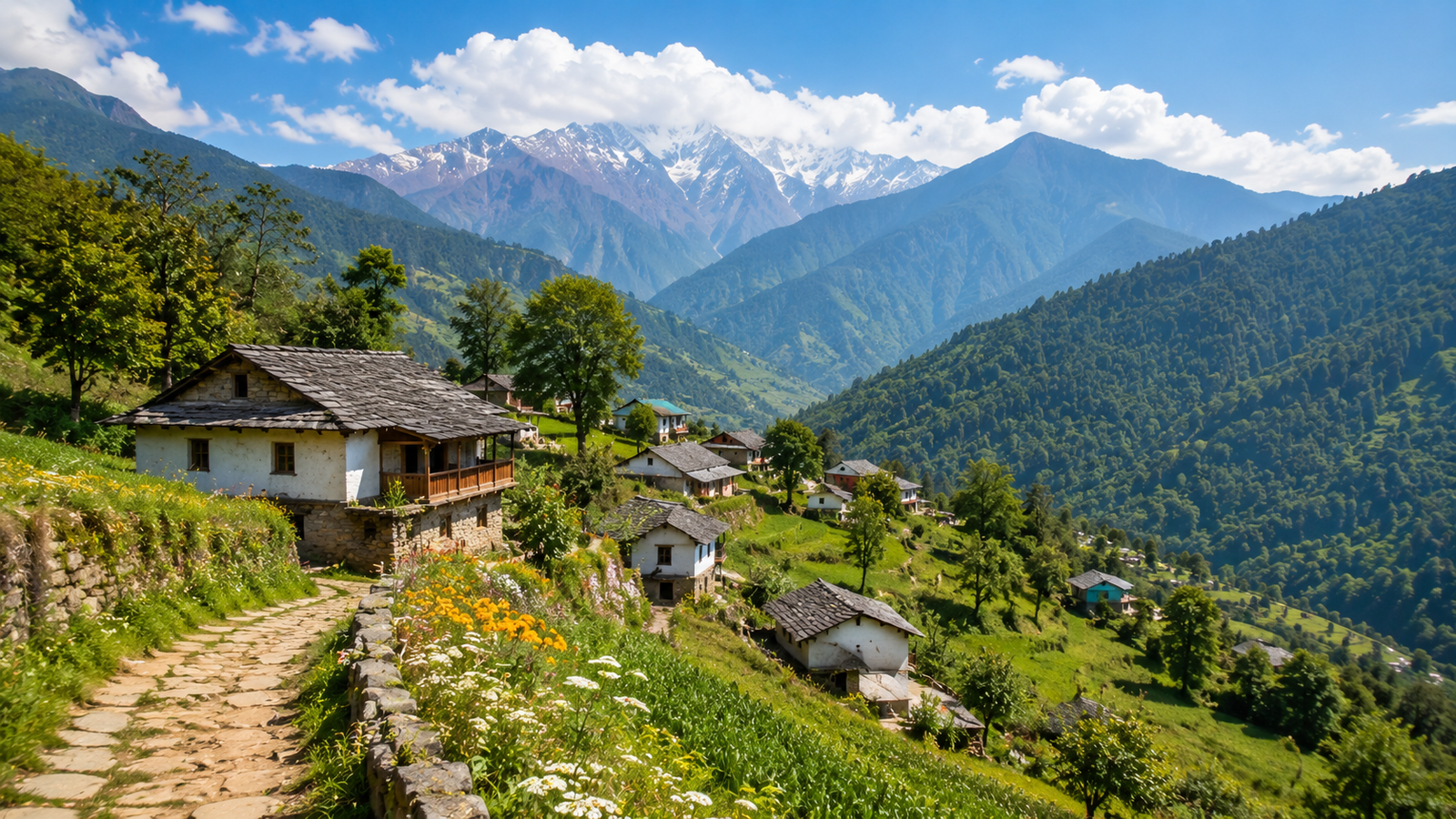
Hidden Villages in Himachal Pradesh for an Authentic Himalayan Escape
Himachal Pradesh holds dozens of villages far beyond Manali and Shimla that most travelers never find. From the ancient mud-brick towers of Chitkul to the sky-high pastures of Langza, these unexplored destinations offer raw Himalayan beauty, authentic culture, and zero tourist crowds—perfect for slow travelers and adventure seekers alike.
Every year, millions of tourists pour into Himachal Pradesh chasing the same handful of destinations. Manali gets crowded. Shimla feels like a hill-station theme park in peak season. Even Spiti—once a secret—now sees long queues of SUVs on its narrow mountain roads.
But Himachal Pradesh stretches across more than 55,000 square kilometers of dramatic terrain. Tucked between snowcapped ridges, along rushing glacial rivers, and atop windswept plateaus are villages that most travelers drive straight past. These are places where locals still weave traditional Kinnauri shawls by hand, where Buddhist monasteries sit untouched by commercialization, and where the night sky actually goes dark.
This guide covers some of the most rewarding unexplored villages in Himachal Pradesh—with details on what makes each one special, how to reach them, and the best time to go. Whether you’re a solo backpacker, a travel photographer, or a family looking to slow down, these destinations will completely reframe what a Himachal trip can feel like.
What Makes a Village “Unexplored” in Himachal Pradesh in 2026?
The word “unexplored” is relative. These aren’t places that have never seen an outsider—most are accessible by road, and many have basic guesthouses or homestays. What sets them apart is the absence of mass tourism infrastructure. No chain hotels. No souvenir markets selling factory-made pashminas. No crowds of day-trippers.
The villages on this list share a few common traits: they sit off the main tourist circuits, they retain a strong cultural or architectural identity, and they reward travelers who take the time to actually stop, stay, and engage. That’s the real definition of unexplored—a place where the experience still feels like a discovery.
Chitkul: The Last Inhabited Village on the Indo-Tibet Border
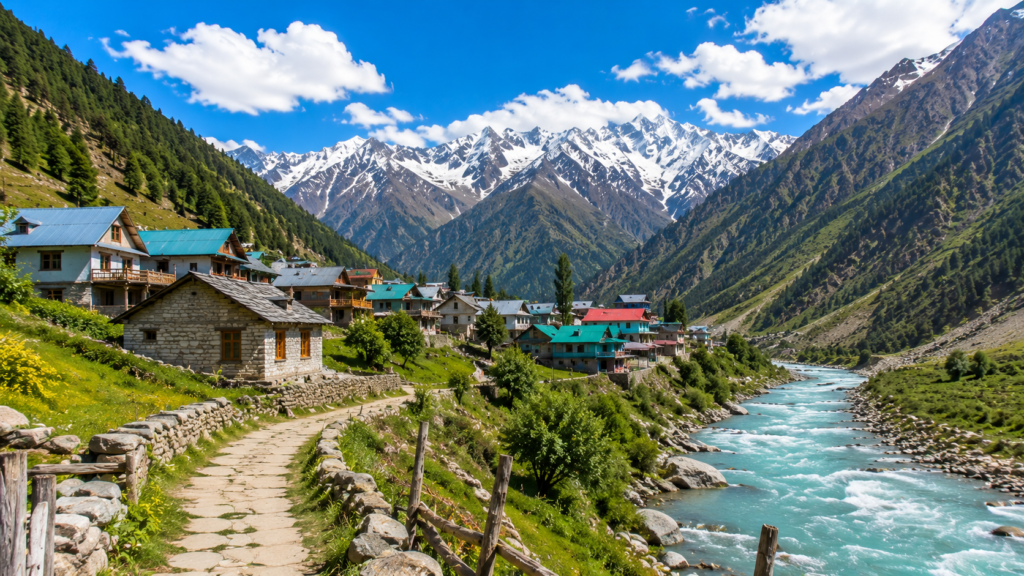
Chitkul sits at an elevation of approximately 3,450 meters in the Baspa Valley of Kinnaur district, making it one of the highest permanently inhabited villages in India. Most road trips through Kinnaur pause at Sangla, then head back. Chitkul, just 28 kilometers further up the valley, is where the road—and India—officially ends.
The village is a compact cluster of old wooden houses with intricately carved facades, a 500-year-old Mathi temple dedicated to the local goddess, and fields of rajma (kidney beans) that turn vivid green in summer. The Baspa River runs alongside the village with startling clarity, and on clear days, the surrounding peaks reflect off the water.
Getting to Chitkul requires traveling through Rampur and Karcham, then heading up the Baspa Valley via Sangla. The route is accessible between May and October, though always check road conditions during monsoon (July–August). Homestays in Chitkul are affordable and offer homemade local food—dishes like siddu (a steamed bread) and pulses cooked with Himalayan spices.
Tirthan Valley Villages: Jibhi, Soja, and Shoja
The Tirthan Valley in Kullu district doesn’t have one standout village—it has an entire cluster of them. Jibhi, Soja, and Shoja are all within a short drive of each other, yet each carries its own character. Jibhi is the most visited of the three (which still doesn’t say much), while Soja and Shoja sit at higher elevations with views that stretch toward the Jalori Pass at 3,120 meters.
Tirthan Valley is adjacent to the Great Himalayan National Park, a UNESCO World Heritage Site. Trout fishing in the Tirthan River is a draw for outdoor travelers, and the forest trails around these villages pass through dense Himalayan oak and rhododendron. In spring, the hillsides turn pink and red with blooms—a sight that puts Tirthan firmly on par with any better-known Himachal destination.
The valley is about 165 kilometers from Chandigarh and is best reached via the Aut tunnel on National Highway 3. Accommodation options have expanded in recent years but remain predominantly small wooden guesthouses and cottages. The valley stays relatively calm even in peak summer, making it ideal for families or anyone looking to decompress.
Langza: The Fossil Village at 4,400 Meters in Spiti
Most Spiti travelers tick off Kaza, Key Monastery, and Chandratal. Langza, perched at roughly 4,400 meters on a plateau above Kaza, tends to get only a passing mention in itineraries—and that’s precisely why it’s worth prioritizing.
Langza is famous among geology enthusiasts and paleontologists for a remarkable reason: the surrounding terrain is rich in marine fossils. This entire plateau was once beneath the ancient Tethys Sea, and the rock formations here contain ammonite fossils dating back tens of millions of years. Locals sell fossil specimens near the village—though exporting them is prohibited by law, so only look, don’t purchase them for travel.
Overlooking the village is a large Buddha statue, a striking contrast against the barren brown-and-white Spiti landscape. The houses in Langza are classic Spiti mud-brick architecture with flat roofs used for drying crops. Population is sparse—fewer than 200 residents—and the pace of life is almost meditative.
To reach Langza, drive from Kaza (approximately 15 kilometers on a rough mountain road) via a route that’s only open between June and October due to heavy snowfall. Altitude sickness is a real concern at this elevation; acclimatize in Kaza for at least a day before heading up. A few basic homestays operate in peak season.
Malana: The Ancient Republic in the Parvati Valley
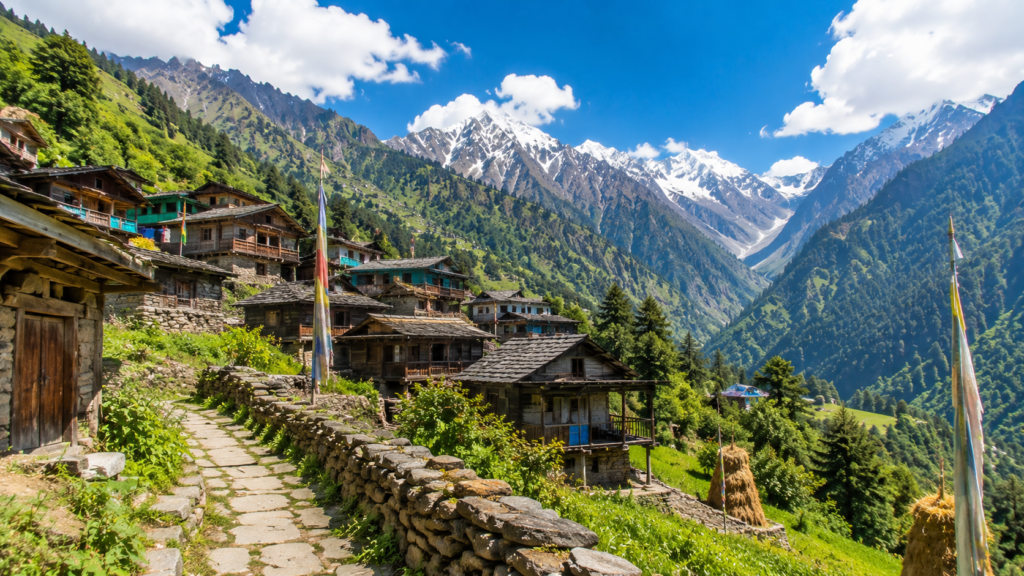
Malana occupies a position unlike any other village in Himachal Pradesh—or arguably in India. Set at around 2,652 meters in a side valley above the Parvati Valley, Malana functions as its own self-governing community with a social structure and legal code that predates modern Indian law. Residents historically claimed descent from Alexander the Great’s army, though this remains a point of anthropological debate.
The village is largely closed off to outsiders in a cultural sense. Visitors may not touch local buildings, walls, or residents, and photography of people without explicit consent is strictly prohibited. These boundaries exist out of genuine cultural protection—not as a tourist gimmick—and should be respected fully.
Malana is a 3-kilometer trek from the road head near Rashol, making it inaccessible by vehicle. The trek takes around 1.5–2 hours and passes through pine forests. The region has faced environmental challenges due to tourism pressure in recent years, so treading lightly is especially important here.
Bara Bhangal: The Remote Shepherds’ Village in Kangra District
For serious trekkers, Bara Bhangal offers one of the most remote village experiences in all of Himachal Pradesh. Located in the Ravi River basin in Kangra district, the village sits at approximately 2,200 meters and can only be reached on foot—there is no motor road. The most common approach is a multi-day trek from Billing (the famous paragliding launch site near Bir) over the Thamsar Pass, a high-altitude crossing above 4,600 meters.
The village is home to the Gaddi community, a group of semi-nomadic shepherds who spend their summers in these high pastures and descend to the Kangra valley in winter. Bara Bhangal has no electricity grid, no mobile signal, and no established tourist accommodation—travelers camp or rely on the hospitality of local families.
This is genuinely off the beaten path, requiring solid trekking experience, proper gear, and a guide familiar with the route. That said, the reward is an encounter with a way of life that has changed little over centuries.
Spangla and Komic: Twin Villages Above the World
Often mentioned together, Spangla and Komic sit near Langza in the upper Spiti region and compete for the title of the world’s highest motorable villages, with Komic sitting at approximately 4,587 meters above sea level. These two villages together hold a tiny population, an ancient monastery (Tangyud Monastery in Komic), and a landscape so stark it can feel like standing on another planet.
Both villages are accessible from Kaza via the same high-altitude road used to reach Langza. The drive itself is an experience—hairpin bends, zero guardrails, and views of glaciers stretching across the horizon. Neither village has commercial accommodation, but homestays can often be arranged on arrival.
What Is the Best Time to Visit Unexplored Villages in Himachal Pradesh?
The answer depends heavily on which region you’re targeting. For Spiti Valley destinations like Langza, Komic, and Spangla, the window is narrow: mid-June to mid-October. Snow closes the Rohtang and Kunzum passes outside this window.
For Kinnaur villages like Chitkul, the season runs slightly longer—May through mid-November—before the Hindustan-Tibet Highway becomes unsafe. Tirthan Valley villages are accessible year-round, though the best experience comes in April–June (before peak monsoon) or September–November for clear autumn skies.
Malana and Bara Bhangal are best visited between June and September, before high-altitude passes become dangerous.
How to Reach These Villages Without a Tour Operator
Most of these destinations require some combination of state buses, shared taxis, and trekking. The Himachal Road Transport Corporation (HRTC) runs buses to major valley towns like Kaza, Sangla, and Bhuntar—from which you can hire local taxis or jeeps. For villages like Bara Bhangal and Malana, hiring a local guide is strongly recommended, both for navigation and to ensure you’re engaging respectfully with local communities.
Renting a self-drive vehicle—typically a sturdy SUV like a Mahindra Thar or Scorpio—is popular for Spiti circuits, but roads like the one to Langza and Komic demand genuine driving experience on mountain terrain.
Start Planning Your Himachal Village Trip Today
Himachal Pradesh’s unexplored villages aren’t just scenic diversions—they’re places where the culture is intact, the landscapes are undiluted, and the experience of travel still feels like an actual discovery. Chitkul’s carved wooden temples, Langza’s ancient fossils, Malana’s independent civilization, Bara Bhangal’s shepherd communities: each one offers something that no mainstream destination in the state can match.
The practical advice is straightforward: book early if you’re targeting peak summer months (July–August), carry enough cash since ATMs are scarce in remote areas, pack for cold nights even in summer at high altitudes, and always register with local police if your destination is near a restricted or border zone.
The best time to visit these villages is before they stop being unexplored. That window, given growing domestic tourism in India, may not be as wide in 2030 as it is in 2026.
Frequently Asked Questions About Unexplored Villages in Himachal Pradesh
Which is the most unexplored village in Himachal Pradesh?
Bara Bhangal in Kangra district is arguably the most remote and unexplored village in Himachal Pradesh. It has no road access, no electricity grid, and can only be reached via a multi-day trek over a 4,600-meter mountain pass. It remains largely outside the radar of mainstream travel.
Is it safe to visit remote Himachal Pradesh villages alone?
Most villages are safe to visit solo, but traveling with at least one companion is advisable for high-altitude and road-less destinations like Bara Bhangal. Always inform someone of your route, carry a basic first-aid kit, and download offline maps before entering areas with no mobile signal.
Do these unexplored villages have accommodation?
Chitkul, Tirthan Valley (Jibhi, Soja, Shoja), and Langza all have basic homestays or guesthouses. Malana has limited options given cultural restrictions. Bara Bhangal has no established accommodation—camping or local hospitality is the only option. Always contact local tourism boards or travel groups for the most current availability.
What permits are required to visit border villages like Chitkul?
Indian nationals do not currently require a permit to visit Chitkul, though this can change based on security conditions. Foreign nationals may require an Inner Line Permit (ILP) for travel in parts of Kinnaur and Spiti. Always verify current requirements through the official Himachal Pradesh Tourism website hptdc.in before your trip.
What is the best unexplored village to visit in Himachal Pradesh for first-time travelers?
Jibhi or Shoja in the Tirthan Valley are the best starting points for first-timers. Both are accessible by road, have reliable homestay accommodation, and sit near the Great Himalayan National Park—offering natural beauty and cultural immersion without the logistical challenges of high-altitude Spiti destinations.

