

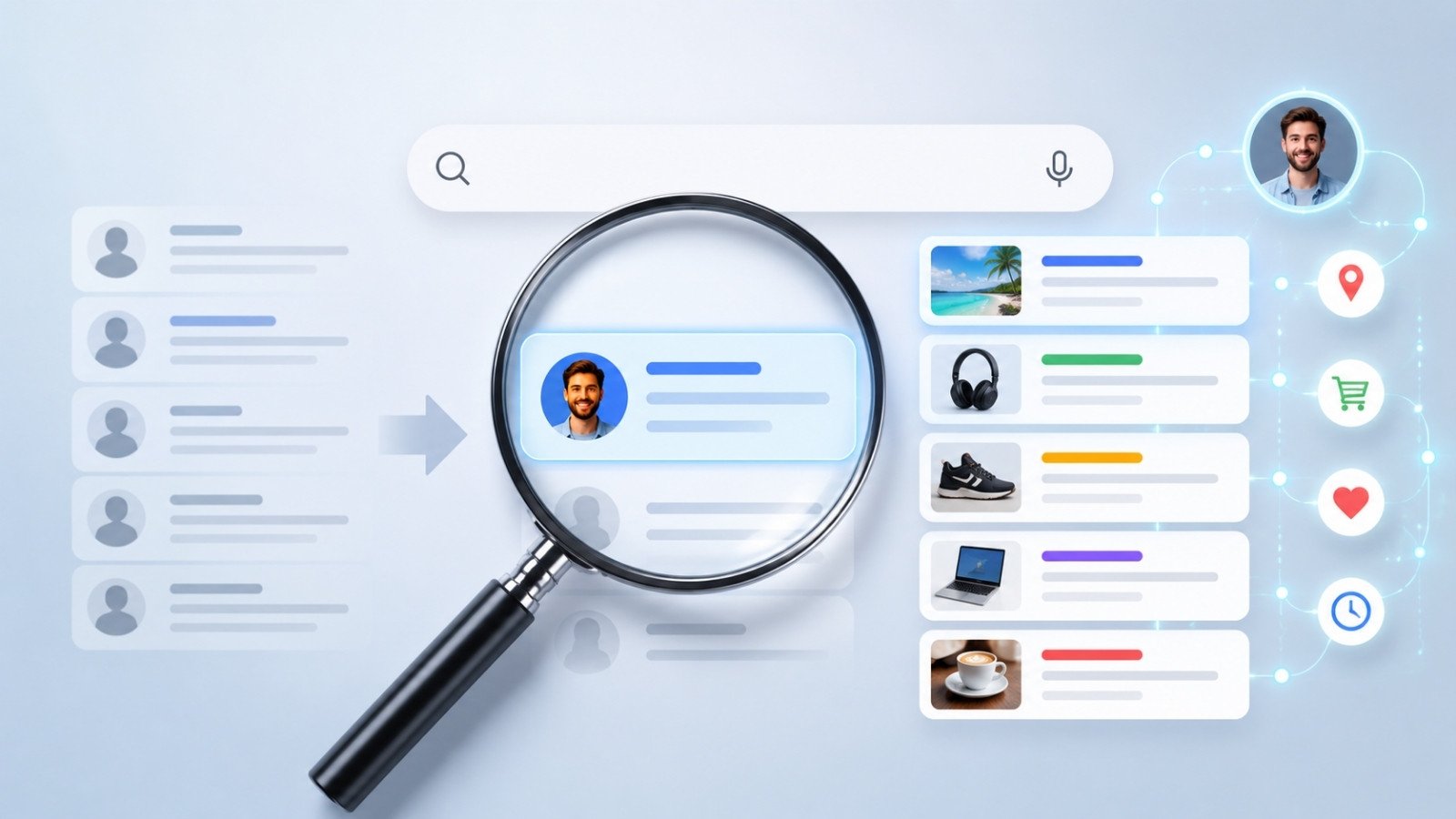
Decoding Personalized Search How Search Engines Customize Results for Every User
Personalized search results are tailored responses that search engines generate based on an individual user’s location, browsing history, device type, and past search interactions. Instead of showing the exact identical links to everyone who types the same query, algorithms filter and rank information to provide the most relevant answers for that specific user.
You sit down at your computer, type a highly specific question into Google, and immediately find the exact local business or niche article you needed. A colleague sitting in a different city types the exact same phrase into their smartphone and receives a completely different list of websites. This scenario plays out millions of times a day across the globe. Search engines no longer function as static directories that hand out identical maps to every traveler. They act as dynamic, hyper-observant guides that adjust their recommendations based on who is asking the question.
The shift from uniform results to individualized experiences fundamentally changed how people interact with the internet. Before 2005, searching for a broad term yielded a standard list of blue links prioritized purely by the website’s overall authority and keyword density. Today, algorithms evaluate hundreds of micro-signals the moment you hit the enter key. The system cross-references your current physical location, your previous clicks, and even the language settings on your device to guess your actual intent.
Understanding how personalized search results work provides immense value for both casual internet users and digital marketing professionals. For the average person, knowing how algorithms shape visible information helps maintain digital privacy and avoid isolated filter bubbles. For businesses and content creators, recognizing the variables behind personalized search is the only way to effectively reach target audiences.
What exactly are personalized search results?
Personalized search results represent a sophisticated filtering process where a search engine alters its standard ranking algorithm to accommodate the unique characteristics of the individual user performing the search. When Google officially rolled out personalized search for all users in late 2005, the company shifted the fundamental philosophy of information retrieval. The search engine moved away from asking “What is the best page on the internet for this keyword?” to asking “What is the best page on the internet for this specific user right now?”
If you search for the word “apple,” the search engine has to decide what you actually want. A user who frequently visits technology blogs and recently searched for laptop reviews will likely see links to the Apple technology company. Another user who frequently looks up recipes, health benefits, and local grocery stores will see links related to the fruit. The search engine uses contextual clues to resolve the ambiguity of the keyword.
This customization happens seamlessly. The majority of internet users remain entirely unaware that the results they see differ from the results delivered to their neighbors or family members. Search engines design this process to be invisible because the ultimate goal is frictionless user experience.
Which specific data points do search engines use to personalize results?
To deliver a customized experience, search engine algorithms must collect and process vast amounts of data in real-time. The system relies on several primary categories of user data to make immediate ranking adjustments.
How does a user’s geographical location impact search outcomes?
Geographical location stands out as the most influential factor in search personalization. Search engines utilize IP addresses, GPS data from mobile devices, and registered Wi-Fi networks to pinpoint exactly where a user is located. This location data fundamentally alters the search engine results page for any query with local intent.
If you type “best pizza restaurants” into a search bar, the algorithm knows you are looking for food nearby. A user in Chicago will see deep-dish pizza establishments in the Loop, while a user in New York City will see entirely different local pizzerias. This location-based personalization extends far beyond restaurants. Searches for plumbers, law firms, movie theaters, and retail stores all trigger a localized ranking algorithm. The search engine will prominently feature maps, local business listings, and reviews relevant only to the user’s immediate vicinity.
Why does past browsing history change future search engine rankings?
Your digital footprint plays a massive role in shaping what you see during future search sessions. Search engines, particularly when users remain logged into a specific ecosystem like a Google Account, track which links you click, how long you stay on specific web pages, and what queries you type.
This historical data helps the algorithm build a profile of your interests and preferences. If you consistently click on articles from a specific news publisher when searching for global events, the search engine learns that you prefer that publisher. In future searches, the algorithm will artificially boost the ranking of that specific news outlet for your account. Similarly, if you frequently search for advanced programming tutorials, the search engine will begin filtering out beginner-level coding guides, assuming you require more technical information.
What role does device type and operating system play in search personalization?
The physical hardware you use to access the internet provides another layer of context for search algorithms. Search engines distinguish between desktop computers, tablets, and mobile smartphones. They also recognize the specific operating system, such as iOS or Android.
Mobile users often have different immediate needs compared to desktop users. A person searching on a mobile device is frequently on the move and looking for quick answers, phone numbers, or immediate directions. Consequently, search engines prioritize mobile-friendly, fast-loading websites and highly actionable local listings for smartphone queries. Furthermore, searching for software or applications will yield results tailored to your operating system. An Android user searching for “best podcast apps” will see Google Play Store links, whereas an iPhone user will see Apple App Store recommendations.
How does search personalization impact digital marketing and SEO strategies?
The existence of personalized search results forces businesses to rethink traditional Search Engine Optimization (SEO). Marketers can no longer rely on a single, static ranking report to measure success. Because results fluctuate wildly from user to user, digital marketing strategies must adapt to target specific user contexts rather than simply chasing raw keyword volume.
Why is local SEO critical for businesses dealing with personalized search?
Because physical location serves as a primary personalization factor, local SEO has become an absolute necessity for brick-and-mortar businesses. If a business wants to appear when a nearby user searches for their services, the company must optimize its digital footprint for local algorithms.
Businesses achieve this by claiming and managing their Google Business Profile, ensuring their name, address, and phone number remain consistent across all online directories, and actively collecting customer reviews. A strong local SEO strategy ensures that when the search engine factors in a user’s geographical proximity, the business presents itself as the most credible and relevant local option.
How should content creators adapt to user intent and personalized algorithms?
Content creators must focus heavily on user intent rather than simply repeating target keywords. Because algorithms evaluate a user’s past behavior and current context, content must clearly answer specific questions and provide genuine value.
Creators should structure their content to address different stages of the customer journey. Some users are seeking purely informational content, while others possess transactional intent and want to make an immediate purchase. By creating a diverse portfolio of content that answers specific, long-tail questions, websites increase their chances of aligning with the personalized needs of different users. Clearly naming entities, using conversational subheadings, and providing fact-dense answers helps search engines match the content to the right user profile.
What are the privacy concerns associated with personalized search engines?
The convenience of receiving highly relevant search results comes at the cost of data privacy. To provide these customized experiences, technology companies must constantly monitor, record, and analyze user behavior. This persistent surveillance raises significant concerns about digital privacy and the control of personal information.
How do the filter bubble effect and echo chambers influence user knowledge?
When an algorithm consistently feeds a user information that aligns with their previous clicks and established preferences, it creates a phenomenon known as the filter bubble. The search engine stops exposing the user to opposing viewpoints or diverse perspectives, assuming the user only wants to see information that confirms their existing beliefs.
This effect proves particularly problematic for political or controversial searches. If a user only interacts with articles supporting a specific political ideology, the personalized search algorithm will eventually suppress contradictory information. This creates an echo chamber where the user falsely believes the entire internet agrees with their viewpoint, simply because the algorithm hides alternative perspectives.
How can internet users disable or manage personalized search settings?
Users who wish to step outside their filter bubbles or reclaim their privacy have several options to manage personalized search results. The most straightforward method involves logging out of search engine accounts and clearing browser cookies regularly. This removes the historical data algorithms use to build user profiles.
Alternatively, users can utilize privacy-focused search engines like DuckDuckGo. These alternative platforms explicitly refuse to track user search history or build personalized profiles, delivering the exact same search results to every user who types a specific query. For users who prefer to stick with major providers, adjusting the privacy and activity controls within their account settings allows them to pause or delete their search history, effectively minimizing the personalization algorithms.
Navigating the future of search algorithms and personalized data
As artificial intelligence continues to evolve, search engines will only become more adept at predicting user needs. The integration of conversational AI assistants and generative engine optimization means that personalization will likely move beyond simply reordering links. Future search engines will generate entirely unique, synthesized answers based on the specific context and historical knowledge of the user asking the question.
Businesses must remain agile, focusing on creating high-quality, fact-dense content that clearly addresses user intent. Internet users, meanwhile, must maintain awareness of how their data is used and actively manage their privacy settings to ensure they receive a balanced view of the digital world. By understanding the mechanics behind personalized search results, individuals and organizations can better navigate the complex, ever-changing landscape of online information.
Social media plays a vital role in connecting with customers today. Let LinkLuminous manage your platforms while you focus on growing your business.
Frequently Asked Questions about personalized search results
What is the main difference between standard search and personalized search?
Standard search relies entirely on analyzing the website itself to determine rankings, looking at factors like domain authority and keyword relevance. Personalized search takes the user’s specific context—including their location, device, and past search history—into account to filter and rank the final results.
Can I completely turn off personalized search results on Google?
Yes, you can turn off personalized search results by logging out of your Google account, navigating to your “Web & App Activity” settings, and pausing the tracking features. Utilizing private browsing modes or incognito windows also temporarily prevents the search engine from using your past history to alter current results.
Why do I see different search rankings on my phone compared to my laptop?
Search engines heavily factor device type into their algorithms. Mobile searches prioritize websites that load quickly on cellular networks and feature responsive designs. Additionally, mobile devices provide more precise GPS location data, which drastically changes the results for any search with local intent.
Do personalized search results affect paid advertising?
Yes, paid advertisements heavily rely on the same personalization data points. Advertising platforms allow businesses to target their ads based on a user’s location, device, and past browsing behavior. This ensures that the sponsored links appearing above the organic search results are highly customized to the individual user.
Are privacy-focused search engines a viable alternative for daily use?
Privacy-focused search engines like DuckDuckGo offer a highly viable alternative for daily use. They provide robust, unpersonalized search results by pulling data from multiple sources without tracking your individual IP address or building a historical profile of your search behavior. Choose a privacy-focused engine if avoiding targeted data collection matters more than hyper-localized convenience.

