

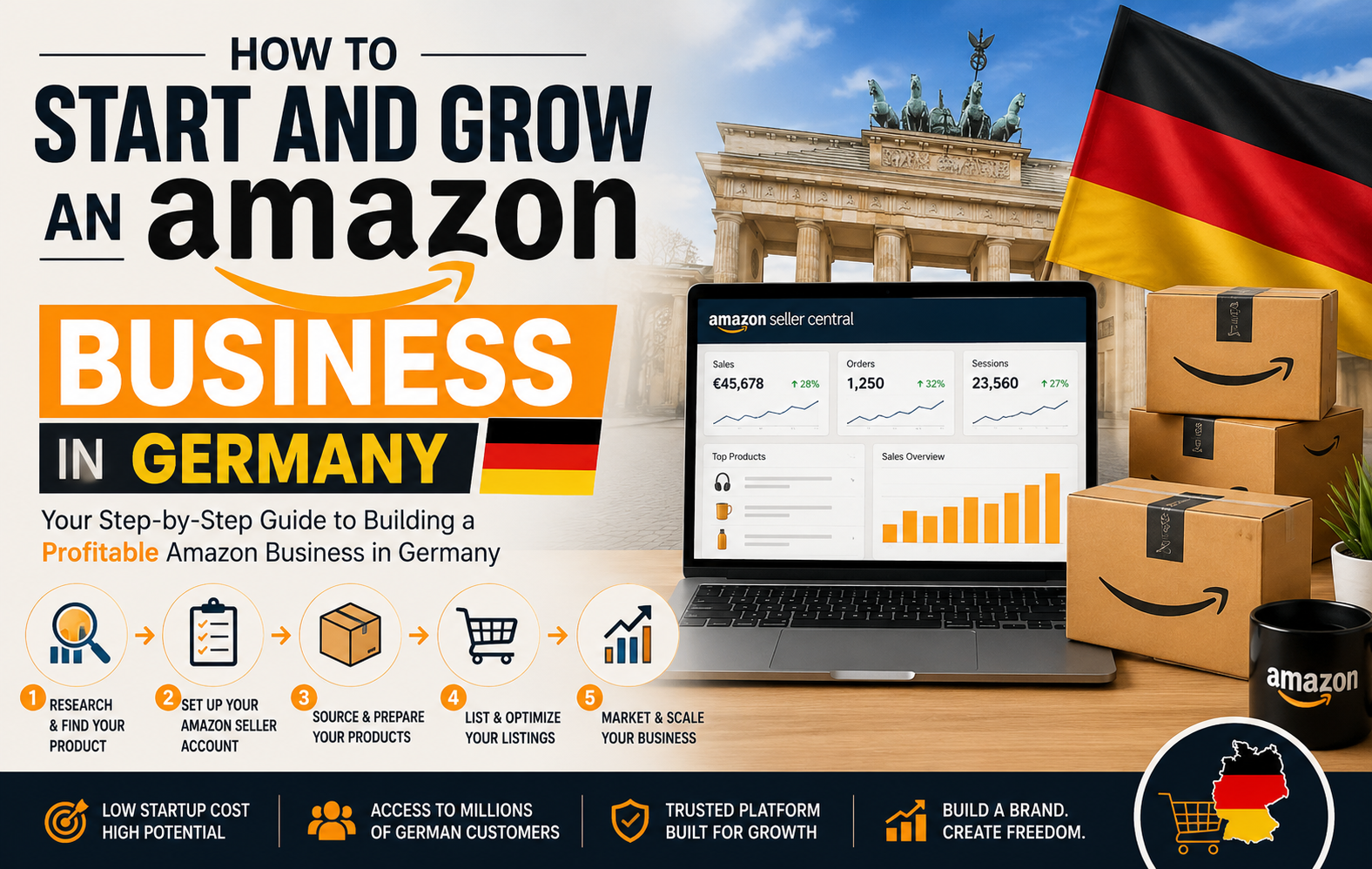
Germany stands as the largest economy in Europe and boasts one of the most robust e-commerce markets in the world. With high internet penetration and a population that embraces online shopping, the potential for digital retail is massive. At the center of this booming industry is Amazon.de, a platform that dominates the local market and serves as the primary search engine for product discovery among German consumers.
Launching an enterprise here offers access to tens of millions of active buyers. Shoppers in this region are known for their strong purchasing power and high expectations regarding product quality and delivery speed. Meeting these expectations can lead to intense customer loyalty and consistent revenue growth for your brand.
However, expanding into a new international market requires careful planning. You must navigate specific legal frameworks, tax obligations, and cultural preferences. Failing to comply with local regulations can lead to account suspensions or heavy fines, turning a lucrative opportunity into a costly mistake.
This comprehensive guide covers everything you need to know to establish a successful Amazon business in Germany. You will learn how to handle necessary legal registrations, choose the right fulfillment methods, optimize your product listings for local buyers, and scale your operations efficiently.
Understanding the German E-commerce Landscape
Before setting up your seller account, it helps to understand the environment you are entering. The German market has unique characteristics that influence how businesses operate and how consumers make purchasing decisions.
High Purchasing Power and Consumer Behavior
German consumers possess significant disposable income and are highly comfortable buying physical goods online. They prioritize quality, clear product descriptions, and transparent pricing. Reviews play a massive role in their decision-making process. A product with poor reviews or vague specifications will struggle to gain traction. Furthermore, buyers expect a seamless return process. A complicated return policy can quickly deter potential customers.
The Dominance of Amazon.de
Amazon.de is not just a marketplace; it is the default starting point for online shopping in the region. Many users bypass traditional search engines entirely, opting to search for products directly on Amazon. This platform also services neighboring countries like Austria, Switzerland, and the Netherlands, giving sellers an even broader reach across Central Europe. By establishing a strong presence on Amazon.de, you tap into a massive, multi-country customer base.
Legal and Regulatory Requirements
Compliance is the most critical aspect of running an Amazon business in Germany. The government enforces strict rules for digital commerce, and Amazon requires all sellers to adhere to these local laws.
Registering Your Business
If you plan to operate locally within the country, you must register your business with the local trade office (Gewerbeamt). This process is known as Gewerbeanmeldung. For international sellers operating from abroad, you do not necessarily need a German corporate entity, but you must still comply with European and local tax laws to sell to local citizens.
VAT (Value Added Tax) Registration
Value Added Tax (VAT) compliance is mandatory. You need a German VAT number (USt-IdNr) if you store your inventory within the country or if your sales to German consumers exceed the EU distance selling thresholds. Amazon requires you to upload your VAT certificate to your Seller Central account. Without it, the platform will suspend your selling privileges. Securing a VAT number involves registering with the local tax office (Finanzamt), a process that can take several weeks. Many sellers hire specialized tax advisors to handle these filings and ensure ongoing compliance.
Packaging Laws and the LUCID Register
Germany has strict environmental regulations regarding packaging waste. The German Packaging Act (VerpackG) requires all businesses that ship packaged goods to consumers to register with the LUCID Packaging Register. You must also pay a fee to a dual system provider for the recycling and recovery of your packaging materials. This applies to product packaging, shipping boxes, and any protective materials used inside the box. You must provide your LUCID registration number to Amazon to prove compliance.
The Impressum Requirement
German law requires commercial websites and online seller profiles to display an “Impressum” or legal notice. This document must clearly state who owns and operates the business, including the company name, authorized representatives, physical address, and contact information. Amazon provides a specific field in Seller Central for you to input your Impressum details.
Setting Up Your Amazon Seller Central Account
Once you understand the legal landscape, you can begin the technical setup of your storefront.
Choosing the Right Seller Plan
Amazon offers two main selling plans: Individual and Professional. The Individual plan is suitable if you intend to sell fewer than 40 items per month. It charges a small fee per item sold. The Professional plan requires a flat monthly subscription fee (usually €39 excluding VAT) but waives the per-item fee. The Professional plan also unlocks essential features like advanced reporting, API access, and the ability to win the Buy Box. For anyone looking to build a serious Amazon business in Germany, the Professional plan is a necessity.
Verifying Your Identity and Bank Details
Account verification is a rigorous process. Amazon will ask for government-issued identification, proof of address, and business registration documents. Ensure all the information matches exactly. A slight discrepancy between your bank statement address and your Seller Central address can cause significant delays. You will also need to provide a valid bank account to receive disbursements.
Fulfillment Methods: FBA vs. FBM
How you get products to your customers affects your overhead costs, visibility, and customer satisfaction. You have two primary options for fulfillment.
Fulfillment by Amazon (FBA)
With FBA, you send your inventory to Amazon’s fulfillment centers located across the region. Amazon handles storage, picking, packing, shipping, and customer service. Products fulfilled by Amazon automatically receive the Prime badge. This badge is highly coveted because Prime members purchase more frequently and prefer items with guaranteed fast shipping. FBA removes the logistical headaches of warehousing and shipping, allowing you to focus on marketing and sourcing.
Fulfillment by Merchant (FBM)
FBM means you handle all storage and shipping yourself or through a third-party logistics (3PL) provider. You are entirely responsible for meeting Amazon’s strict delivery timelines and handling customer inquiries. FBM can be cost-effective for oversized items or products with very low profit margins where FBA fees would eat up the revenue. However, winning the Buy Box is generally harder with FBM unless you can match Prime delivery speeds.
Expanding with Pan-European FBA
As your business grows, you might consider the Pan-European FBA program. You send your inventory to a single fulfillment center, and Amazon distributes it across its European network based on anticipated demand. This allows you to offer fast delivery to customers in France, Italy, Spain, and elsewhere while only paying local fulfillment fees.
Optimizing Product Listings for the German Market
Visibility on Amazon relies heavily on how well your product listings are optimized. You must appeal to the search algorithm and the human buyer simultaneously.
Accurate Translation and Localization
Translating your English listings word-for-word using automated software will hurt your sales. German sentence structure and vocabulary nuances require professional localization. You must conduct keyword research specifically in German to understand what terms local buyers actually type into the search bar. Hire a native speaker to write your titles, bullet points, and product descriptions. This ensures the copy flows naturally and highlights the features most important to the local demographic.
High-Quality Images and A+ Content
Visual presentation builds trust. Use high-resolution images showing your product from multiple angles. Include lifestyle images that demonstrate the product in use, and use infographics to explain complex features or sizing charts. If you have registered your brand with Amazon Brand Registry, utilize A+ Content. This feature allows you to add enhanced images, rich text, and brand stories to your product description area, significantly improving conversion rates.
Customer Service and Managing Returns
German buyers expect prompt, polite, and helpful customer service. All customer inquiries must be answered in German within 24 hours. If you use FBA, Amazon handles most of this for you. If you fulfill orders yourself, you must have native speakers ready to assist buyers. Clear communication can often prevent negative reviews and minimize return rates.
Frequently Asked Questions
Do I need to live in Germany to sell on Amazon.de?
No, you do not need to be a resident. Sellers from all over the world operate successfully on Amazon.de. However, you must comply with local tax laws, obtain necessary VAT numbers, and provide customer support in the local language.
How much does it cost to start an Amazon business in Germany?
Initial costs vary widely based on your product sourcing strategy. Basic expenses include inventory purchases, the €39 monthly Professional Seller fee, VAT registration services (which can range from a few hundred to a thousand euros annually), and LUCID packaging fees. A sensible starting budget for private label sellers is often between €3,000 and €5,000.
What is the LUCID packaging register?
The LUCID register is a mandatory database managed by the Central Agency Packaging Register (ZSVR). Any business that places packaged goods into the German market for consumers must register here to ensure they contribute to the national recycling systems.
Can I manage my Seller Central account in English?
Yes. The Seller Central dashboard allows you to change the interface language to English. This makes it easy to navigate the backend, run reports, and manage inventory without needing to speak a foreign language. However, all outward-facing content, such as product listings and customer messages, must be localized.
Take the Next Step in European E-commerce
Launching an Amazon business in Germany presents an incredible opportunity to reach millions of dedicated shoppers. While the initial setup requires careful attention to legal requirements like VAT and packaging laws, the long-term rewards easily justify the effort. By understanding local consumer habits, leveraging Fulfillment by Amazon, and optimizing your listings with professional localization, you can build a highly profitable brand in Europe’s most powerful economy.
Begin by researching your product niche on Amazon.de today. Assess the competition, calculate your potential profit margins, and start assembling your compliance strategy. With the right preparation, your expansion into this thriving marketplace will set the foundation for long-term international success.

