

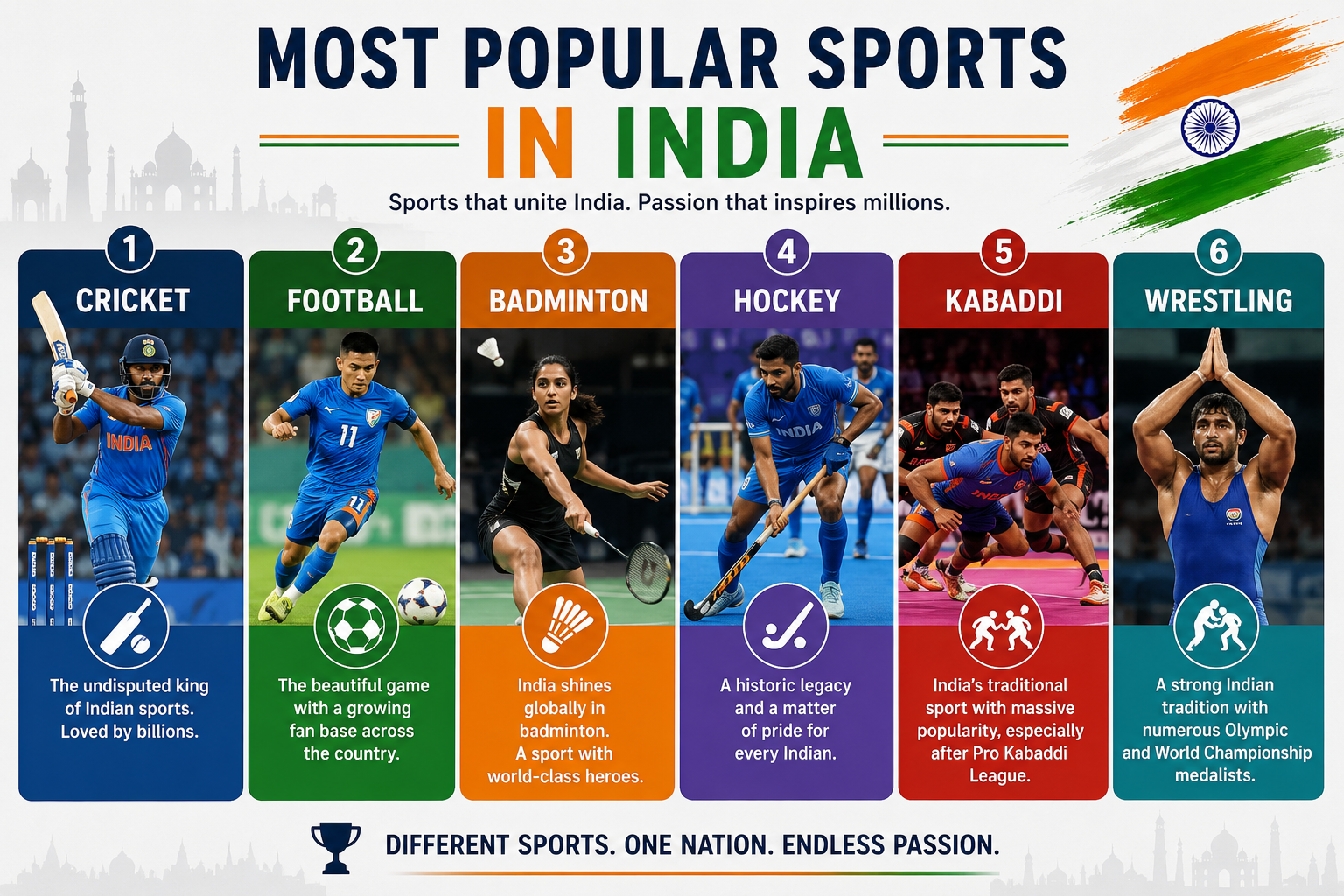
India boasts a rich tapestry of athletic traditions, blending ancient games with modern global competitions. Sports serve as a powerful unifying force across the vast subcontinent, transcending languages, religions, and geographical borders. People gather around televisions in bustling cities and play on dusty fields in rural villages, demonstrating a shared passion for athletic excellence.
The country’s sporting landscape has evolved dramatically over the past few decades. While one particular bat-and-ball game often dominates the headlines, a closer look reveals a highly diverse athletic culture. Investments in local leagues, better infrastructure, and increased international exposure have paved the way for multiple sports to capture the public’s imagination.
Understanding the most popular sports in India offers a unique window into the nation’s culture and values. From traditional contact sports rooted in ancient history to global phenomena that fill massive stadiums, the Indian sporting ecosystem is vibrant and continually expanding. This guide breaks down the defining sports that keep over a billion people cheering.
Table of Contents
Cricket: The Undisputed King
It is impossible to discuss Indian sports without starting with cricket. Introduced during the British colonial era, the sport has grown into an unofficial religion. Children learn to hold a bat almost as soon as they can walk, using makeshift equipment in narrow alleyways and empty lots.
The Impact of the Indian Premier League
The launch of the Indian Premier League (IPL) in 2008 revolutionized the sport entirely. The franchise-based Twenty20 tournament brought together international superstars and local talent, creating a massive entertainment spectacle. The IPL not only generates billions of dollars in revenue but also provides a platform for unknown domestic players to showcase their skills on a global stage.
International Dominance
The Indian national cricket team consistently ranks among the best in the world across all formats—Test, One Day International (ODI), and Twenty20. Historic victories, such as the 1983 World Cup win led by Kapil Dev and the 2011 World Cup triumph under MS Dhoni, are etched deeply into the national consciousness. Current icons continue to inspire millions, ensuring cricket’s dominance remains unchallenged.
Kabaddi: The Indigenous Powerhouse
Kabaddi is a high-octane contact sport that originated in ancient India. For decades, it was primarily played in rural areas on mud courts. The objective is simple but physically demanding: a “raider” must cross into the opposing team’s half, tag as many defenders as possible, and return to their own half while holding their breath and chanting “kabaddi.”
The Rise of the Pro Kabaddi League
The perception of Kabaddi transformed completely with the introduction of the Pro Kabaddi League (PKL) in 2014. By packaging the traditional game with bright lights, colored mats, and television broadcasts, the PKL turned local athletes into national celebrities.
Expanding Global Reach
Today, Kabaddi is the second most-watched sport in India. Its popularity has even spilled over the borders, gaining traction in countries like Iran, South Korea, and Kenya. The fast-paced nature of a 40-minute match makes it perfectly suited for modern television audiences, securing its spot as a staple of Indian sports entertainment.
Football: The Beautiful Game Gaining Ground
Football holds a massive, deeply rooted fan base in specific regions of India, particularly West Bengal, Kerala, Goa, and the northeastern states. In these areas, local derbies draw crowds that rival major European matches.
The Indian Super League
To elevate the standard of the sport nationwide, the Indian Super League (ISL) was established. The league injected much-needed capital, professional infrastructure, and international expertise into Indian football. Franchises partnered with European clubs and brought in high-profile international players and coaches to raise the domestic competition level.
A Growing National Fanbase
Beyond domestic leagues, millions of Indians avidly follow European football. Clubs from the English Premier League, La Liga, and Serie A have massive supporter clubs across Indian cities. As grassroots training programs improve, the ultimate dream for Indian football fans remains seeing their national team qualify for the FIFA World Cup.
Badminton: Producing Global Champions
Badminton has always been a popular recreational activity in India, often played in winter evenings across neighborhood parks. However, its status as a premier competitive sport skyrocketed due to a string of extraordinary international successes by Indian athletes over the last two decades.
Olympic Medals and Historic Wins
Players like Saina Nehwal and P.V. Sindhu brought badminton to the forefront by consistently winning medals at the Olympics and World Championships. Their success inspired a massive surge in badminton academy enrollments across the country.
The Thomas Cup Victory
In 2022, the Indian men’s team achieved the unthinkable by winning the prestigious Thomas Cup, defeating the defending champions Indonesia. This monumental victory cemented India’s status as a global badminton superpower and ensured the sport’s continued popularity among the youth.
Field Hockey: A Legacy of Pride
Field hockey holds a special, nostalgic place in the hearts of Indians. For a large part of the 20th century, India was the undisputed master of the sport, winning eight Olympic gold medals. Legendary players like Major Dhyan Chand mesmerized opponents with their incredible stickwork and agility.
A Modern Resurgence
After a prolonged period of decline due to the shift from grass to artificial turf, Indian hockey has seen a strong resurgence. The men’s national team secured a historic bronze medal at the Tokyo 2020 Olympics, ending a 41-year Olympic medal drought. This victory reignited national passion for the sport, backed by heavy investments in new astroturf facilities and professional coaching setups.
Athletics and Wrestling: Strength and Speed
Individual sports like athletics and wrestling have traditionally been strongholds for India, particularly in regional competitions like the Asian Games and Commonwealth Games.
The Javelin Revolution
Track and field gained unprecedented popularity when Neeraj Chopra won the gold medal in javelin throw at the Tokyo Olympics. His historic achievement—India’s first-ever Olympic gold in athletics—turned him into a national icon and sparked immense interest in track and field events among young athletes.
The Wrestling Tradition
Wrestling, or “kushti,” has deep cultural roots in the akharas (traditional gyms) of Northern India, especially in Haryana and Punjab. Indian wrestlers consistently bring home medals from international events. The success of female wrestlers, famously depicted in popular culture, has also broken down significant gender barriers in the sport.
Chess: The Game of Kings
India is widely considered the birthplace of chess (originally known as Chaturanga), and the mind game enjoys a massive following today. Viswanathan Anand, a five-time World Chess Champion, is largely credited with sparking the modern chess revolution in the country.
A Factory of Grandmasters
Following in Anand’s footsteps, India has produced a staggering number of young Grandmasters. Prodigies like Rameshbabu Praggnanandhaa and Gukesh D frequently make global headlines by defeating the world’s highest-rated players. With chess easily accessible through online platforms, its popularity continues to surge among students and adults alike.
Frequently Asked Questions (FAQ)
What is the national sport of India?
Contrary to popular belief, India does not have an officially designated national sport. While field hockey is often mistakenly referred to as the national sport due to its historical Olympic success, the Ministry of Youth Affairs and Sports has clarified that the government encourages all sports equally without giving one a specific national title.
Why is cricket so much more popular than other sports in India?
Cricket’s unparalleled popularity stems from a combination of historical legacy, early international success (like the 1983 World Cup), strong administrative backing by the BCCI, and massive corporate sponsorships. The game is easily adaptable, requiring minimal equipment for casual street play, which helps foster deep grassroots engagement.
Is basketball popular in India?
Basketball is steadily growing in popularity, particularly in urban schools and colleges. The NBA has heavily invested in the Indian market by establishing academies and hosting preseason games in the country. While it hasn’t reached the viewership numbers of cricket or kabaddi, its youth participation rates are very encouraging.
How is the Indian government supporting athletes?
The government has launched several initiatives, most notably the “Khelo India” (Play India) program. This initiative focuses on reviving sports culture at the grassroots level by building better infrastructure, providing scholarships to young talents, and hosting national youth games to identify future Olympic prospects.
The Future of the Indian Sporting Landscape
The sporting culture in India has never been more dynamic. While cricket will likely maintain its stronghold for the foreseeable future, the rapid rise of franchise leagues in kabaddi, football, and volleyball demonstrates a strong public appetite for diverse athletic entertainment.
As corporate investments grow and government programs begin to yield results, the focus is shifting toward creating a multi-sport ecosystem. Young athletes now have more viable career paths and access to world-class training facilities than ever before. For fans, this means the coming decades will offer an even richer, more exciting variety of sports to watch, play, and celebrate.

