

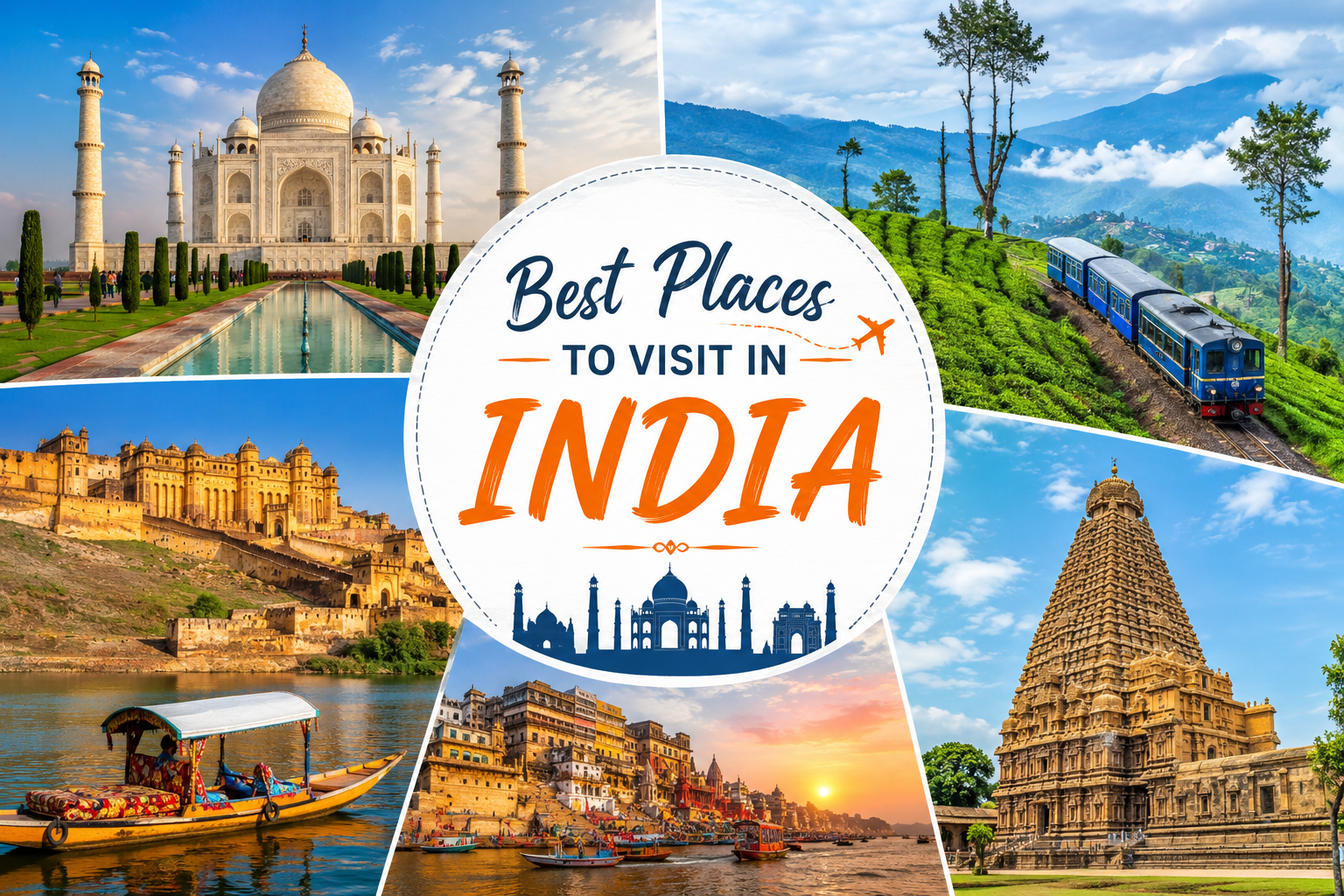
India is a vast, incredibly diverse country that offers a striking mix of landscapes, cultures, and histories. From the snow-capped peaks of the Himalayas in the north to the sun-drenched, palm-fringed beaches of the south, every region presents a completely unique experience. Planning a trip here can quickly become overwhelming simply because there is so much ground to cover.
Table of Contents
Travelers often find themselves wondering how to prioritize their itinerary. Should you focus on the majestic forts of Rajasthan, the peaceful backwaters of Kerala, or the spiritual intensity of Varanasi? The right answer depends entirely on your personal travel style and what you hope to gain from the experience.
This guide highlights the absolute best places to visit in India. We have broken down these destinations by region and vibe, providing detailed insights into what makes each location special. By the end of this post, you will have a clear roadmap to help you build the perfect itinerary for your upcoming Indian adventure.
The Majestic North
Northern India is famous for its monumental architecture, sweeping desert landscapes, and towering mountain ranges. This region holds some of the country’s most iconic landmarks and offers a deep look into India’s royal and spiritual history.
Agra, Uttar Pradesh
No list of Indian travel destinations is complete without Agra. Home to the Taj Mahal, this city draws millions of visitors every year. Built by Emperor Shah Jahan as a memorial for his beloved wife, the white marble mausoleum changes color as the sun moves across the sky. Sunrise is widely considered the best time to visit, as the morning light creates a soft, ethereal glow and the crowds are generally thinner.
Beyond the Taj Mahal, Agra features several other remarkable historical sites. The Agra Fort, a massive red sandstone fortress, offers a fascinating look into the lives of the Mughal emperors. Just a short drive away lies Fatehpur Sikri, an abandoned royal city perfectly preserved in time.
Jaipur, Rajasthan
Known as the Pink City due to the distinctive color of its historic buildings, Jaipur forms one-third of India’s famous Golden Triangle tourist circuit. The city serves as a gateway to the desert state of Rajasthan and boasts some of the country’s most spectacular palaces.
The Amber Fort sits on a rugged hill just outside the city center, offering breathtaking views of the Maota Lake below. Inside the city, the City Palace remains a royal residence, while the Hawa Mahal (Palace of Winds) features a stunning honeycomb facade with hundreds of tiny windows. Shoppers will love Jaipur’s bustling bazaars, which are filled with handcrafted textiles, bright pottery, and intricate jewelry.
Ladakh
For those seeking rugged natural beauty and high-altitude adventure, Ladakh is an unmatched destination. Located in the northernmost part of the country, this region is defined by barren mountains, deep valleys, and brilliant blue lakes.
The culture here is heavily influenced by Tibetan Buddhism. Ancient monasteries like Thiksey and Hemis cling to rocky hillsides, offering a peaceful atmosphere and stunning panoramic views. Pangong Lake, which stretches across the border into China, is famous for its ever-changing shades of blue. Because of the extreme altitude, visitors must take a few days to acclimatize upon arrival in the capital town of Leh.
The Vibrant South
If the north is defined by its intensity and monumental history, the south offers a more relaxed pace. Here, you will find lush greenery, ancient temples, and incredibly flavorful cuisine heavily featuring coconut and fresh spices.
Kerala
Often referred to as “God’s Own Country,” Kerala is a narrow strip of land along India’s southwestern coast. The region is most famous for its tranquil backwaters, a vast network of interconnected canals, rivers, and lakes. Renting a traditional houseboat in Alleppey and drifting through these palm-lined waterways is one of the most relaxing experiences in the country.
Kerala also offers beautiful hill stations like Munnar, where rolling green hills are completely covered in tea plantations. The coastal city of Kochi features a rich colonial history, evidenced by its unique blend of Dutch, Portuguese, and British architecture, alongside the iconic Chinese fishing nets that line the harbor.
Hampi, Karnataka
Hampi feels like a place out of a fantasy novel. This UNESCO World Heritage site was once the capital of the prosperous Vijayanagara Empire. Today, it is a vast landscape of massive boulders interspersed with the stunning ruins of ancient temples and royal pavilions.
The Virupaksha Temple remains an active place of worship, towering over the main bazaar. Meanwhile, the intricately carved stone chariot at the Vittala Temple showcases the incredible craftsmanship of the era. Exploring Hampi by bicycle or motorbike allows you to easily hop between the main ruins and the incredibly lush banana plantations that surround them.
The Spiritual and Cultural Heart
India is the birthplace of several major world religions, and its spiritual heart beats loudly in its central and northern plains. These cities offer profound, intense experiences that leave a lasting impact on visitors.
Varanasi, Uttar Pradesh
Varanasi is one of the oldest continuously inhabited cities in the world. Situated on the banks of the sacred Ganges River, it is the holiest city in Hinduism. Pilgrims come here to wash away their sins in the river and cremate their loved ones on the burning ghats along the water’s edge.
Taking a sunrise boat ride on the Ganges provides a quiet vantage point to observe the morning rituals. In the evening, the Dashashwamedh Ghat hosts the Ganga Aarti, a powerful and highly choreographed fire ceremony accompanied by chanting and music. Varanasi can be chaotic and overwhelming, but it offers an unfiltered look at life, death, and devotion in India.
Amritsar, Punjab
Located near the border with Pakistan, Amritsar is the spiritual center of the Sikh religion. The city’s main attraction is the magnificent Golden Temple (Harmandir Sahib). Covered in gold leaf and surrounded by a sacred pool, the temple is a place of profound peace and equality.
The temple’s community kitchen, known as a langar, serves free meals to up to 100,000 people every single day, regardless of their religion or background. Volunteering in the kitchen or simply sitting by the water and listening to the devotional music provides a deeply moving cultural experience.
The Scenic Coasts and Islands
With thousands of miles of coastline, India offers plenty of opportunities for beach lovers to soak up the sun.
Goa
Goa is India’s most popular beach destination, known for its golden sands, laid-back atmosphere, and vibrant nightlife. Because it was a Portuguese colony until 1961, Goa has a distinctly different flavor from the rest of the country.
North Goa is characterized by busy beaches, bustling markets, and lively parties. South Goa offers a quieter experience with secluded resorts and pristine stretches of sand. Beyond the beaches, visitors can explore the crumbling Portuguese forts, grand baroque churches in Old Goa, and lush spice plantations scattered throughout the interior.
Andaman and Nicobar Islands
For a true tropical escape, head to the Andaman and Nicobar Islands in the Bay of Bengal. These remote islands offer some of the best scuba diving and snorkeling in South Asia, with crystal-clear waters and vibrant coral reefs.
Havelock Island is the most popular destination for travelers, home to the stunning Radhanagar Beach. With its white powdery sand and turquoise water, it frequently ranks among the best beaches in all of Asia.
Frequently Asked Questions About Visiting India
What is the best time to visit India?
The ideal time to visit most parts of India is during the winter months, from November to March. During this time, the weather is generally dry and cool, making it comfortable for sightseeing. The summer months (April to June) can be unbearably hot, while the monsoon season (July to September) brings heavy rains that can disrupt travel plans. However, the summer is the perfect time to visit the high-altitude regions of Ladakh and the Himalayas.
Do I need a visa to enter India?
Yes, most foreign nationals require a visa to enter India. Fortunately, the Indian government offers an e-Visa facility for citizens of over 160 countries. You can apply for a tourist e-Visa online before your trip, which is typically processed within a few days.
Is it safe for solo female travelers?
India is a rewarding but challenging destination for solo female travelers. While millions of women travel safely through India every year, it requires a higher level of vigilance than many other countries. Dress conservatively by covering your shoulders and knees, avoid traveling alone at night, and trust your instincts. Booking higher-end transportation and accommodations can also provide a more secure environment.
How should I get around the country?
India has one of the largest railway networks in the world, and taking a train is a quintessential Indian experience. For long distances, domestic flights are highly affordable and save a massive amount of time. For shorter trips within cities or between nearby towns, you can use ride-hailing apps like Uber and Ola, or negotiate a fare with a local auto-rickshaw driver.
Start Planning Your Indian Adventure
India is a destination that demands to be felt rather than just seen. Whether you are navigating the energetic streets of Delhi, finding peace in a Himalayan monastery, or eating fresh seafood on a Goan beach, the country will challenge and reward you in equal measure.
Start by picking one or two specific regions rather than trying to see the entire country in a single trip. Book your flights, secure your visa, and prepare yourself for an unforgettable journey. Safe travels!

