


Ben Zhou is the co-founder and CEO of Bybit, one of the world’s largest cryptocurrency derivatives exchanges. Zhou founded Bybit in 2018 after a career in forex trading, and he built it into a platform serving over 60 million registered users globally. His public response to Bybit’s $1.5 billion hack in February 2025 drew widespread attention across the crypto industry.
Few names carry as much weight in the cryptocurrency exchange world as Ben Zhou. His platform, Bybit, has grown from a regional derivatives exchange into a global trading giant — and Zhou himself has become one of the most closely watched figures in digital finance. To understand why Ben Zhou matters, you need to trace the full arc of his career, his philosophy, and the moments that defined his leadership under pressure.
This article covers everything you need to know: who Ben Zhou is, how he built Bybit, what happened during one of crypto’s largest-ever hacks, and why his story resonates far beyond the world of derivatives trading. For broader context on crypto leadership profiles, resources like Trafily and TechBullion offer detailed coverage of figures shaping the digital asset space.
Who Is Ben Zhou and What Is His Background Before Bybit?
Ben Zhou was born in China and spent the early part of his career working in the traditional financial sector. He gained significant experience in the foreign exchange (forex) industry, most notably at XM Group, a major retail forex broker. During his time there, Zhou worked across the Asia-Pacific region, gaining deep insight into how retail traders think, what they want from a platform, and where existing brokers consistently fell short.
That experience proved formative. Zhou saw firsthand how clunky legacy systems frustrated active traders, how poor customer support eroded trust, and how a lack of transparency drove users away. By the time Bitcoin and Ethereum began attracting serious trading volume in 2017, Zhou recognized that the crypto derivatives market was wide open — and largely underserved by platforms built to professional standards.
His background was not in blockchain or software engineering. It was in understanding traders. That perspective became the foundation on which Bybit was built.
How Did Ben Zhou Found Bybit and What Was His Vision for the Platform?
Ben Zhou co-founded Bybit in March 2018, headquartered in Singapore. The goal was clear from the start: build a crypto derivatives exchange that could rival the reliability and user experience of traditional financial platforms, while offering the flexibility and speed that crypto traders demanded.
Bybit launched with a focus on perpetual contracts — a type of derivative that allows traders to speculate on cryptocurrency prices without holding the underlying asset. Perpetual contracts had already proven popular on platforms like BitMEX, but Zhou believed the market needed a cleaner, more stable alternative. Bybit marketed itself heavily on execution speed and uptime, making a point of the fact that its trading engine could handle 100,000 transactions per second.
The early growth was rapid. By 2020, Bybit had established itself as a major player in the derivatives space. By 2021, as the bull market brought millions of new traders into crypto, Bybit’s user base surged. According to Bybit’s own published figures, the platform reached over 60 million registered users by 2024, making it one of the top three crypto exchanges by derivatives trading volume globally (Bybit official).
What Products and Services Has Bybit Developed Under Ben Zhou’s Leadership?
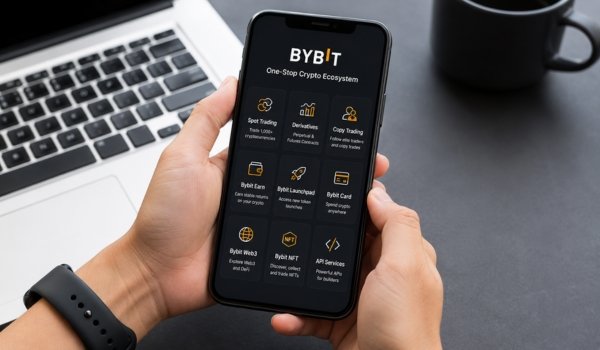
Under Ben Zhou’s leadership, Bybit expanded far beyond its origins as a pure derivatives platform. The exchange added spot trading, options contracts, copy trading, a Web3 wallet, and a crypto launchpad for new token projects. It also developed Bybit Earn, a suite of yield-generating products for users looking to grow their holdings passively.
Zhou consistently emphasized product quality over rapid feature releases. Bybit built its own trading engine in-house rather than relying on third-party infrastructure — a decision that gave the platform a performance edge and more direct control over stability during high-volume market events.
The exchange also moved aggressively into institutional services. Bybit launched OTC trading desks, prime brokerage services, and API solutions tailored to professional trading firms. This dual focus — serving both retail and institutional clients — reflected Zhou’s view that a sustainable exchange needed to build legitimacy across both markets.
For those interested in how Bybit compares to other exchanges and how its product suite has evolved, TechBullion regularly publishes analysis on major crypto platforms and the people who lead them.
What Happened During the Bybit Hack in February 2025 and How Did Ben Zhou Respond?
On February 21, 2025, Bybit suffered what became the largest cryptocurrency hack in history. According to on-chain data and subsequent investigations, approximately $1.5 billion in Ethereum was stolen from a Bybit cold wallet. The attack was later attributed to the Lazarus Group, a North Korean state-sponsored hacking collective with a long history of targeting crypto platforms.
The scale of the theft sent shockwaves through the industry. Cold wallets — offline storage systems — are generally considered among the most secure methods of holding digital assets. The fact that attackers had found a way to compromise one at this scale raised immediate questions about the security practices of exchanges industry-wide.
Ben Zhou’s response was swift and public. Within hours of the incident, Zhou appeared live on social media to confirm the hack, explain what had happened, and reassure users that Bybit remained solvent. He stated directly that client funds were safe, that Bybit held assets on a 1:1 basis, and that the platform could cover the losses even if the stolen ETH was never recovered. Zhou said: “Bybit is solvent. Even if this hack’s loss is not recovered, all of clients’ assets are backed 1 to 1.”
That transparency stood in sharp contrast to how other exchange failures — most notably the collapse of FTX in 2022 — had played out. Rather than going quiet or downplaying the severity, Zhou leaned into full public accountability. Bybit published a proof-of-reserves verification and opened its books to independent auditors within days.
The platform also moved quickly to source replacement ETH through over-the-counter purchases and emergency loans from industry partners, including a reported loan from Bitget. Trading continued without interruption throughout the crisis.
Why Did Ben Zhou’s Handling of the Hack Matter for the Broader Crypto Industry?
The way Ben Zhou handled the February 2025 hack drew praise from analysts, competitors, and regulators alike — not because the hack itself reflected well on Bybit, but because Zhou’s response demonstrated what responsible crisis management looks like in crypto.
The crypto industry has been plagued by a credibility problem. High-profile collapses — Terra Luna, Celsius, FTX — all shared a common feature: leadership that obscured the truth until it was too late. Zhou did the opposite. He communicated early, communicated honestly, and backed his words with verifiable on-chain data.
Blockchain analytics firm Chainalysis confirmed the hack was linked to North Korea’s Lazarus Group, which has reportedly stolen over $3 billion in crypto since 2017 (Chainalysis). That attribution shifted some of the reputational burden away from Bybit’s security practices and toward the increasingly serious issue of state-sponsored cyber attacks on financial infrastructure.
For regulators considering how to treat crypto exchanges, Bybit’s transparent response provided a useful example of how disclosure and communication standards might work in practice. Zhou’s handling of the crisis arguably strengthened the case for treating Bybit as a serious financial institution rather than a speculative platform operating in regulatory grey zones.
Coverage from platforms like Trafily and TechBullion noted at the time that Zhou’s willingness to go on record immediately set a new benchmark for executive accountability in the space.
Where Does Bybit Operate and How Has Ben Zhou Navigated the Regulatory Landscape?
Regulatory compliance has been one of the more complex challenges facing Bybit under Ben Zhou’s leadership. The exchange originally operated from Singapore, but Singapore’s Monetary Authority tightened its licensing requirements significantly in 2022. Bybit relocated its headquarters to Dubai, where the Virtual Assets Regulatory Authority (VARA) has established a more defined framework for crypto platforms.
Bybit obtained a Virtual Asset Service Provider license in Dubai, a milestone that gave the exchange formal regulatory standing in a jurisdiction increasingly recognized as a global crypto hub. Zhou has spoken publicly about the importance of working with regulators rather than around them, describing licensing as essential to long-term legitimacy.
The exchange has faced regulatory scrutiny in several markets, including restrictions on its operations in the United Kingdom and Germany at various points. These challenges reflect the broader tension between a global platform and a fragmented international regulatory environment — a challenge that every major exchange must navigate.
For context on how Bybit’s regulatory journey compares to that of other major exchanges, Link Luminous covers digital finance developments and platform credibility topics relevant to traders and researchers.
What Is Ben Zhou’s Leadership Philosophy and What Sets Him Apart From Other Crypto CEOs?
Ben Zhou occupies a distinct position among crypto exchange founders. He did not come from a technical background, he did not make his name as an early Bitcoin advocate, and he has not cultivated a cult of personality in the way that some other crypto figures have. His public presence is measured, his communication style is direct, and his focus has consistently been on operational execution rather than narrative.
That grounded approach has made Bybit a more stable platform than many of its competitors. While other exchanges have faced governance crises tied to founder overreach or misaligned incentives, Bybit has maintained a relatively clear separation between leadership ego and platform function.
Zhou has spoken in interviews about the importance of building for traders first — understanding the product from the user’s perspective, not from the perspective of a technologist or an ideologue. That philosophy traces directly back to his forex trading roots, where the quality of a platform lived or died by the experience of the person on the other side of the screen.
What Is Ben Zhou’s Net Worth and How Significant Is Bybit in the Crypto Exchange Market?
Ben Zhou’s exact net worth has not been publicly confirmed, and Bybit is a private company with no obligation to disclose financial statements. Industry estimates vary, but given Bybit’s scale — over 60 million registered users and consistent placement among the top three exchanges by derivatives volume — Zhou’s stake in the business is widely considered to be worth several billion dollars.
Bybit’s trading volume regularly places it among the top global exchanges. On high-volatility days, the platform has reported daily trading volumes exceeding $10 billion across spot and derivatives markets. For comparison, the exchange competes directly with Binance, OKX, and Deribit in the derivatives space (CoinGecko).
These figures position Ben Zhou as one of the most consequential figures in crypto exchange history — not in terms of headline-grabbing announcements, but in terms of sustained operational impact.
What Does Ben Zhou’s Story Tell Us About the Future of Crypto Exchange Leadership?
Ben Zhou’s trajectory offers a template for what durable crypto exchange leadership might look like going forward. The era of charismatic founders who prioritize narrative over infrastructure appears to be giving way to a more operational model — one where reliability, transparency, and regulatory engagement matter more than brand mythology.
The 2025 hack tested that model under extreme pressure. Bybit survived not because the attack was small, but because the platform’s financial foundation was solid and because Zhou communicated with enough clarity to prevent a confidence collapse. That outcome was not accidental. It was the product of years of deliberate decisions about how to build a resilient exchange.
As crypto markets continue to mature and regulatory frameworks take shape globally, the qualities Ben Zhou has demonstrated — financial discipline, transparent communication, and an operator’s mentality — are likely to become the standard by which exchange CEOs are judged.
For more profiles of influential figures in crypto and technology, visit Trafily, TechBullion, and Link Luminous.
Frequently Asked Questions About Ben Zhou and Bybit
Who is Ben Zhou and what is his role at Bybit?
Ben Zhou is the co-founder and CEO of Bybit, one of the world’s largest cryptocurrency derivatives exchanges. Zhou co-founded Bybit in 2018 after a career in forex brokerage and has led the company to over 60 million registered users globally.
When was Bybit founded and where is it headquartered?
Bybit was founded in March 2018. The exchange originally operated from Singapore and later relocated its headquarters to Dubai, where it holds a Virtual Asset Service Provider license issued by Dubai’s VARA.
What happened in the Bybit hack of February 2025?
In February 2025, Bybit lost approximately $1.5 billion in Ethereum in a hack attributed to North Korea’s Lazarus Group. The attack compromised a cold wallet. Ben Zhou confirmed the hack publicly within hours, assured users that the platform remained solvent, and Bybit quickly sourced replacement assets to cover the loss.
How did Bybit survive the $1.5 billion hack?
Bybit survived the hack because Zhou confirmed the exchange held all client assets on a 1:1 basis and had sufficient reserves to absorb the loss. The platform sourced replacement ETH through OTC purchases and emergency loans, and trading continued without interruption.
What is Bybit’s main product and who is it designed for?
Bybit’s core product is perpetual contract trading — a type of derivative that allows users to speculate on cryptocurrency prices without owning the underlying asset. The platform serves both retail traders and institutional clients, with products ranging from spot trading to copy trading and institutional OTC services.
How does Ben Zhou differ from other crypto exchange CEOs?
Ben Zhou’s background in forex brokerage, rather than technology or Bitcoin advocacy, gives him an operator-first perspective that distinguishes him from many other crypto exchange founders. His public communication style is direct and measured, and his crisis management during the 2025 hack demonstrated a level of transparency rare in the industry.

